Skip to content
Monday 10 August 2026London --:--Frankfurt --:--Zurich --:--
NewslettersSearchEN · DE
MorningWire

European business, markets and politics

FTSE 100
10,876.08
-0.23%
DAX
26,401.30
+0.31%
CAC 40
8,722.37
+0.09%
STOXX 50
6,551.72
+0.43%
  • Europe
  • Markets
  • Business
  • Economy
  • Technology
  • Politics
  • Opinion
More
GermanyFranceBankingAIEnergyFintechPropertyCapital Markets
  • Germany
  • France
  • Europe
  • Markets
  • Business
  • Economy
  • Technology
  • Politics
  • Opinion
  • DE
Thursday 19 February 2015 11:43 am

How GSK and AstraZeneca might stop advancing treatments if drug spend is reduced

By: Sarah Spickernell

Add as a preferred source on Google

 
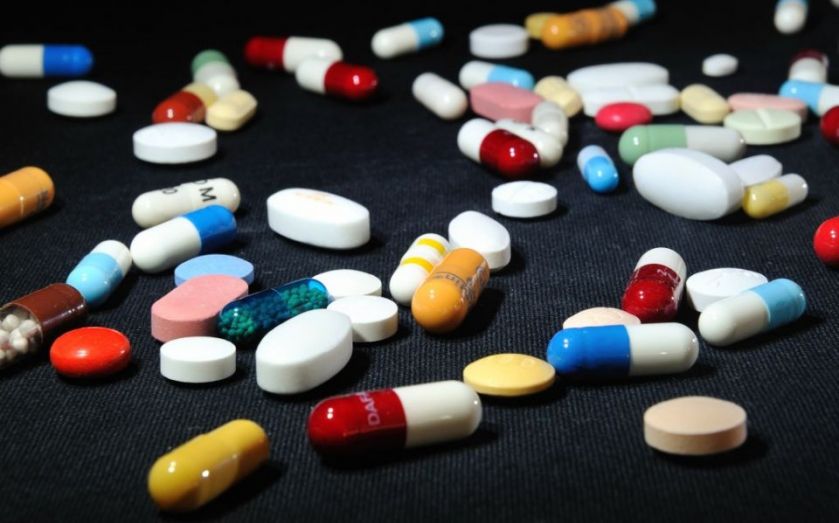
Big pharmaceutical companies thrive off the invention of new drugs, but their success relies on those drugs being purchased at the end of the line. 
 
If the maximum amount spent by the NHS on new medicines was seriously lowered, as a report released today suggested, it would not only limit access to some already available drugs – it might discourage companies like GSK and AstraZeneca from investing in the development of new ones.
 
This morning, a group of researchers at the University of York accused the National Institute for Health and Care Excellence (Nice), the government’s drug advisory body, of buying medicines for too much money. They said this was diverting important funding away from other, cheaper aspects of healthcare.
 
NICE, which sets its current limit at £20,000 to £30,000 per quality-adjusted life year (QALY), reacted by saying this would close the door to many new and advanced therapies. The researchers had recommended a lower limit of £13,000.
 
A QALY is a weighting of the cost of using a drug for a year against the extent to which a persons life can be extended and improved. 
 
Ketan Patel, senior investment analyst at Ecclesiastical, told Morning Wire how damaging such a move could be for innovation at big pharma companies. 
 
“The healthcare industry, which has delivered innovative drugs in recent decades, is built around a business model that is predicated on being rewarded for that innovation,” he said. 
 
“To remove that mechanism with a set threshold, whether it be at £13,000 or £130,000 will have a huge impact on how healthcare companies allocate their capital within R&D, resulting in a decline in innovation, to the detriment to the patient in the long run.”
 
Patel also suggested that reducing the threshold may not even have the desired effect of saving money for the NHS, since it wouldn't guarantee a return on investment:
 
The pricing of drugs is always an easy target for policymakers, but it is a very myopic way to measure the total return on investment. The wider healthcare system needs to be reviewed with the end consumer being at the core of any framework – the patient.
 
GSK has already experienced the detrimental impact of drug price limitation in the US, where sales declined by 12 per cent last year. According to the FT, this reflected the increasingly tough pricing environment facing drugmakers there, with insurers and healthcare providers attempting to bring down the escalating cost of healthcare. 
 
Following this morning's recommendation to Nice, shares inGSK and AstraZeneca dipped to £15.25 and £43.63 respectively. They have since picked back up again. 

Share this article

  • Facebook
  • X
  • LinkedIn
  • WhatsApp
  • Email

Similarly tagged content:

Sections

  • News

Categories

  • Business

Related Topics

  • AstraZeneca
  • Company
  • GSK

Trending Articles

  • Back to basics: Sainsbury’s gradual retreat from the British high street

  • Thames Water faces fresh threat to survival after pensions regulation breach

  • Hargreaves Lansdown orders staff back to office

  • FTSE 100 Live: Stocks drop as US-Iran peace stalls; Oil climbs higher

  • PwC’s Embankment HQ to get major makeover ahead of Canary Wharf move

More from Morning Wire

  • Sweeping job cuts at GSK to fund £400m Cambridge campus

    Pharma
    Modern GSK Cambridge campus buildings with sky bridge, green spaces, and people walking and cycling.
  • Patent cliff fuels Novartis’ $1.5bn swoop for London biotech

    Healthcare
    Hikma produces generic drugs
  • Astrazeneca and Jaguar Land Rover given power to endorse talented migrants for visas

    Politics
    Jonathan Reynolds addressing the SMMT's annual International Automotive Summit (image courtesy of SMMT)
  • Astrazeneca share price tumbles on $400bn megamerger talks

    Investing
    Astrazeneca headquarters with logo, reflecting commitment to reduce US medicine prices after Trump administration pressure
  • ViiV Healthcare to present phase IIIb data comparing Dovato with Biktarvy in treatment-naïve adults; alongside INSTI-powered long-acting injectable innovation at AIDS 2026

    Business Wire
  • Terry Smith dubs weight-loss giant Novo Nordisk ‘investment disaster’

    Investing
    Terry Smith, founder of Fundsmith, speaking at a business conference, wearing a suit and tie, with a focused expression.
  • Cabenuva demonstrates superiority to daily oral therapy in adolescents living with HIV, as ViiV Healthcare highlights new long-acting injectable data at AIDS 2026

    Business Wire
  • Verdiva Bio Appoints Cardiometabolic Leader Steve Marso as Chief Medical Officer

    Business Wire
MorningWire

Independent European business, markets and political news for decision-makers.

Morning Briefing

Europe

  • Germany
  • France
  • Europe
  • UK & Ireland

Business

  • Markets
  • Banking
  • Technology
  • Energy
  • Property
  • Fintech

Editorial

  • Opinion
  • Editorial Policy
  • Corrections
  • Contact

Company

  • About Morning Wire
  • Privacy Policy
  • Terms of Use
  • Cookie Policy
© 2026 Morning Wire Ltd · Published by Morning Wire Media, Bahnhofstrasse 65, 8001 Zürich, Switzerland
Privacy · Terms · Cookies · Facebook