Time to network the rail

Five London stations are being redeveloped – let’s combine these projects to get London’s growth back on track, says Peter Hogg
Railway stations define London. From the first family trip out of Euston to the countryside, to passing through the market at King’s Cross, for many Londoners they are as integral to life here as a flat white. But they are starting to show their age.
Today Euston, Victoria, Waterloo, Liverpool Street and Charing Cross are each at different stages of planning and development for significant remodelling or regeneration. Each project is important in its own right, and brings its own unique set of challenges to address. But if we continue to treat them as separate, discrete efforts run by different national and local bodies, we will miss the scale of impact that a coordinated, strategic programme could deliver for London and the country.
There are proposals underway to redevelop these spaces with plans extending beyond the station buildings to the surrounding urban fabric, unlocking substantial development potential and improving connectivity across the capital. Euston’s regeneration is especially multi-faceted: it encompasses the new HS2 terminal, re‑provision of the Network Rail station, and a wider Euston Area Regeneration Programme that will be delivered through a public-sector led body with decisions on delivery model expected soon. This is emblematic of the complexity that nearly every station has in their vision for redevelopment, both addressing desperately needed transport infrastructure upgrades while creating spaces for the whole of the community.
Integrated station regeneration offers rare, high‑leverage urban investment: thousands of new homes, billions of pounds of economic activity, and the revitalisation of entire neighbourhoods are realistic outcomes when transport, land use and placemaking are planned together
The people are ready for change – study after study has shown nearly everyone wants to live and work near transport hubs. Integrated station regeneration offers rare, high‑leverage urban investment: thousands of new homes, billions of pounds of economic activity, and the revitalisation of entire neighbourhoods are realistic outcomes when transport, land use and placemaking are planned together. These schemes are both critical local projects and strategic national infrastructure investments, with knock‑on benefits for regional rail, commuting patterns, and freight movement.
At present, different entities from Network Rail, Places for London, borough offices, and private developers are all involved in various combinations across these projects. That multi‑party involvement is necessary, but it also risks fragmented delivery.
A coordinated approach
A coordinated programme could align station upgrades with wider area development to maximise mixed‑use housing and commercial outcomes, while ensuring greater purchasing power for costly materials across multiple components of the developments, saving the public money overall. Additionally, better coordination could allow for predictable shifts in rail, underground, and bus traffic – trains that cannot access one station temporarily could be more easily coordinated and sent to a terminus in a different phase of work, with robust public communication across many channels keeping the public informed. This would be good for business continuity and commuters alike.
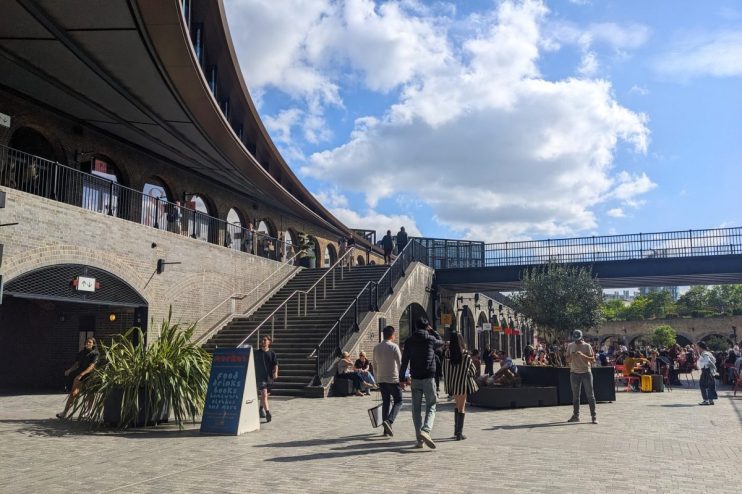
The substantial impact of the King’s Cross and St Pancras regeneration demonstrates the importance of a combined approach. When you think of major regeneration projects as one entity with an eye to maximising the impact of the transport hub and attracting substantial investment, the entire area can benefit. Now is the time to take this model and think even bigger.
To achieve this, we need to take a strategic, pan‑station view led by a cross‑agency coalition: central government, the Greater London Authority, Network Rail, and boroughs should agree on a shared delivery framework and common objectives. Euston’s impending delivery model decision is a timely moment to set this precedent. We must also market test developer partnerships at scale, packaging several station sites or coordinating them to attract the long‑term capital and integrated delivery capability required for major mixed‑use redevelopment. Additionally, placemaking and housing outcomes must be prioritised alongside transport engineering.
In short, London must take an integrated ‘whole system’ approach to the five stations initiative and treat it as a once-in-a-generation opportunity to turbo-charge London’s economic growth, social cohesion, and global competitiveness.
London’s stations are a national asset. By moving beyond silos and viewing each project as a coordinated programme of opportunity, we can amplify the returns on public and private investment, unlock much‑needed housing, and breathe new economic life into whole communities. When we do this, the effort will transcend transportation upgrade and even urban regeneration to become city-building. In an increasingly globally competitive world, this will give London a competitive edge for a generation. We stand ready to partner with government and local partners to help shape that singular strategy and to deliver it at scale.
Peter Hogg is the Country Director for the UK & Ireland at global consultancy Arcadis.