Skip to content
Sunday 13 September 2026London --:--Frankfurt --:--Zurich --:--
NewslettersSearchEN · DE · FR
MorningWire

European business, markets and politics

FTSE 100
10,650.44
+0.39%
DAX
25,568.56
+0.82%
CAC 40
8,179.77
+0.78%
STOXX 50
6,325.13
+0.90%
  • Europe
  • Markets
  • Business
  • Economy
  • Regulation
  • Politics
  • Opinion
More
GermanyFranceEU InstitutionsCompetitionPublic AffairsBankingTechnologyEnergy
  • Germany
  • France
  • Europe
  • Markets
  • Business
  • Economy
  • Regulation
  • Politics
  • Opinion
  • DE
Friday 17 December 2021 6:15 am  |  Updated:  Thursday 16 December 2021 6:39 pm

It’s time to put away the toy trains and thrash out a deal for Transport for London

By: Darren Caplan

Add as a preferred source on Google
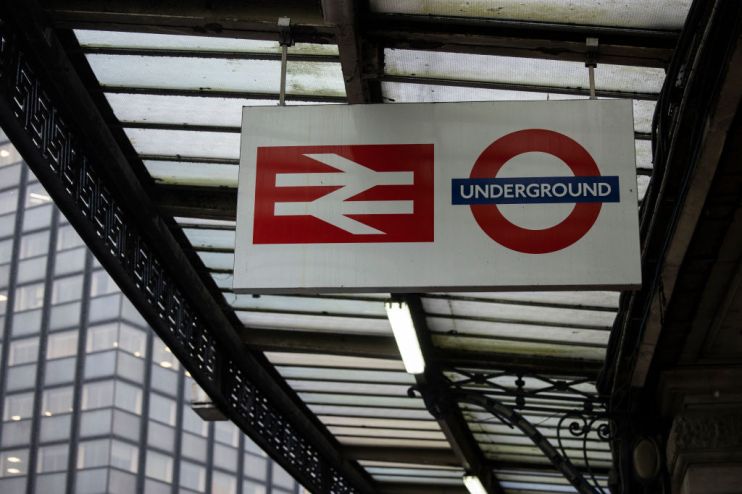
Winds of change are blowing over TfL as the public body announced the appointment of two new members of its management team. 
Winds of change are blowing over TfL as the public body announced the appointment of two new members of its management team. (Photo by Dan Kitwood/Getty Images)

The pandemic has brought the country to a standstill more times than once this  year. But the UK’s railways have continued to move people and goods across the country during these critical moments.

The impact of Covid-19 has been felt acutely in London, where passenger numbers fall every time more restrictions are brought in. The Railway Industry Association is bullish  that numbers will return in the medium term as nothing beats the benefits of meeting in-person, whether for leisure or work. The Capital will continue to draw people from around the country as a global centre of culture and business, long after the pandemic.

But fresh restrictions mean a fresh fall in numbers. Omicron or otherwise, it is clear Transport for London will continue to need support over the coming years as it will not be able to generate the necessary revenue from fares alone for some time. Over the last 18 months, there have been a series of  short-term funding deals with TfL: a first emergency deal in May 2020, followed by a £1.8bn agreement after the financial review in November 2020, running to May 2021. In June 2021, a third £1.1bn deal was confirmed, running to this December. Now, TfL finds itself again negotiating a funding settlement for the coming months, with another deadline today.

Clearly the government has acted to support rail services over the course of the pandemic, continuing to keep trains running and supporting the economy. But these series of short-term deals, reviewed every six months or so, throw rail businesses into a state of continued uncertainty.

This precariousness has knock-on effects. Multinational companies struggle to justify investment in the UK rail market without knowing what projects are planned. For smaller businesses, many of which provide irreplaceable specialist services, a lack of forward pipeline can threaten their survival. This is a vicious circle, if the Treasury wants the rail supply industry to be able to buoy itself up again, supporting jobs and investment, it needs to give the sector a long term plan.

In comparison to TfL, Network Rail, the national rail infrastructure manager, receives funding in five yearly cycles, known as control periods, negotiated and agreed more than a year before the next cycle begins. The system provides a significant level of predictability for businesses, informing them of priorities and of the level of investment in the organisation well in advance of the funding coming into place.

Of course, we can’t be certain of the trajectory of the pandemic – as the Omicron variant has shown. A control period-style settlement, however, would at least give rail suppliers, and all those involved in delivering transport services in London long-term clarity, far more than the current six-monthly agreements. A longer-term investment plan would also provide certainty for businesses to invest in the people, skills and capabilities needed to maintain and upgrade London’s rail and tube lines. If there are assurances of more work in the future,  costs can be kept down.

Before the pandemic, the railway industry accounted for £43bn in economic growth, 710,000 jobs and £14bn in tax revenue.

The Treasury, TfL and City Hall need to be able to sit down and thrash out a deal for the future – not just until the tide of Omicron recedes.

Read more

Heathrow overtaken by Istanbul as Europe’s busiest airport

Commercial airplane landing at Heathrow Airport, seen from behind, with a prominent Heathrow sign below.

Share this article

  • Facebook
  • X
  • LinkedIn
  • WhatsApp
  • Email

Similarly tagged content:

Sections

  • Opinion

Categories

  • Opinion

Trending Articles

  • Wetherspoon boss: ‘Not up to Burnham’ to choose who is on the high street 

  • Badger Beer maker Hall & Woodhouse doubles profit ahead of tie-up with James May

  • Four interest rate hikes loom despite surprise economic growth

  • Primark sales slip as owner dresses up retailer for demerger

  • Barclays faces legal scrutiny over role in £90m ‘Ponzi scheme within a Ponzi scheme’

More from Morning Wire

  • Heathrow overtaken by Istanbul as Europe’s busiest airport

    Transport & Infrastructure
    Commercial airplane landing at Heathrow Airport, seen from behind, with a prominent Heathrow sign below.
  • Revolut lands fresh banking licence after wrestling with Europe friction

    Fintech
    Revolut Banque Française ad on a Morris column in Paris, with the July Column and blurred traffic in the background.
  • How the NHS backlog fuelled a private equity gold rush in UK health market

    Healthcare
    Private health insurance admissions continue to surge
  • Stansted Airport owner hit with cyber attack as millions of customers’ data stolen

    Transport & Infrastructure
    London Stansted Airport is part of the wider Manchester Airports Group (MAG).
  • Which is the smelliest Tube line?

    Opinion
    Passenger wearing a blue surgical mask and coat on a London Underground train.
  • Luton Airport expansion set for take-off after environmental challenge dismissed

    Transport & Infrastructure
    Luton Airport aerial view with planes, runways, and terminal buildings, highlighting busy travel hub operations
  • INEOS boss: North Sea decommissioning is ideological and destructive

    Opinion
    Offshore oil rig platform with illuminated facilities and a long gangway over choppy North Sea waters.
  • Beyond your 9-5: things to explore in the Square Mile 

    Partner
    Three friends enjoying drinks on a rooftop bar with St Pauls Cathedral dome in the background.
MorningWire

Independent European business, markets and political news for decision-makers.

Morning Briefing

Europe

  • Germany
  • France
  • EU Institutions
  • Europe

Business

  • Markets
  • Business
  • Economy
  • Regulation
  • Competition
  • Public Affairs

Editorial

  • Opinion
  • Editorial Policy
  • Corrections
  • Contact

Company

  • About Morning Wire
  • Privacy Policy
  • Terms of Use
  • Cookie Policy
© 2026 Morning Wire Ltd · Published by Morning Wire Media, Bahnhofstrasse 65, 8001 Zürich, Switzerland
Privacy · Terms · Cookies · Facebook