Skip to content
Friday 28 August 2026London --:--Frankfurt --:--Zurich --:--
NewslettersSearchEN · DE · FR
MorningWire

European business, markets and politics

FTSE 100
10,792.54
-0.79%
DAX
26,367.24
0.00%
CAC 40
8,319.87
0.00%
STOXX 50
6,424.73
0.00%
  • Europe
  • Markets
  • Business
  • Economy
  • Regulation
  • Politics
  • Opinion
More
GermanyFranceEU InstitutionsCompetitionPublic AffairsBankingTechnologyEnergy
  • Germany
  • France
  • Europe
  • Markets
  • Business
  • Economy
  • Regulation
  • Politics
  • Opinion
  • DE
Monday 17 January 2022 6:00 am  |  Updated:  Friday 14 January 2022 4:11 pm

A timely payday is the only way to protect our small businesses and freelancers

By: Liz Barclay

Add as a preferred source on Google
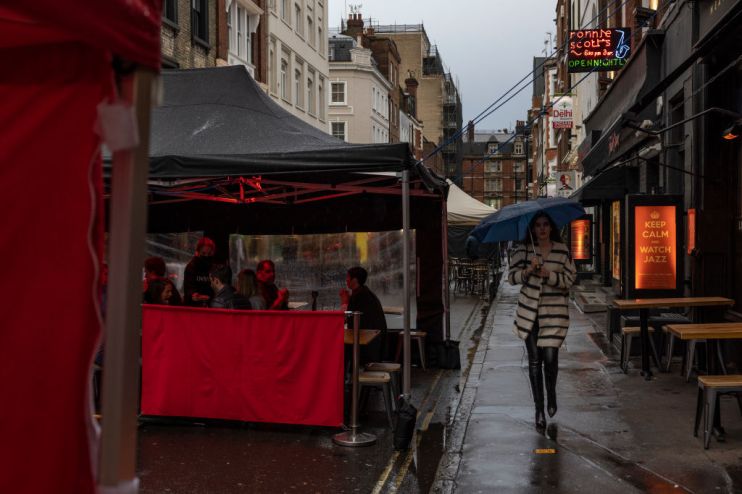
Hugs And Pubs Back On Menu After Latest Lockdown Easing
Small businesses comprise an important part of the UK economy. (Photo by Dan Kitwood/Getty Images)

In 2022, we’re facing the loss of 440,000 small firms and of the talent that could drive future prosperity because of poor payment practices. Paying quickly pays everyone. It’s folly to pay late or to inflict extended payment terms on suppliers. It’s theft not to pay at all. We need to revolutionise business-to-business payments.

The problem is tangible. One of the UK’s leading representative organisations for small business surveyed 1,200 of its members. It found out 30 per cent are facing problems getting paid. By process of extrapolation, 360 member firms becomes 440,000 around the UK. 

Not paying quickly pays no one. Extended payment terms are rarely the stance of an ethical business. Investors and skilled would-be recruits are beginning to ask how well small suppliers are treated. Extending payment terms and using small suppliers as a bank often signals that a firm is in financial difficulty.

In the same way that employees can’t be paid with a four months delay, small suppliers shouldn’t endure late and delayed payments. The levelling up of any area starts with the small firms, sole traders, micro businesses and freelancers operating there. Put the right support into their hands and they will level up the community. Give them no money, and they will be unable to bring any benefit.

The credit management sector is convinced it has found the solution, by providing the cash to allow firms to plug the gaps in their cashflow while they’re waiting to be paid. That does work for some businesses but rarely for the smallest. Freelancers, sole traders and micro businesses are highly unlikely to get invoice financing at fees they can afford.

Wellbeing is one of the reasons people prefer to work for themselves. The flexibility to combine work and income generation with caring responsibilities, other work whether paid or unpaid and the needs of one’s own health and wellbeing, are driving factors in the choice of freelancing or opening a small business. 

Creativity, the very lifeblood of business at all levels, is another aspect of it. Creative freelancers are the bees that fertilise bigger firms with the pollen of ideas and shared best practice.

Throughout the pandemic we’ve seen more and more people give up their jobs to become freelancers or sole traders, or to set up their own business with a small number of employees. This trend is likely to continue, as the great resignation has been a long time coming. People who would in the past have made their own rules about how they worked and when, are likely to grasp that option rather than carrying on accepting the constraints of employers. The next creative freelancers may use the experience as a prelude to setting up what will become the next £3tn megacorp. 

All of these are reasons why we must not let the 440,000 small firms already operating in this way go to the wall. They will take with them the talent that delivers to bigger businesses the creativity and ideas that being an employee, confined in a bigger workplace, neglects and allows to wither. If we want them to survive, we must make sure they are paid for what they deliver as they deliver it and not four months later. By then, it’s too late and the shutters are down. Where do you get your talent from when it’s gone? In the words of one supermarket chain: when it’s gone, it’s gone.

Read more

‘Cost of business crisis’ as government drives up overheads by 70 per cent in a decade

Andy Burnham, Mayor of Greater Manchester, drinking a pint of beer in a busy pub setting

Share this article

  • Facebook
  • X
  • LinkedIn
  • WhatsApp
  • Email

Similarly tagged content:

Sections

  • Opinion

Categories

  • Opinion

Trending Articles

  • Pensioners to hand over bank statements in government benefits crackdown

  • Jamie Carragher: HMRC petitions for Sky Sports star to be declared bankrupt

  • Brewdog founder James Watt hits out at ‘total silence’ over new venture

  • Lloyds Bank and Halifax users unable to use app in latest outage

  • Economists urge Bank of England to halt bond sales as borrowing costs climb

More from Morning Wire

  • ‘Cost of business crisis’ as government drives up overheads by 70 per cent in a decade

    Business
    Andy Burnham, Mayor of Greater Manchester, drinking a pint of beer in a busy pub setting
  • London pensions firm eyes more deals after HSBC and Lloyds takeovers

    Insurance
    HSBC could be set to follow peers Lloyds and Barclays in a push back to the office.
  • Vistry shares slide after Allianz ‘cuts insurance cover’

    Property
    Vistry said the outcome of the government's spending review and a "recovery in consumer confidence" would prove pivotal.
  • Elavon renews partnership with Sage to simplify payments for growing businesses

    Business Wire
  • ‘Social value’ procurement rules are an absurd waste of time and money

    Economics
    Tunnelling for the Euston link finally kicks off this week.
  • Stansted Airport owner hit with cyber attack as millions of customers’ data stolen

    Transport & Infrastructure
    London Stansted Airport is part of the wider Manchester Airports Group (MAG).
  • Labour’s ‘chaotic’ zero-hour crackdown could cost firms £3bn per year

    Economics
    Andy Burnham, Mayor of Greater Manchester, in a suit and glasses, looking serious against a bright sky.
  • ‘We’d love an apprentice – but the government has made it too expensive’

    Economics
    Technician in blue shirt operating a large metal lathe machine, industrial manufacturing process
MorningWire

Independent European business, markets and political news for decision-makers.

Morning Briefing

Europe

  • Germany
  • France
  • EU Institutions
  • Europe

Business

  • Markets
  • Business
  • Economy
  • Regulation
  • Competition
  • Public Affairs

Editorial

  • Opinion
  • Editorial Policy
  • Corrections
  • Contact

Company

  • About Morning Wire
  • Privacy Policy
  • Terms of Use
  • Cookie Policy
© 2026 Morning Wire Ltd · Published by Morning Wire Media, Bahnhofstrasse 65, 8001 Zürich, Switzerland
Privacy · Terms · Cookies · Facebook