Time’s up: Ending the tyranny of clock-changing would make us a richer, happier nation

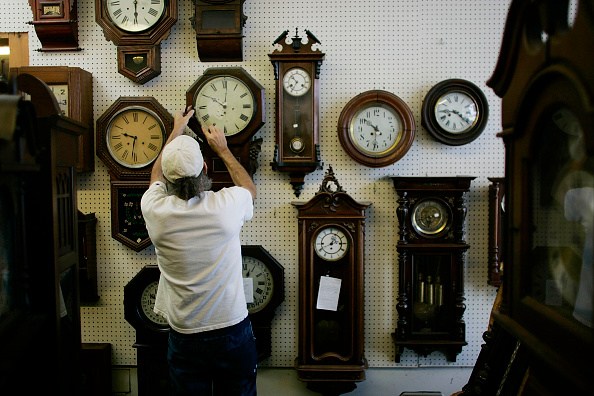
It’s that time of year again where the government exerts its power over time itself.
In the early hours of Sunday morning, British Summer Time (BST) will officially be no more, and the country will return to Greenwich Mean Time (GMT) until March.
Alas – for it would make far more sense to stop changing the clocks twice a year and instead stick with BST throughout.
As welcome as an extra hour in bed is in October, we pay for it under our current system when we put our clocks forward again in March.
Losing that hour of sleep in spring is detrimental to our health and well-being. Numerous medical studies have shown that the likelihood of suffering a heart attack increases dramatically on the Monday following the clocks going forward, while other research has found that it increases the chances of having a stroke.
The bad news does not stop there. Getting out of bed an hour earlier might seem like a mild inconvenience, but it can have deadly consequences. You are more likely to be involved in a car accident on the Monday after the clocks go forward, as people fall asleep at the wheel due to being deprived of an hour of sleep.
And the danger doesn’t stop once you get to work. You might not consider your office a particularly risky place, but on that springtime Monday you are more likely to sustain a workplace injury.
Putting the clocks forward is not just damaging our health – it is also having a detrimental impact on the economy. A 2012 psychological study found that on the Monday after the time switch you are more likely to “cyberloaf” in the office – essentially wasting time on Twitter or sending cat videos to your friends rather than doing actual work.
Having avoided an early demise on the roads or at the hands of the office toaster, you might feel entitled to take things easy, but this certainly does not help improve the UK’s sluggish productivity. What is more, there is evidence to suggest that the switch back to GMT lowers stock market returns.
Consider now the numerous benefits of keeping BST all year – namely, that it will be lighter for longer. Most of us don’t get up at dawn, so the later hours of sunlight will be more closely aligned to when we are actually awake and active.
This has the potential to make us healthier as a nation. Lighter evenings make it much more likely that you will play for football or go to the gym after work, rather than just collapsing on the sofa with a takeaway and the latest Netflix show as the sky darkens from 4pm.
Even if you’re not exercising after work, you could still be boosting the economy, as you’re more likely to want to socialise by going for a drink or two at the local or seeing a show.
Crime rates will also decrease, with criminals less able to rely on the cover of darkness.
It could even boost international trade. A 2014 study looking at the impact of time differences on trade found that each hour of time difference reduced international goods trade by between two and seven per cent. As such, reducing the time difference between the UK and continental Europe – and, indeed, Asia – should help to increase trade.
Given that most of us get our time from phones these days, putting the clocks back is not the inconvenience it once was, as they tend to update automatically. But there is still little justification for this biannual ritual.
Let’s scrap the charade of moving our clocks every six months and stick with British Summer Time all year round, for the sake of a healthier, happier, and richer nation.
Main image credit: Getty