To achieve a strong semiconductor strategy, we need to keep Taiwan safe

Our collaboration with Japan will boost our semiconductors’ strategy. But if we want to be resilient in that sector, we have to protect Taiwan from a Chinese threat which won’t go away, writes Eliot Wilson
Last week Liz Truss (she was prime minister, briefly) visited Taiwan on a five-day tour. Proving that, like a stopped clock, she is still occasionally right, she warned her audience that the Chinese president, Xi Jinping, had ambitions to seize control of the island, by force if necessary, and that the West, “those of us who believe in freedom and democracy”, had to be prepared to defend Taiwan.
This matters, and Truss was right to say it. Freedom and democracy aside, Taiwan’s semiconductor industry produces a fifth of the world’s supply, a hefty $115bn, while two Taiwanese companies are the biggest global manufacturers of microchips. Any interruption to manufacture or supply because of a Chinese strike against Taiwan would have disastrous effects for the rest of the world.
For once the UK is not wholly on the back foot. The March 2023 “refresh” of the Integrated Review, our foundational geopolitical and national security document, promised a “Semiconductor Strategy” to boost our manufacturing base and strengthen the supply chain for importing semiconductors as part of wider economic security measures. This will be a key responsibility for one of the new bodies the prime minister created in February, the Department for Science, Innovation and Technology.
The scheme, announced by the government last Friday, is a 20-year plan, backed by £1bn over the next decade, to improve access to infrastructure, increase research and development in semiconductors and boost international cooperation. In particular, the UK has committed to collaborate with Japan’s Ministry of Economy, Trade and Industry to cooperate on research and development, share skills and jointly improve resilience in supply chains. It is part of a wider agreement between the UK and Japan dubbed the Hiroshima Accord.
The ambitions of the strategy address obvious elements of government policy. It is designed to improve the UK tech sector (Rishi Sunak wants us to be recognised as a “tech superpower” by 2030), contribute to overall economic growth, increase the domestic supply of semiconductors and make our supply chain more resilient.
The main criticism of the strategy is that recurring theme of British policy-making: it is long on ambition and rhetoric, and short on actual funding. £1bn spread over 10 years is not a significant investment in global terms—one tech boss pointed out that building a basic semiconductor plant from scratch would cost more than that—and it is dwarfed by the sums which have been announced in subsidies to the industry by the US, the European Union and China.
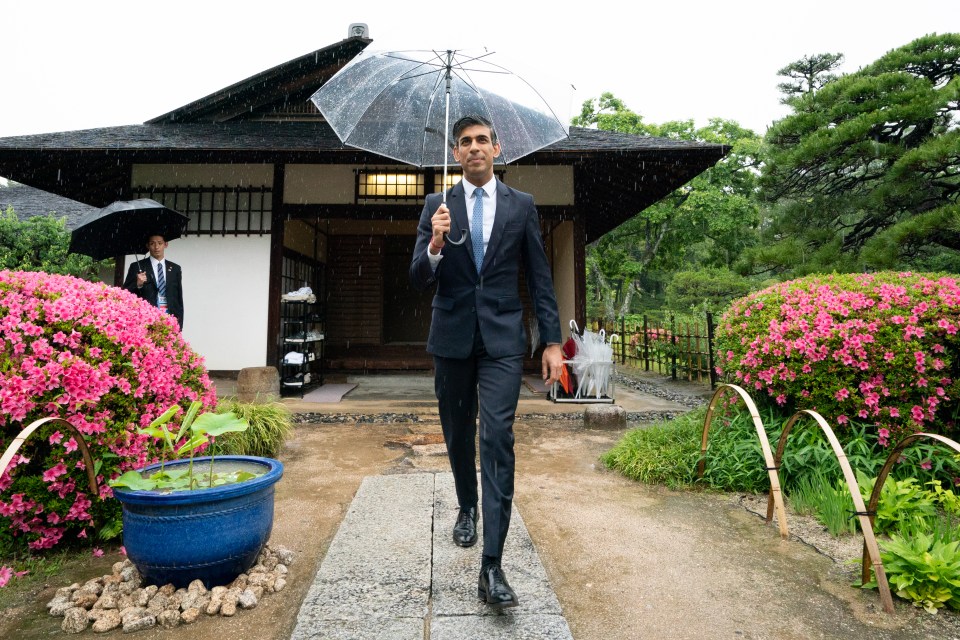
Framed more optimistically, it is a promising start on a critical issue. It will be a test case for the new DSIT (currently steered by former work and pensions secretary Chloe Smith, as Michelle Donelan is on maternity leave), and it is well timed politically. The prime minister and the foreign secretary are in Japan for the G7 Summit, and the Hiroshima Accord with Japan is a demonstration of the UK’s ambition and reach post-Brexit. It anchors our attention firmly in the Indo-Pacific region to which the Integrated Review has “tilted” British foreign policy.
It is striking that the document released on Friday contained no mention of China or Taiwan. As often in diplomacy, one learns a great deal from looking at the white spaces. This is as much a South China Sea strategy as it is about semiconductors, and in this lies the real problem with the government’s plans. Yes, it may be underfunded, but, much more pressingly, time is short. President Xi’s designs on Taiwan are not medium- or long-term, vague intentions for the 2040s or 2050s. This is proximate.
Xi has previously emphasised that the issue of Taiwan “cannot be passed on from generation to generation”, and he has told the Chinese military to be ready for an assault on the island by 2027. We are more likely to see a naval blockade, in the first instance, than a full-dress amphibious invasion, but the crisis is coming. No matter how well-intentioned our plans for self-sufficiency, we will still need Taiwan. So are we willing to fight for her?