Skip to content
Monday 14 September 2026London --:--Frankfurt --:--Zurich --:--
NewslettersSearchEN · DE · FR
MorningWire

European business, markets and politics

FTSE 100
10,650.44
+0.39%
DAX
25,568.56
0.00%
CAC 40
8,179.77
0.00%
STOXX 50
6,325.13
0.00%
  • Europe
  • Markets
  • Business
  • Economy
  • Regulation
  • Politics
  • Opinion
More
GermanyFranceEU InstitutionsCompetitionPublic AffairsBankingTechnologyEnergy
  • Germany
  • France
  • Europe
  • Markets
  • Business
  • Economy
  • Regulation
  • Politics
  • Opinion
  • DE
Friday 15 October 2021 6:00 am  |  Updated:  Friday 15 October 2021 12:02 pm

To fix the NHS, we must look at what went wrong, but also use what went right

By: Davina Deniszczyc

Add as a preferred source on Google
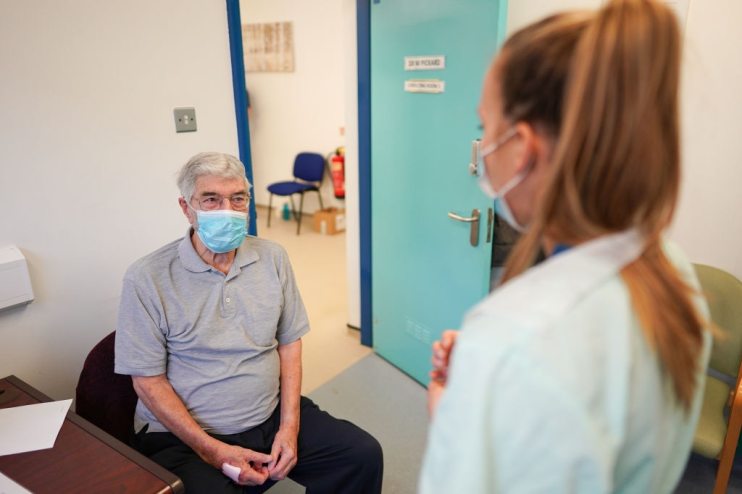
Vaccine Rollout Continues In GPs' Surgeries Across The UK
GPs have helped rollout the vaccine (Photo by Ian Forsyth/Getty Images)

As we continue to rebuild from the effects of the pandemic, it is important to look at what went wrong, to take stock. We also need to look at what worked and where this can be applied elsewhere. This will not only help us to prepare for future pandemics, but in the shorter term will be critical in rebuilding our healthcare system to be more efficient, helping the NHS to tackle the long waiting lists that have built up as a result of facing the sudden problems of Covid-19.

When faced with the immediate challenge of building and creating testing and vaccine roll out capabilities, red tape was removed and new systems were built. They were unburdened by the old ways of doing things. The report from the House of Commons Health committee allows us to do this; it points to our failures – and our successes. It acknowledges that what enabled the vaccine roll-out was largely an innovative strategy, free from the usual bureaucracy the NHS is normally subject to.

A national problem requires a whole-system solution. Prevention is not just a government or healthcare issue, everyone is responsible and the public, as well as the independent sector and employers, must pitch in.

In the early stages of the pandemic, we saw national frameworks created that nourished autonomy in local areas. This meant the immediate needs of local communities were prioritised. Remote working enabled easier access to a wider range of services at more accessible times.

Taking inspiration from the task forces that enabled our vaccine development, we should take a similar approach and build prevention boards in local communities. With the support of groups and businesses based in the area, they can reach out to groups at high-risk of developing health problems. Early intervention should be de-medicalised, in order to make our systems more efficient.

We’ve relied on the healthcare sector heavily during the pandemic; we need to find broader shoulders for the support we need.

This is simple, and things we all know. For example, regular exercise is extremely effective at reducing the risk of major illnesses, such as heart disease, stroke, type 2 diabetes and cancer by up to 50 per cent. Local communities can help encourage physical activity, and patients who wind up in GP surgeries should be given advice on how to start an exercise routine. This should be prescribed more often as treatment, even ahead of medicines where appropriate. We need to start treating health and fitness as two interlinked industries.

Knowledge sharing is the critical third pillar. Too often, different bodies are segmented off from one another. Siloed in by bureaucratic walls. The Government and health organisations must share information and be honest about what is working and what’s not. The beauty of the vaccine programme was in the way the regulator, the MHRA, was able to have access to rolling data from each developer and enable the public to have a swift roll-out of the jab. When there were concerns about one vaccine for a particular age group, these were quickly fed back and the roll-out was adjusted.

One size doesn’t fit all. But too often our health systems prescribe cookie-cutter approaches. Ministers too, are often quick to jump on simplistic check-lists to prove the efficacy of the NHS.

We need to be open about the challenges that need to be overcome, adopting the test and learning attitude which helped us navigate our way out of the worst of the pandemic.

Read more

NHS data counters claims that £330m Palantir deal has led to ‘no improvement’

Brit are seeking financial support from the ‘Bank of Mum and Dad’ to afford private healthcare.

Share this article

  • Facebook
  • X
  • LinkedIn
  • WhatsApp
  • Email

Similarly tagged content:

Sections

  • Opinion

Categories

  • Opinion

Trending Articles

  • Wetherspoon boss: ‘Not up to Burnham’ to choose who is on the high street 

  • Four interest rate hikes loom despite surprise economic growth

  • Reform hits back at Tory plan to ‘abolish inheritance tax’

  • Lotus, Porsche and Corvette: the best sports cars to buy in 2026

  • Primark sales slip as owner dresses up retailer for demerger

More from Morning Wire

  • NHS data counters claims that £330m Palantir deal has led to ‘no improvement’

    Tech
    Brit are seeking financial support from the ‘Bank of Mum and Dad’ to afford private healthcare.
  • Burnham calls for honesty then sticks his head in the sand

    Politics
    Andy Burnham, Mayor of Greater Manchester, in a dark suit holding a red folder outside 10 Downing Street
  • How the NHS backlog fuelled a private equity gold rush in UK health market

    Healthcare
    Private health insurance admissions continue to surge
  • Leeds NHS Innovation to Accelerate Global Adoption of AI-enabled Pathology for Cancer Diagnostics Through Epredia Partnership

    Business Wire
  • Use AI for investing at your own risk, warns watchdog

    Personal Finance
    Financial Conduct Authority reception area in 2025, highlighting increased regulatory actions and financial penalties
  • £74m for branded condoms? UK must stop spaffing cash on foreign aid

    Opinion
    Ed Miliband in a suit and red tie, carrying a red folder, walking past railings outside Downing Street
  • We desperately need more negative hotel reviews

    Life&Style
    Grand black and white spiral staircase in the elegant lobby of Six Senses London, with seating area and plants.
  • The real divide in British politics: fantasists vs realists

    Opinion
    Houses of Parliament in Westminster showcasing historic architecture under a clear sky, central to UK government and politics
MorningWire

Independent European business, markets and political news for decision-makers.

Morning Briefing

Europe

  • Germany
  • France
  • EU Institutions
  • Europe

Business

  • Markets
  • Business
  • Economy
  • Regulation
  • Competition
  • Public Affairs

Editorial

  • Opinion
  • Editorial Policy
  • Corrections
  • Contact

Company

  • About Morning Wire
  • Privacy Policy
  • Terms of Use
  • Cookie Policy
© 2026 Morning Wire Ltd · Published by Morning Wire Media, Bahnhofstrasse 65, 8001 Zürich, Switzerland
Privacy · Terms · Cookies · Facebook