To list or not to list? The bizarre process behind England’s listed buildings

Historic England have enormous power when choosing to list or not to list a building. To preserve our richly textured historical cities, they shouldn’t hold back, writes Lucy Kenningham
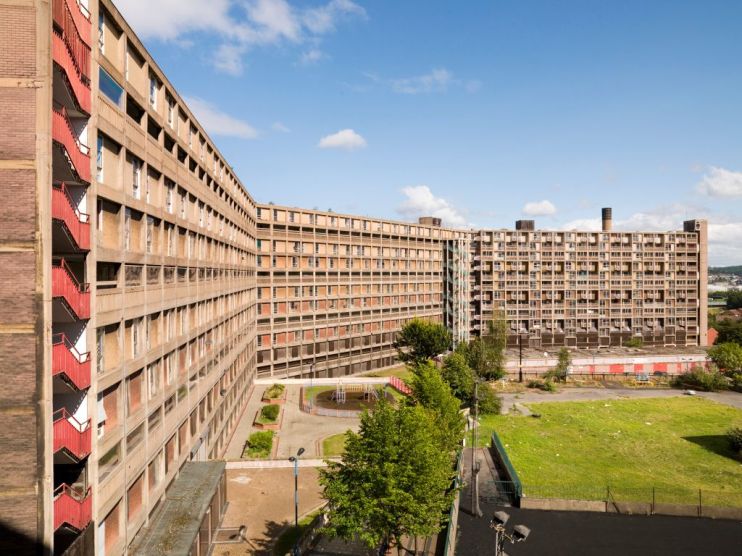
In 1998, a fateful and surprising decision was made. Historic England, the public body that protects England’s “spectacular historic environment” unexpectedly granted a brutalist housing estate Grade II listed status.
Park Hill Estate was meant to be “the future of council housing” An attempt to build a utopia for former slum dwellers in Sheffield, it was built on a modernist, post-war dream that architecture could solve society’s problems.
But its listing decades later was a shock to many, who derided its brutalism and wondered if Historic England had completely lost their marbles. The estate had over time decayed, its skyways becoming havens of crime rather than harbouring meet cutes.
In 2009, commentator Stephen Bayley marvelled at the “intellectual chaos” of Historic England finding such a “horribly dystopian” neo-Corbusian building “fantastic”. The furore encapsulated the impossibility of an objective and selective building protection.
After all – what unites a rather stagnant-looking puddle of water in rural Hertfordshire, a wrought-iron footbridge in Hindley, an underground tunnel in Cornwall and a church in Lancaster that was built in the style of an upturned boat? Grade II listed status, granted in 2023.
Despite appearing as if four concrete slabs were jammed together by an ancient shepherd, the small low-cover coastal radar station at Craster in Northumberland made it too.
Last year the body known as Historic England anointed these “remarkable historic gems” along with 222 other buildings or structures with listed status (or ‘scheduled monument’ status in the case of the cave, which is technically a fogou). Other categories include historical wreck sites (underwater) and registered battlefields.
In all, England has some 500,000 sites that have been selected to appear on ‘The List’, as it is known, which in Sheffield for example includes such a diverse array of sites as the Cholera Monument (it’s what is says on the tin), the Botanical Gardens Bear Pit, the University of Sheffield’s drama studio and the aforementioned Park Hill.
However, nobody knows the precise number of listings – as one listing can include a whole row of terraced housing – a fact even Historic England admits is “surprising”, and reflects a slightly shambolic seeming selection process.
Anyone can nominate a building but large or influential campaign groups have an outsized chance of lobbyings success. Campaigning introduced four early 20th century gas lamps in Covent Garden onto The List just this week, in an eccentric and climate-blind move likely helped by its advocates being the actor Simon Callow and Lord Parkinson.
Many in the know are sceptical of the listing process. “English Heritage really doesn’t have the expertise in-house when it comes to assessing modern architecture,” says Amanda Baillieu, editor of the journal Building Design.
And it’s true that the listing sequence seems more sporadic than scientific.
In 2013 Preston bus station was listed. That year, English Heritage ran an exhibition on brutalism – emblematic of the body’s intrigue in a particular movement rather than evidence of a scientific process.
Others commend England’s preservation of old buildings. Architects and planners who espouse willy-nilly demolition – which is terrible for the environment – are largely in favour. Britain currently has a fetish for wrecking, knocking down 50,000 buildings a year which is a vast waste of resources. Listing protects a building from harm but does not necessarily prevent it from being renovated or refurbished to provide new functions.
Any building or structure erected prior to 1 July 1948 can be listed. “The older a building is, and the fewer the surviving examples of its kind, the more likely it is to be listed,” Historic England explains, helpfully if not precisely.
So in reality it is rather random. In the case of Park Hill, a listing meant preserving a distinct moment in history from near-certain demolition. Two predecessors of Park Hill, Hyde Park and Kelvin Flats were either fully or partially torn down.
Now, Park Hill has been renovated in a way that restores the building’s glory whilst preserving its history, so the concrete castle that looms down on the city has become a beloved part of Sheffield’s mythology. The estate even got its own musical, Standing at the Sky’s Edge, which is on now at the National Theatre.
If we want to live in cities and towns that have a rich texture of buildings from different historical periods, we should protect more of our buildings. And it shouldn’t be a shock when unique buildings are given special status – nor should it require expensive campaign efforts to get through the process.
It is a strange power that Historic England wields; it would do best to list liberally.