Skip to content
Sunday 13 September 2026London --:--Frankfurt --:--Zurich --:--
NewslettersSearchEN · DE · FR
MorningWire

European business, markets and politics

FTSE 100
10,650.44
+0.39%
DAX
25,568.56
+0.82%
CAC 40
8,179.77
+0.78%
STOXX 50
6,325.13
+0.90%
  • Europe
  • Markets
  • Business
  • Economy
  • Regulation
  • Politics
  • Opinion
More
GermanyFranceEU InstitutionsCompetitionPublic AffairsBankingTechnologyEnergy
  • Germany
  • France
  • Europe
  • Markets
  • Business
  • Economy
  • Regulation
  • Politics
  • Opinion
  • DE
Wednesday 18 March 2020 4:40 am  |  Updated:  Tuesday 17 March 2020 7:41 pm

To pay for this crisis, the government must keep in mind Ricardian equivalence

By: Paul Ormerod

Add as a preferred source on Google
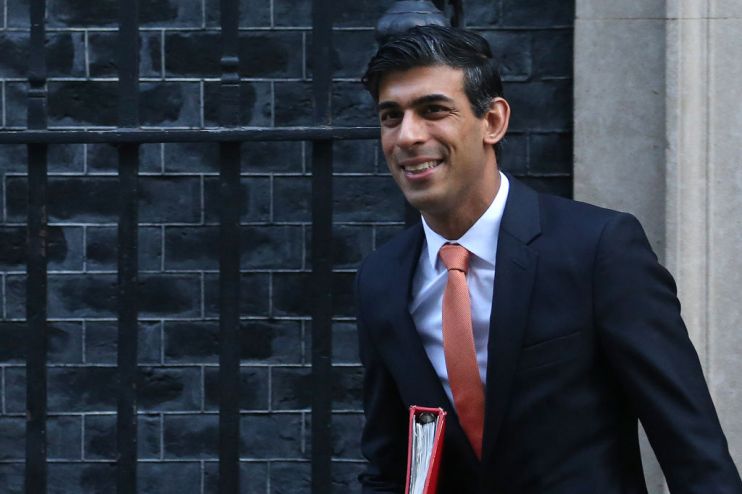
Chancellor Rishi Sunak is expected to tell employers today that they will have to start contributing to the government’s massive furlough scheme which is paying the wages of millions of UK workers.

John Maynard Keynes could certainly craft a neat phrase.

In the Second World War, he wrote in his pamphlet How to Pay for the War: “It is only in a free community that the task of government is complicated by the cause of social justice.”

The impact of the coronavirus pandemic is similar to a war. Governments have to spend more on some stuff (bombers or ventilators) and restrict access to resources for other activities (in WW2, petrol was rationed, now sports events restricted).  

In the current crisis, many otherwise viable companies will go to the wall as demand for their products and services drop. Already, the airlines are clamouring for a huge bailout. 

Rishi Sunak’s loan scheme is a very good start, but it does not go far enough.

Looming over all of this: how should all the extra spending, extending even further than the loan scheme, be paid for?

Another great British economist, David Ricardo, was also fascinated by the question of how to pay for a major war. In his case, it was the Napoleonic wars in the early nineteenth century.

The government could either raise taxes or issue bonds to cover the increase in spending. 

Ricardo argued that the effect on the economy would be the same regardless of which method was used. If increased government spending was financed by taxation, total demand in the economy would be unaffected. Military spending would rise, but private spending would fall.

Read more

Healey facing £6bn hit as UK borrowing costs reach highest point since financial crisis 

A smiling man in a dark suit and red tie looking slightly upwards, against a plain background.

According to Ricardo, the issue of government bonds would also have no effect. The bonds give rise to a stream of interest payments in the future and at some stage have to be repaid. So taxes in the future would be higher. A rational agent would anticipate these higher taxes. They would increase savings now in order to be able to meet them.

This concept, known as Ricardian equivalence, is hotly contested in macroeconomics even today. If it is true, so-called Keynesian policies for more public spending and bigger deficits simply do not work.

In the financial crisis of the late 2000s, the public sector deficit rose. Both the household and the corporate sector increased their savings, rather than running them down to maintain spending levels. So Ricardian equivalence is not as far-fetched as it may seem.

Traditionally, wars have mainly been paid for by the government issuing debt. In the Napoleonic wars, Bank of England data shows that government debt as a percentage of GDP rose from 100 to 150. In the First World War, it went from 20 to 110, and in the Second, from 130 to 250.

A similar massive rise now might simply be offset by an increase in private sector savings. Demand would fall even further than it is doing.

Sunak’s proposal is to make loans to any business that wants them, large or small. But the repayment period needs to be longer, say 10 years. The company could pay these back as and when it chose. Otherwise, the outstanding loans would be converted into equity in the company.

The loans would therefore either be repaid or backed by an asset. The principles of sound finance would be maintained, and businesses would survive.

Main image credit: Getty

Read more

Healey revives ‘price-gouging’ threat as cost of living options narrow

Chancellor John Healey smiling, wearing a navy suit, white shirt, and red tie.

Share this article

  • Facebook
  • X
  • LinkedIn
  • WhatsApp
  • Email

Similarly tagged content:

Sections

  • Markets & Economics
  • News
  • Opinion

Categories

  • Business
  • Economics
  • Opinion

Trending Articles

  • Wetherspoon boss: ‘Not up to Burnham’ to choose who is on the high street 

  • Badger Beer maker Hall & Woodhouse doubles profit ahead of tie-up with James May

  • Four interest rate hikes loom despite surprise economic growth

  • Primark sales slip as owner dresses up retailer for demerger

  • As it happened: FTSE 100 rallies as economy beats forecasts; oil falls back

More from Morning Wire

  • Healey facing £6bn hit as UK borrowing costs reach highest point since financial crisis 

    Markets
    A smiling man in a dark suit and red tie looking slightly upwards, against a plain background.
  • Healey revives ‘price-gouging’ threat as cost of living options narrow

    Politics
    Chancellor John Healey smiling, wearing a navy suit, white shirt, and red tie.
  • Retailers hit back at Healey’s ‘profiteering’ threat

    Retail
    Chancellor John Healey smiling, wearing a navy suit, white shirt, and red tie.
  • Bailey warns on inflation risks as Iran war roils UK economy

    Economics
    Bank of England Governor Andrew Bailey addressing financial stability concerns at a press conference
  • Aldi boss wades into supermarket ‘price-gouging’ row

    Retail
    Giles Hurley, Aldi UK CEO, stands in a supermarket produce aisle with fresh fruits and vegetables.
  • Britain ‘taxing itself to death,’ Burnham warned

    Economics
    Andy Burnham, Mayor of Greater Manchester, in a suit and tie with a Union Jack flag in the background.
  • ‘War on wealth creation’: capital gains tax raid would lose government money, Tories argue

    Politics
    Mel Stride speaking at a press conference, addressing key issues, in a formal setting with a backdrop of the events logo.
  • Gatwick takes ‘significant’ passenger hit from Iran war

    Transport & Infrastructure
    Gatwick Airport terminal bustling with travelers and staff under bright signage and flight information displays
MorningWire

Independent European business, markets and political news for decision-makers.

Morning Briefing

Europe

  • Germany
  • France
  • EU Institutions
  • Europe

Business

  • Markets
  • Business
  • Economy
  • Regulation
  • Competition
  • Public Affairs

Editorial

  • Opinion
  • Editorial Policy
  • Corrections
  • Contact

Company

  • About Morning Wire
  • Privacy Policy
  • Terms of Use
  • Cookie Policy
© 2026 Morning Wire Ltd · Published by Morning Wire Media, Bahnhofstrasse 65, 8001 Zürich, Switzerland
Privacy · Terms · Cookies · Facebook