To solve London’s housing crisis, don’t built tall, build beautiful

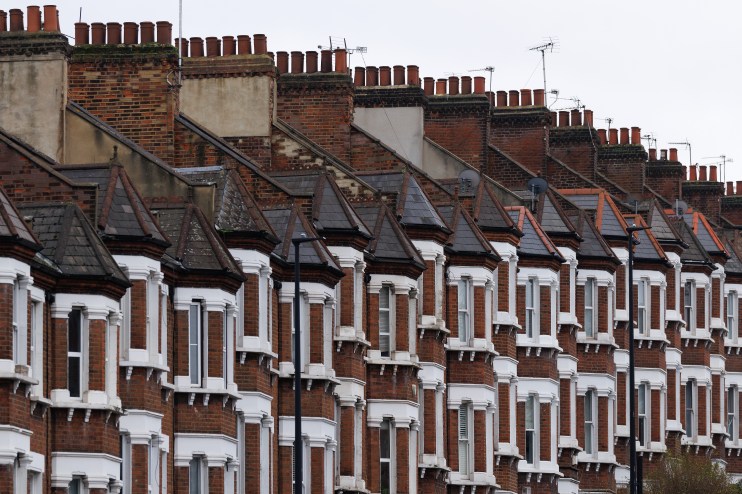
What two strategies does Maida Hill use to achieve its high residential density?
Maida Hill is a small, west London residential enclave just west of Maida Vale. It primarily comprises low and mid-rise terraces and townhouses nestling amongst leafy, tree-lined streets. And yet, according to data from the last census, not only does Maida Hill have a higher residential density than high-rise districts like Nine Elms, Docklands and Croydon, it is the neighbourhood with the highest residential density in Britain.
How does it do it? Like many historic, high-density neighbourhoods in London, it chiefly deploys two strategies: mid-rise and mansion blocks. Not only do these form the basis for Policy Exchange’s latest report, S.M.A.R.T. Density, Building Dense, Building Beautiful, but between them, they could be the answer to solving London’s housing crisis.
London has spent the last 25 years building or approving hundreds of tall buildings. These are frequently contentious in planning terms and have harmed much of the capital’s historic and urban character. And they haven’t appreciably helped London improve its density either. Apart from Oslo, Dublin and Rome, London is Europe’s least dense capital city and it is four times less dense than low-rise Paris.
But perhaps even worse, not only have towers not eased the housing crisis, there is a chance they may have exacerbated it. As Policy Exchange’s Tall Buildings report exclusively revealed last year, since 2000, London’s has built over 70 residential high-rises over the height of St Paul’s Cathedral. But only six per cent of the housing they have provided has been affordable and just 0.3 per cent of it has been social housing.
London primarily builds high-rises because land is expensive and there is a widely held view that high-rise means high-density. But as Policy Exchange’s new report argues, this view is misplaced and because tall buildings usually impose more inefficient use of land, energy, structure and costs, mid-rise is often the optimum density solution. It’s also cheaper too, costing up to 40 per cent less to build than high-rise.
Mid-rise
Maida Hill is not the only London neighbourhood that demonstrates the effectiveness of mid-rise housing. Popular areas like Kensington, Chelsea, Maida Vale, Marylebone and Victoria all feature high densities with little or no reliance on tall buildings. And there is one element apart from mid-rise that all these districts have in common: mansion blocks.
Mansion blocks were invented in late 19th century London as an Anglosphere equivalent to the boulevard-fronted apartment blocks that help continental cities like Paris achieve astronomically higher densities than London. They differ from the more modern blocks we may commonly associate flats with by prioritising brickwork, balconies, multiple street entrances and distinctive, often decorative street frontages.
Crucially, they are also excellent density deliverers, effectively forming horizontal skyscrapers that pack thousands of residents into waves of linear blocks in concentrated neighbourhoods. The new Nine Elms development has a gross density of approximately 88 dwellings per hectare while there are streets in Victoria and Kensington with densities of up to 200 dwellings p/h and beyond.
Had the new Nine Elms development been covered with mansion blocks rather than skyscrapers, not only could we have created a timeless new neighbourhood far more sympathetic to London’s traditional scale and character, but, in the midst of a housing crisis, we could have built thousands more homes too. And, because mid-rise is cheaper to build, more of them could also have been used for affordable or social housing.
Policy Exchange’s Building Beautiful programme has long argued that improving the quality of our housing design will help solve the housing crisis by making the public more amenable to significant increases in housing quantity. We believe this same principle applies to density and that the societal impact of telling Londoners that they’re getting a new Marylebone rather than more new tower blocks could be transformative.
If we want to build skyscrapers, we should build high-rise. But we want to solve the housing crisis, then going back to mid-rise and especially mansion blocks, is the future.
Ike Ijeh isHead of Housing, Architecture & Urban Space at Policy Exchange