Skip to content
Saturday 8 August 2026London --:--Frankfurt --:--Zurich --:--
NewslettersSearchEN · DE
MorningWire

European business, markets and politics

FTSE 100
10,901.09
+0.31%
DAX
26,319.45
+0.69%
CAC 40
8,714.93
+0.17%
STOXX 50
6,523.86
+0.33%
  • Europe
  • Markets
  • Business
  • Economy
  • Technology
  • Politics
  • Opinion
More
GermanyFranceBankingAIEnergyFintechPropertyCapital Markets
  • Germany
  • France
  • Europe
  • Markets
  • Business
  • Economy
  • Technology
  • Politics
  • Opinion
  • DE
Friday 06 December 2024 2:30 pm  |  Updated:  Thursday 05 December 2024 2:14 pm

Top footballers spend 87 per cent of time working, study finds

By: Frank Dalleres

Sports Editor

Add as a preferred source on Google
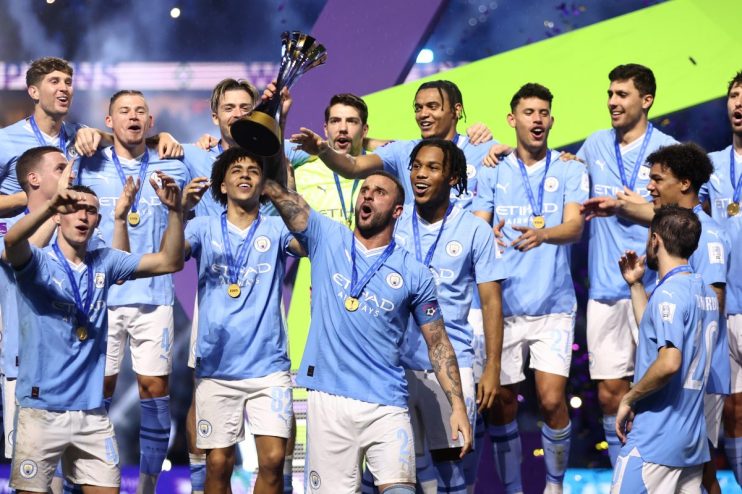
Fifa's expansion of the Club World Cup has increased fears about player burnout

Fresh concerns have been raised about player burnout ahead of next year’s Club World Cup after a new study found that top professional footballers typically spend 80 per cent of their time working. 

Drawing on data that it compiled for global players’ union Fifpro, independent consultancy Football Benchmark says that, for some individuals, the number can be as high as 86-87 per cent of time spent in a work setting.

This not only includes matches and training sessions for both club and national teams but also related travel and commercial commitments.

“As top players juggle club commitments, national team duties and other obligations, the lack of recovery time amplifies physical fatigue and mental burnout,” the report states. 

“This type of overload over a prolonged period leads to a domino effect of underperformance and heightened injury risk, ultimately impacting a player’s overall career prospects.”

Football Benchmark’s study cites data from the 2022-23 season to illustrate the extreme demands being placed on some professionals.

Bruno Fernandes played more than 70 games for Manchester United and Portugal, while Paris Saint-Germain defender Marquinhos had “insufficient” recovery time between two thirds of his matches. Due in part to representing Brazil, he travelled more than 55,000km on international flights and crossed time zones 30 times.

The demands on top players are expected to get even greater as competitions continue to expand. The Champions League is in the first year of a new format featuring 64 extra games, and the next men’s World Cup will increase in size by 50 per cent to 48 teams. 

Fifa, meanwhile, has revamped the Club World Cup from a seven-team affair into a 32-club tournament from next summer. The draw for the first edition of the competition, to be played in the US, was held on Thursday in Miami.  

Read more

Ferdinand, Crouch, Foster: How footballers have built media empires for the future

GettyImages 2252823665 might depict an important event or figure related to the latest business news.

Research by the Fifa-backed CIES Football Observatory earlier this year stated that only 0.31 per cent of players in 40 leading leagues played more than 50 games a year, and projected that their average minutes played would not rise despite competition expansions.

While it may only be the relatively few players at elite clubs and successful nations who face the biggest workloads, Football Benchmark argues that burnout among that group can still have a detrimental effect for the rest of the game. 

“Often players at the pinnacle of the game experience the most adverse effects. Yet, it is their performances that attract most fans and underpin the financial and commercial success of the industry,” it says.

The consultancy says that merely measuring appearances or minutes played is sufficient, and that a holistic analysis taking into account the primary activity of each day gives a clearer picture of the true workload being placed on players.

“The selected example provides a comprehensive overview of an elite player’s typical season from one of Europe’s ‘Big Five’ leagues,” its report states. “The player in question consistently manages both club and national team commitments and his schedule involves significant travel.

“The analysis results indicate that 80 per cent of the year is associated with ‘working time’, either for club or country. The remaining 20 per cent is left for private time that is spent entirely outside the football environment, allowing the player to recover.

“It is important to highlight that although this is just one example, it is representative of a large group of players who are involved in multiple international competitions and whose off-season breaks are often infringed upon by long summer tournaments. 

“In addition, our analysis have found several players who recorded working time percentages well above 80 per cent. In the current competition landscape, it is not unheard of that certain players spend 86-87 per cent of the year in a work setting and go 365 or more days without any off-season break.

“The long-term consequences of sustained high workload (‘excessive load’) must be considered by competition organisers when developing the match calendar of the future.”

Read more

Why HMRC is huge Premier League transfer window tax headache

Two jubilant soccer players in white England jerseys celebrate a goal on the field.

Share this article

  • Facebook
  • X
  • LinkedIn
  • WhatsApp
  • Email

Similarly tagged content:

Sections

  • Sport

Categories

  • Sport
  • Sport Business

People & Organisations

  • 2022 World Cup
  • CIES Football Observatory
  • Fifa Club World Cup
  • Football Benchmark
  • Marquinhos

Related Topics

  • Football
  • Premier League football
  • Sport business

Trending Articles

  • WPP slashes jobs as revenue continues to fall

  • Liverpool owners tipped to sell – but not to Amazon boss Bezos – by former CEO

  • Revolut founder’s wealth set to balloon amid talks of share award at $500bn valuation

  • Starling plans to ‘come out swinging’ in diversification bid

  • As it happened: Stocks rise despite new tensions in Strait of Hormuz; Oil price climbs

More from Morning Wire

  • Ferdinand, Crouch, Foster: How footballers have built media empires for the future

    Sport Business
    GettyImages 2252823665 might depict an important event or figure related to the latest business news.
  • Why HMRC is huge Premier League transfer window tax headache

    Sport Business
    Two jubilant soccer players in white England jerseys celebrate a goal on the field.
  • Gary Lineker forks out £10k to save England World Cup dream

    Sport Business
    Gary Lineker smiling in a dark suit, white shirt, and navy tie, wearing black-framed glasses.
  • Wimbledon: HMRC set to slap Sinner and Noskova with £1.6m tax bill

    Sport Business
    Getty Images logo on a sleek black background, symbolizing reliable sources for high-quality stock photography and media c...
  • Fifa accused of bullying in attempt to kill off multi-billion class action claim

    Sport Business
    Getty Images news-related image depicting a significant event or person, suitable for general news and business contexts.
  • Barry Hearn and Matchroom back Brentwood Town’s bid to reach National League

    Sport Business
    Business meeting with diverse professionals discussing strategy at a modern conference table with charts and laptops visible.
  • Fifa World Cup sell-off is a money-grab and faces defeat, says Uefa

    Sport Business
    Aleksander Ceferin speaking into a microphone and giving a thumbs-up, wearing a suit at a public event
  • Ben Stokes bombshell shows how power has swung to sport’s players and coaches

    Sport Business
    Business professionals discussing strategy in a modern office setting with laptops and documents on a wooden conference ta...
MorningWire

Independent European business, markets and political news for decision-makers.

Morning Briefing

Europe

  • Germany
  • France
  • Europe
  • UK & Ireland

Business

  • Markets
  • Banking
  • Technology
  • Energy
  • Property
  • Fintech

Editorial

  • Opinion
  • Editorial Policy
  • Corrections
  • Contact

Company

  • About Morning Wire
  • Privacy Policy
  • Terms of Use
  • Cookie Policy
© 2026 Morning Wire Ltd · Published by Morning Wire Media, Bahnhofstrasse 65, 8001 Zürich, Switzerland
Privacy · Terms · Cookies · Facebook