Torsten Bell: Who is the mastermind behind the 2025 Autumn Budget?

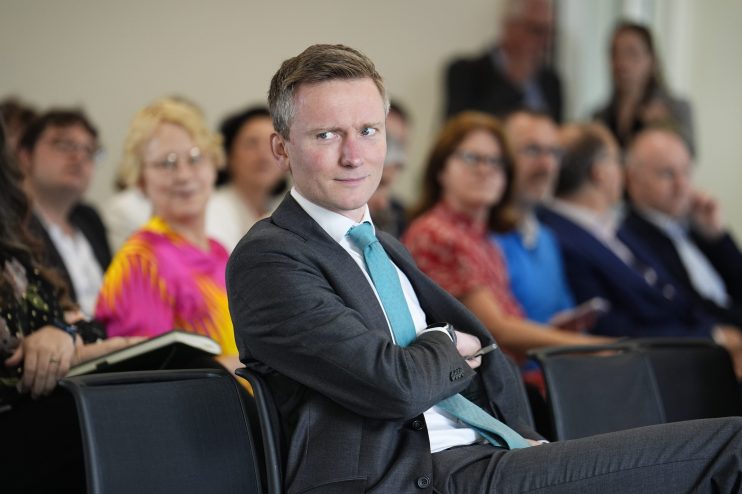
When parliamentary candidates were revealed ahead of last year’s elections, Torsten Bell was one of the better-known names on Labour’s list. With his glaringly wonkish CV and swaggering way of talking up esoteric economic policies, he seemed primed to one day leave his mark on a Budget.
According to the New Statesman, his opportunity to play a leading role in Budget preparations will come earlier than many expected. Bell will reportedly take on more responsibility for economic policy later this year, seven months after he was lobbed from the backbenches into a ministerial role overseeing pensions and some Treasury work.
Reports claiming the Treasury could make landlords pay national insurance on rental income have his fingerprints all over them.
Bell’s rise through the ranks shines a light on the wider Budget-led decisions being made in Westminster.
Keir Starmer is strengthening his squad of advisers in No 10, with new appointees set to provide more focused counsel on the nuances of fiscal policy-making. Darren Jones, who played a leading role in the weeks leading up to the Spending Review at as the Treasury’s chief secretary, has been made the chief secretary to the prime minister – a new role that will see him focus on policy delivery.
Minouche Shafik, the former deputy governor of the Bank of England and deputy managing director at the International Monetary Fund, has been appointed as Starmer’s chief economics adviser while Dan York Smith, a senior civil servant who led on welfare and taxation policy, will become his principal private secretary.
Jones’ promotion led to James Murray being appointed chief secretary to the Treasury and Dan Tomlinson, another MP with a background working with think tanks, becoming the tax minister.
But amid all the new economics-led voices now clattering across Downing Street, Bell’s stands out.
Chancellor Rachel Reeves sees Bell, who has led reforms in consolidating pension schemes into mega funds, as one of the “sharpest minds”, according to a source quoted in the New Statesman. Given his experience in tearing Tory Budgets apart on the radio and calling out the decline in living standards using abstruse data sets, you might consider him well-placed to understand how the public will react to a contentious Autumn Budget.
If taxes need to go up by as much as an estimated £50bn to fund a £190bn spending spree and plug shortfalls left by lower growth forecasts and welfare savings U-turns, then Reeves may well need the backing of someone who has long advocated in favour of radical tax rises.
This promotion brings Bell one step closer to taking full control of the Autumn Budget.
Experience with Autumn Budgets
Previously, he had limited sway over decisions. Serving as a special adviser to the late former Chancellor Alistair Darling and later Ed Miliband when he led the Labour Party, Bell likely made the case for controversial taxes to be hiked in private meetings. Miliband’s pitch to voters in 2015 included a pledge to hike income taxes for the highest earners over £150,000 as well as the introduction of extra levies on property and married couples.
As the chief executive of the left-wing Resolution Foundation, Bell was tasked with explaining the costs or benefits of Tory Budgets to a larger audience. He was also able to push for ideas to be adopted by the government. He took aim at the previous Conservative government’s handling of the public purse yet offered his endorsement of progressive policies, including the £70bn furlough scheme and tax cuts for younger workers.
But upon being elected as an MP, Labour’s opponents shared a list of tax hikes taken from a 2023 Resolution Foundation report as proof of what Bell would advocate for in government.
Titled ‘Ending Stagnation: A New Economic Strategy for Britain’, the report called on the government to stop making the tax burden “fall disproportionately on employees” and for benefits including the triple lock pension to be de-coupled from price growth.
It said taxes needed to be “better, not just higher” and claimed high inequality had turned the UK into a “stagnation nation”.
While proposals for further pension consolidation, a higher national minimum wage, greater public sector investment and strengthened workers’ rights have been rolled out by Labour after its first year in office, a number of recommendations remain up for grabs.
Among some of those policies mentioned in Bell’s report are aligning capital gains taxes closer to income tax, adding taxes on businesses and hitting pensioners with extra levies.
Torsten Bell’s ‘fairer’ tax grabs
Inheritance and pensions
- Inheritance tax “with fewer reliefs” for businesses and agricultural property to make it harder for tax to be “abused”
- End to “complicated” residence nil rate band on inheritance tax currently at the value of £175,000
- Significant reduction of £270,000 cap on tax-free lump sum on pensions. Bell said in 2019 that the tax-free lump sum should be capped at £40,000.
Investment
- Increase basic rate of tax on dividends from 8.75 per cent to 20 per cent while reducing the higher rates
- Reforming capital gains taxes to target gains above inflation but raise maximum rates to 37 per cent
- Increase capital gains tax rates for gains made on real estate and other assets to a range of between 40 and 53 per cent
- Charge capital gains taxes upon death or upon leaving the UK, which is widely referred to as an “exit tax”
- Charge national insurance on rental income
Other bright ideas
- Increasing the national insurance charged on self-employed earnings above the higher rate income tax threshold
- Adding a charge of 6p per mile e for electric vehicles in line with fuel duty, which could be “implemented via in-vehicle GPS-linked systems that councils can also deploy for smooth congestion charging”
- Lower VAT threshold from £85,000 to a level where “almost no business owner would consider the option of deliberately staying below that level of turnover”
- The Resolution Foundation said in another report in June 2023 that vehicle excise duty should be increased according to the weight of vehicles
- The same report also said fuel duty should be unfrozen and rise in line with inflation along with road duty
Bell might argue the bullet point list over-simplifies some of the more fundamental reforms that he wishes to make, which include a cut to stamp duty on people’s main homes and businesses plus a “carefully paced overhaul” of council tax.
He may also say his findings raise questions on whether wealth – rather than transactions – should be taxed. Bell appears to indicate that the UK should focus on addressing the imbalances between the generations, with ideas around tax incentives or other regulatory opportunities, such as planning reforms, targeted at newer companies, founders and younger workers given they have more potential to offer to the UK economy.
Love-hate relationship with the triple lock pension
Ultimately, the single policy against which Bell has railed the most prior to entering the House of Commons was replacing the triple lock pension, which allows the state pension to rise by a minimum of 2.5 per cent and a maximum of whichever is highest out of inflation or wage growth. In 2020, Bell said it was “increasingly inevitable” the triple lock would end.
The Resolution Foundation has said the state pension should be moved to a “smoothed earnings link” mechanism whereby benefits move in line with earnings over the medium term and offers it protection from short-term jumps in inflation or weak growth in wages.
Several other leading think tanks have also called time on the triple lock pension. The Office for Budget Responsibility (OBR) and the International Monetary Fund (IMF) have said the triple lock pension is becoming unaffordable due to the UK’s ageing population. OBR chiefs said in July that the triple lock pension had already cost three times more than originally predicted and blamed politicians for making promises it could not realistically keep given the state of the UK’s public finances.
And yet, as pensions minister, Bell celebrated “an extra £31bn every year to protect the triple lock”. Some interpreted his post on X as tongue-in-cheek, highlighting the exorbitant cost of the state pension while sticking to his new brief as a politician, instead of independent expert.
Despite his impulses, Bell will need to toe the government line as he helps with preparations for the Autumn Budget. No other party in Westminster has called for the triple lock pension to be scrapped. Even opposition leader Kemi Badenoch, who said she was the UK’s answer to Argentina’s pensions-cutting president Javier Milei, defended the triple lock as “Conservative policy”. Scrapping the triple lock pension remains a political landmine.
But some of the tax hikes supported by Bell in the past are not. The public may react well to targeting landlords or wealthy individuals leaving the UK, with the end of the non dom regime seen as one of Labour’s more popular policies, despite its financial cost. Increasing fuel duty or taxes on pensions and inheritance may well be less popular.
The bond market is watching
The greater risks are always the collateral hits to inflation and living standards. While taxing wealth may seem like a good idea in political terms, the collateral effects on inflation and growth are sure to emerge as the months go by. Both bond markets and industry groups are unlikely to be put at ease as they see extra complex taxes damage the UK’s chances of boosting investment.
The Treasury will also be cautious of how potential tax hikes reported in national media in the lead-up to the Autumn Budget rub off on leading economists in the City. The Resolution Foundation’s reaction will also be crucial after it contradicted Rachel Reeves in March when it claimed lower income households would be £500 worse off over the next five years.
Top ministers will also have to defend ideas they find uncomfortable. Bell, who struggled to defend the government’s own welfare reforms in a Newsnight interview before they were reversed, faces trouble if his economic utopia turns out to be a botch.