Tory policy is becoming a mess of contradictions

AS RECOVERY becomes entrenched, it is easy to forget the sense of urgency of those heady days in May 2010, when the Tory-Lib Dem coalition agreement was thrashed out. The backdrop of the Greek implosion brought broad consensus on the need for a credible medium-term plan to repair the public finances. The Conservatives who, right up until the crash, had foolishly signed up to Labour’s public expenditure plans, have since sought to portray themselves as undertaking a prudent long-term fiscal repair job – in contrast to the profligacy and gimmickry of Labour.
The truth doesn’t quite fit the narrative, of course. Headwinds in the form of an oil price shock, an impaired financial system, the Eurozone crisis, and tax-rise front-loaded fiscal consolidation all neutered growth-dependent tax revenues. This exposed the small scale of spending restraint. Over this Parliament, the deficit is likely to be closer to being halved (Labour’s aim under Alistair Darling) than almost entirely eliminated (George Osborne’s original intention).
Last week’s public finance figures suggest that, for 2013-14, UK borrowing will be broadly in line with the OBR’s forecast of £111.2bn. The outlook would have been worse under Darling’s plans, but much of the repair work has been “rolled” into the next Parliament, where tougher choices must be made if Osborne’s aim of closing the deficit without further net tax rises is to be realised.
Given this, you’d have thought the Tories would be doing everything possible to keep focus on the big fiscal and macro-economic challenges. If this is the intention, over recent weeks party discipline has gone haywire.
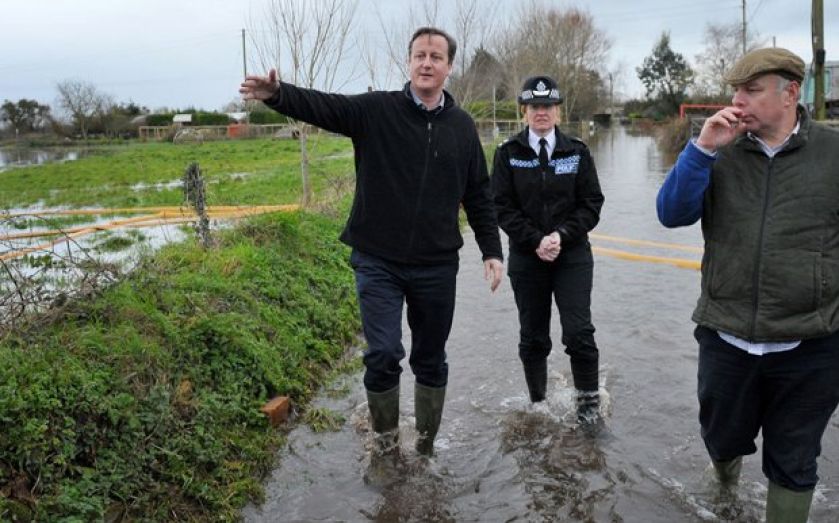
First, we saw David Cameron claim that “money was no object” in dealing with the floods. This may have been politically appealing, but this sort of linguistic sloppiness does much to undermine the government’s fiscally responsible message. If money is limitless in dealing with floods, why not in provision of benefits or the NHS? Cameron’s statement implies that there is no constraint on the government spending taxpayers’ money, but it also ignores a concept which economists call “opportunity cost” – when we spend money, we forego spending it on alternatives. The campaign to re-direct the aid budget to flood victims, whatever you think of it, at least recognises the inherent choices involved in government spending.
Over the weekend, the inconsistency got worse. We had the chancellor standing ready “with a chequebook to help the people of Ukraine rebuild their country”, seemingly without any declared caveats, conditions, or a declared limit. Worse, a newspaper intimated that the government was going to try to out-do Labour on state interventions in energy and water bills, housing, food costs, school transport and childcare to counter Labour attacks about a “cost of living crisis”. That prices in many of these industries are higher than they need be precisely because of misguided government interventions is ignored.
There are signs the Conservatives are slipping back into the mode they adopted in the pre-crisis “Age of Abundance”, as Andrew Tyrie MP has described it. As the economy grows, focus on dealing with the deficit is giving way to rash language on the availability of government funds, and the concept of personal responsibility replaced by new state interventions. The Tories seem to be forgetting that they will never be able to outbid Labour on state spending, but may well lose the confidence of those who want a fiscal repair job and fewer gimmicks.
Ryan Bourne is head of public policy at the Institute for Economic Affairs.