Tottenham Hotspur relegation: A black swan event the Premier League needs?

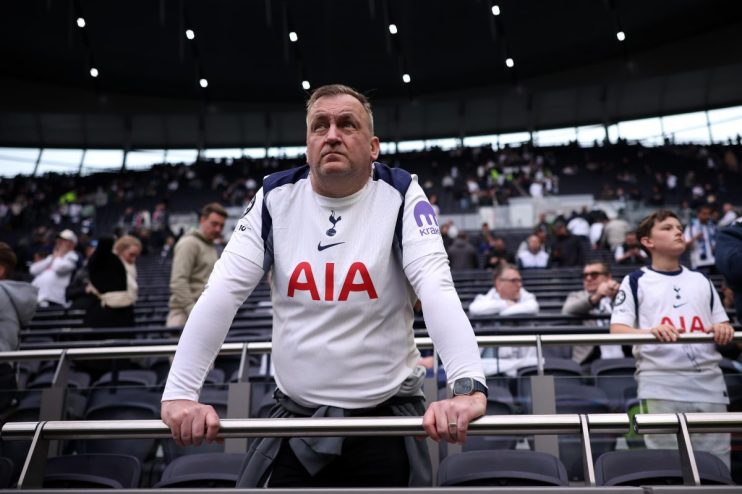
The Premier League trades on its unpredictability so the relegation of Spurs, one of its ever-present clubs, could offer a Leicester-like lift in a dull season, says Ed Warner.
Barnsley, Oldham Athletic, Bradford City, Swindon Town, Portsmouth. Just a few members of the not-so-exclusive club of 16 teams that Tottenham Hotspur fans will be desperate for their side to be barred from.
Each has been relegated from the Premier League exactly once in a competition that is now in its 34th season. Only two, Aston Villa and Bournemouth, have managed to regain top-flight status.
Thirty-three completed Premier League seasons equates to 99 relegations, shared between 43 different clubs – almost half of the total in the top four divisions. Just six teams have been ever-present since the league’s launch in 1992-93. Spurs are one; Arsenal, Chelsea, Everton, Liverpool and Manchester United make up the set.
Now, Tottenham enter the international break in a deep funk, just a point above the relegation zone. The club have spent the past few months as if they had the Marx Brothers at the helm. Harpo and Groucho in the boardroom and Zeppo paired with Chico on the touchline perhaps?
At the time of writing, the bookies’ odds equate to a 37 per cent chance of a Spurs relegation, compared to 43 per cent for West Ham – the side currently occupying 18th place in the table.
What price Premier League bosses, especially those charged with raising broadcast and sponsorship dollars, secretly hoping that their exclusive club of six ever-presents is reduced by one over the remaining eight rounds of matches – especially with the quality of football in the league going through a trough at present?
It is often said that the so-called Big Six clubs (the ever-presents plus Manchester City and minus Everton) quietly resent Leicester City’s Premier League title win. That underdog triumph is now 10 years in the past, but is still cited as evidence that any team’s ability to win the league is not simply theoretical.
This apparent competitiveness forms a key part of the league’s marketing narrative. That doesn’t mean it’s welcomed by the wealthiest clubs, however. For them, competitive appeal need go no further than competing for titles and Champions League qualifying places among themselves.
It may be that the single black swan event of Leicester’s 2015-16 season is all that the Premier League needs to sustain its marketing pitch. However, six titles for Manchester City, two for Liverpool and one for Chelsea in the nine completed seasons since does not speak to competitive breadth.
Indeed, in the last 22 seasons the Big Six have filled all of the top three places in the league – apart from Leicester’s interloper act.
Spurs have taken a top-three spot three times in the past 10 seasons, albeit those finishes will be fast fading in fans’ memories, the last being a third place way back in 2017-18.
How piquant then that the cockerels could prove to be the black swans that provide an injection of global interest to boost the Premier League’s brand.
Tottenham Hotspur’s wealthy counterparts might snicker. More likely they will shiver; “there but the grace of God” thoughts running through their heads in the still of the night.
Parachute payments distort competition in the Championship in favour of the relegated, but would hardly compensate for the loss of revenue for any club whose ambitions are built on continuous European competition and dreams of silverware (however often these are dashed).
Spurs certainly aren’t structured like the traditional yo-yo clubs, those who have experienced the most Premier League drops. Ponder for a moment the financial complexities of re-engineering a squad whose player contracts may not all have built-in relegation clauses – although Spurs’ commercial deals may not either.
Any club’s “bigness” might be a general perception, or perhaps (depending on the club) self-deception, on the part of those happy to bask in the assumed status. It does though tend to have a tangible foundation in the form of stadium capacity and hence revenue-generating potential.
Of course, you can’t just build a state-of-the-art facility and assume loyal fans/customers (take your pick as to how you view them, according to your leadership culture) will fill it repeatedly. Stadia are expanded to reflect actual demand and belief in its future growth.
The Tottenham Hotspur Stadium, seven years old now, is the second biggest in the Premier League and unarguably remains the finest overall. (Relegation rivals West Ham have the third largest, albeit with lesser operating costs but also far lower revenue-generating potential, given the limited facilities and the club’s tenant status).
If there was a simple, direct correlation between stadium size and sporting success then football wouldn’t be worth following. As it is, the grandeur of Tottenham’s stadium only adds to the apparent delight of broadcast editors who have cut repeatedly to shots of anguished Spurs supporters during recent matches, as well as drone footage of those departing early to trudge for the tube or seek a traffic-free drive home.
These fans will each have their own analysis of where it has all gone wrong over the past couple of years (remember, there was some writing on the wall with a 17th place finish last season and a managerial sacking in spite of Spurs’ Europa League triumph).
Does the blame lie with long-standing executive chairman Daniel Levy or those who ousted him in the autumn? With an executive team headed by a new chief executive previously at arch rivals Arsenal?
How should it be shared between the past three managers and their coaching staff? What blame should be laid at the door of the playing squad, and/or those who recruited them? Could the new stadium itself be a curse, an even greater burden of cost and expectation than the Emirates has proved for Arsenal?
And what of those fans who choose to boo or leave early, as if they’d bought a ticket for a pantomime rather than a sporting contest in which the extent of their loyalty forms a part of the narrative?
For the rest of us, the apportionment of blame simply doesn’t matter – unless we are seeking lessons for our own teams. What matters, in a very positive way, is that such close flirtation with relegation can happen at any club, even one which arrogantly chose to be part of the attempted European Super League.
The annual Premier League thriller must always have an uncertain ending. In the current season of dispiritingly clunky football, the value of that uncertainty and Spurs’s part in it is greater than ever.
Old dogs, new tricks?
Ben Stokes called for “some dog” from his team during their woeful Ashes tour over the winter. Now the England Test captain has welcomed the ECB’s [bold/foolhardy – delete to taste] decision to leave its top dogs in place through to Australia’s defence of the urn over here next summer.
The announcement this week from CEO Richard Gould majored on his “not football” observations about loyalty to leadership which Stokes reinforced on social media. Perhaps Gould had in mind Tottenham’s six permanent and three caretaker managers over the past five years.
“My old man was a football manager. Sacking was part of the job and it wasn’t necessarily the right thing.”
Richard Gould
I guess we’ll know whether Rob Key and Brendon McCullum really warrant the ECB board’s backing within the next three months, the Test series against New Zealand being finished by the end of June.
The ICC’s World Test Championship produces an idiosyncratic ranking. For what it’s worth, New Zealand are currently second in the world, England seventh. Time for those dogs to bark.
Ed Warner is chair of GB Wheelchair Rugby and writes his sport column at sportinc.substack.com