Trade and status: China weakens yuan to gain advantage

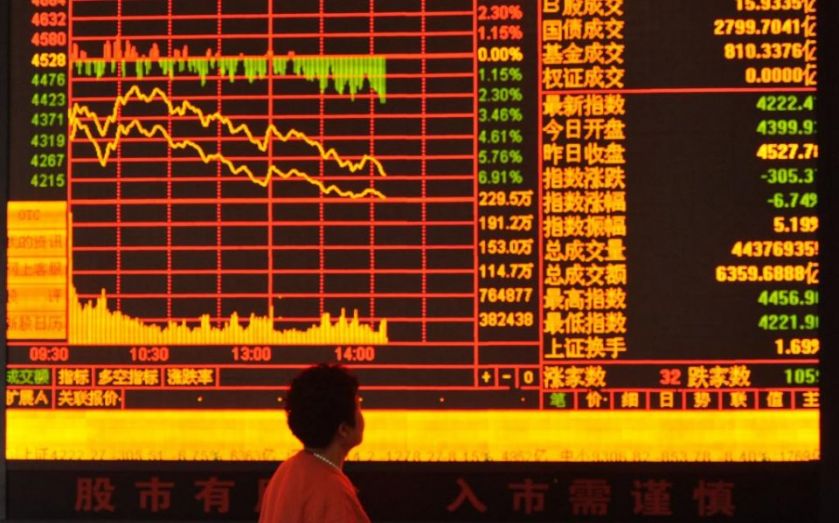
China plans to top the global hierarchy with its surprise move to devalue its currency
China shocked the world yesterday when it devalued the yuan by nearly 2 per cent against the dollar. The surprise move brings its currency to a three-year low against the greenback and should help revive exports.
The news filled headlines across the West – which is somewhat unusual because China’s secretive central bank keeps its currency under tight control, and has been known to intervene and manipulate its value. But this 2 per cent reduction was a surprise – and economists do not like to be caught off guard.
LATEST TWIST
It is also the latest twist to an unusual story that has been playing out in the centrally-planned, tightly controlled economy that has become increasingly wayward in recent years. All eyes have been on China lately as its stock markets, house prices and shadow banks have seemed out of control.
Of course, with China, it is difficult to ever gain a full picture of what is happening on the ground, but some evidence shows trade has been poor and the giant economy appears to be moving at an ever-slower pace.
But this devaluation – while surprising – could also have wide-ranging implications for a country hoping to gain the top spot in the global hierarchy. So what does devaluing the yuan mean, and how will it help China’s ambitions?
MONEY MATTERS
China’s currency has two names: “renminbi”, which is equivalent to “sterling”, and the “yuan”, which is a unit of renminbi and is like “pound”.
The value of renminbi is set by the People’s Bank of China every day, which decides on how much each yuan is worth. It likes to value the currency in relation to the US dollar, which is the world’s most dominant currency. As the dollar rises or falls in value, the yuan is moved in tandem.
The trouble is, the dollar has become particularly strong in the last year. As the Federal Reserve’s interest rate rise looms, investors have been interested in buying up more dollars, keeping demand high and its value strong.
Since the yuan keeps pace with the dollar, it too has strengthened and is now up 15 per cent over 12 months. This is an “extremely overvalued” level compared to other Asian currencies, says John Hardy of Saxo Bank.
For a country that relies on selling exports abroad, that puts it in a difficult position, and some experts had suggested it should devalue. “Although the People’s Bank of China was setting the rate, the international market said it should be much lower than that,” says David Page of Axa Investment Managers.
ECONOMY TROUBLES
Some experts have taken this devaluation as a sign that China is struggling to rev up its economy, which has been slowing.
The country has lurched from one crisis to the next. First, property prices rose dramatically, and observers suggested prices were unsustainably high. Authorities stepped in to calm the market, and attention then shifted to a burgeoning “shadow banking” crisis, as it emerged China’s banks had billions in risky off-balance sheet loans.
The government prevented an all-out disaster, but then trouble struck again in the form of a stock market bubble. Shanghai’s markets rose 170 per cent in the space of the year, and then fell spectacularly.
“These interventions have looked increasingly desperate and serve as a reminder that China should not be mistaken for a Western-style capitalist system,” says Jason Hollands at Tilney Bestinvest.
EXPORT PROBLEMS
Amid all of this, the strong currency has made exports seem expensive, so there has been less manufacturing happening.
“This surprise move came after several consecutive months of weak Chinese economic data from export markets and industrial production, and the rout in the stock market,” says Clifford Lau of Columbia Threadneedle.
Weakening the yuan should make exports more competitive, and make China a cheaper place to manufacture goods. “China seems to have had very few options left to regain its competitiveness and foster much-needed growth,” says Ben Seager-Scott of Tilney Bestinvest.
GLOBAL STATUS
However, it is well known that China has ambitions for its currency to rank among the elite and most-used currencies in the world.
One way of doing this is to have the yuan included in an important basket of currencies that the International Monetary Fund (IMF) keeps on reserve for countries to access in emergencies.
This basket is called the Special Drawing Rights (SDR) and the reserve currencies held in it are the US dollar, euro, sterling and Japanese yen. It is no secret China is hankering for inclusion, and the IMF will make a decision this autumn on whether to do so.
To be included, China needs to show a commitment to having a more normal, freely traded currency. Yesterday’s announcement also included some new rules which could be a step on the way.
Alongside setting the value of the yuan, the People’s Bank of China allows it to move 2 per cent up or down, depending on whether international investors are buying or selling it.
From now on, the Bank says it is going to take the previous day’s trading activity into account when it sets the daily value of the yuan. “This takes into account the International Monetary Fund’s recent report on the yuan… It said the currency’s shortcomings are that it lacks market input into the value,” says Page.
INVESTMENT IMPACT
The big question remains whether devaluing the yuan will have an impact on stock markets. For UK investors, most fund managers have little or nothing invested in yuan assets. So there will be no losses there. However, one positive could be rising profits for Chinese companies.
This would be some welcome good news for fund managers invested in Chinese stocks – which have taken a battering as the bubble burst.