Skip to content
Saturday 12 September 2026London --:--Frankfurt --:--Zurich --:--
NewslettersSearchEN · DE · FR
MorningWire

European business, markets and politics

FTSE 100
10,650.44
+0.39%
DAX
25,568.56
+0.82%
CAC 40
8,179.77
+0.78%
STOXX 50
6,325.13
+0.90%
  • Europe
  • Markets
  • Business
  • Economy
  • Regulation
  • Politics
  • Opinion
More
GermanyFranceEU InstitutionsCompetitionPublic AffairsBankingTechnologyEnergy
  • Germany
  • France
  • Europe
  • Markets
  • Business
  • Economy
  • Regulation
  • Politics
  • Opinion
  • DE
Wednesday 22 June 2022 6:00 am  |  Updated:  Tuesday 21 June 2022 5:30 pm

Transport for London’s haphazard funding model must now be made fit for the future

By: Nick Bowes

Add as a preferred source on Google
UK Daily Life 2022
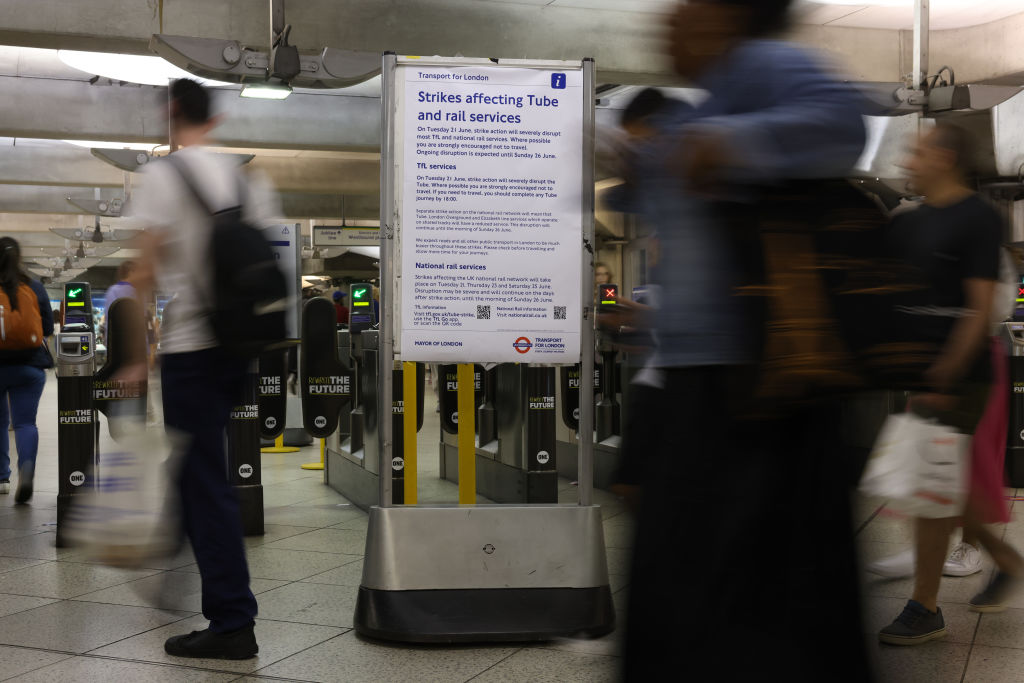
Pedestrians walk past a Transport for London notice inside Westminster Tube station on June 18, 2022 in London, England. Tube strikes are set to disrupt Transport for London (TfL) and national rail services on Tuesday 21st of June. (Photo by Hollie Adams/Getty Images)

SINCE the pandemic wiped out much of Transport for London’s fares income, London’s transport network has faced an existential crisis. The Elizabeth Line’s opening was a rare upbeat moment in a miserable couple of years of uncertainty for the city.

Lurching from one short-term bailout to the next – with highly charged negotiations taking place right up to the wire – has taken its toll on TfL. An inability to plan long-term is no way to run a major global city’s public transport system.  

It is a critical few days for TfL and City Hall as the current funding deal ends on Friday. The mood music isn’t encouraging, and previous negotiations warn us to expect another stopgap lump of funding to tide over TfL for a few weeks.

This funding is crucial to keep the buses and tubes running. Because TfL must run a balanced budget, government money is needed in the short-term to fill the gap between outgoings and income.  

City Hall and the Government fundamentally disagree over how long emergency funding is needed. Ministers demand TfL lives within its means, without subsidy. The Mayor argues without ongoing support for public transport, the city’s recovery and competitiveness is at risk.

Being the one with the money, the government holds the aces. Throughout this crisis, conditions imposed by them have seen fares increase, the scope of concessionary travel reduced and investment slashed. Might service cuts and a weakening of terms and conditions for TfL employees be next on the list?

This is certainly the fear of the unions, provoking them to strike this week. But the impact of such strikes are much diminished now many know working from home is possible.

Furthermore, the unions risk playing into the Treasury’s hands. The government is reported to be modelling a future transport system based on 80 per cent of pre-pandemic passenger numbers. If strikes halt the steady week by week increase in numbers of commuters using London’s buses and tubes, the Treasury could cite this as even more evidence to justify shrinking investment in the transport network.

Since the pandemic, it’s been a huge job just keeping buses and tubes running. But how to fund the city’s major capital programme remains unclear. TfL argues it needs government funding for basic upkeep of an ageing system, the rolling programme of upgrades and increased capacity like the Bakerloo Line extension. The government is warning there’s little prospect of money forthcoming – investment must come from within TfL’s own income.

This must surely be a moment to fundamentally reassess how London funds public transport by giving it the freedom to raise more of its own money. There’s an economic argument for this – London knows better than Whitehall what the city needs. Taxes can be better tailored to suit the city’s circumstances, and by strengthening the accountability of the Mayor to the city’s voters, there’s a democratic case in favour too. Finally, the government ought to see the political advantages.

First, it means ministers are less likely to get the blame for when things go wrong – it wouldn’t be so easy for the Mayor to point the finger at the government. And second – it’d end the wrath ministers face from politicians in the north and Midlands when billions are handed over to London.

Read more

Sadiq Khan urged to end London’s e-bike ‘patchwork’

Man in glasses and beard riding a green rental e-bike on a city street with blurred background of buildings and people.

Share this article

  • Facebook
  • X
  • LinkedIn
  • WhatsApp
  • Email

Similarly tagged content:

Sections

  • Opinion

Categories

  • Opinion

Trending Articles

  • Serie A won’t catch the Premier League by selling its rights better

  • Last Night, a Star-studded Evening Celebrating Moncler’s Fifth Avenue Flagship Ushered in a New Chapter in the Brand’s Enduring Love Story With New York

  • Crystal Palace agree deal with HSBC that paves way for new training ground

  • Lotus, Porsche and Corvette: the best sports cars to buy in 2026

  • Claridge’s swings to £10m loss as luxury hotel warns on ‘adverse impact’ of tax hikes

More from Morning Wire

  • Sadiq Khan urged to end London’s e-bike ‘patchwork’

    London
    Man in glasses and beard riding a green rental e-bike on a city street with blurred background of buildings and people.
  • A global tram renaissance is underway. Why isn’t London jumping on board?

    Opinion
    London tram 1925 with Last Tram Week sign in front of the Houses of Parliament and Big Ben, 1952.
  • Which is the smelliest Tube line?

    Opinion
    Passenger wearing a blue surgical mask and coat on a London Underground train.
  • Burnham’s devolution drive could ‘push 90,000 jobs out of London’

    Economics
    In 2022, rolling Tube strikes led to massive queues for crowded buses. (Photo by Chris J Ratcliffe/Getty Images)
  • Hammersmith Bridge is a test for Burnham’s place-based growth

    Opinion
    Hammersmith Bridge closed in 2021 with fencing, banners, and traffic cones blocking access to the walkway.
  • Trainline hits out at tube strikes and fare freeze as growth stalls

    Transport & Infrastructure
    Rumours of a rival state-owned ticket operator sent Trainline's shares plummeting at certain points last year.
  • Wizz Air profit wiped out by rising fuel prices

    Markets
    The CEO of Wizz Air received a huge bonus in 2024.
  • Heathrow overtaken by Istanbul as Europe’s busiest airport

    Transport & Infrastructure
    Commercial airplane landing at Heathrow Airport, seen from behind, with a prominent Heathrow sign below.
MorningWire

Independent European business, markets and political news for decision-makers.

Morning Briefing

Europe

  • Germany
  • France
  • EU Institutions
  • Europe

Business

  • Markets
  • Business
  • Economy
  • Regulation
  • Competition
  • Public Affairs

Editorial

  • Opinion
  • Editorial Policy
  • Corrections
  • Contact

Company

  • About Morning Wire
  • Privacy Policy
  • Terms of Use
  • Cookie Policy
© 2026 Morning Wire Ltd · Published by Morning Wire Media, Bahnhofstrasse 65, 8001 Zürich, Switzerland
Privacy · Terms · Cookies · Facebook