Skip to content
Friday 28 August 2026London --:--Frankfurt --:--Zurich --:--
NewslettersSearchEN · DE · FR
MorningWire

European business, markets and politics

FTSE 100
10,814.23
+0.20%
DAX
26,548.47
+0.69%
CAC 40
8,410.74
+1.09%
STOXX 50
6,478.39
+0.84%
  • Europe
  • Markets
  • Business
  • Economy
  • Regulation
  • Politics
  • Opinion
More
GermanyFranceEU InstitutionsCompetitionPublic AffairsBankingTechnologyEnergy
  • Germany
  • France
  • Europe
  • Markets
  • Business
  • Economy
  • Regulation
  • Politics
  • Opinion
  • DE
Wednesday 03 February 2016 11:39 am

Tube strike February 2016: City firms must adopt an instinctual reaction to ensure it’s business as usual, even if the London Underground stops running

By: Catherine Neilan

Add as a preferred source on Google

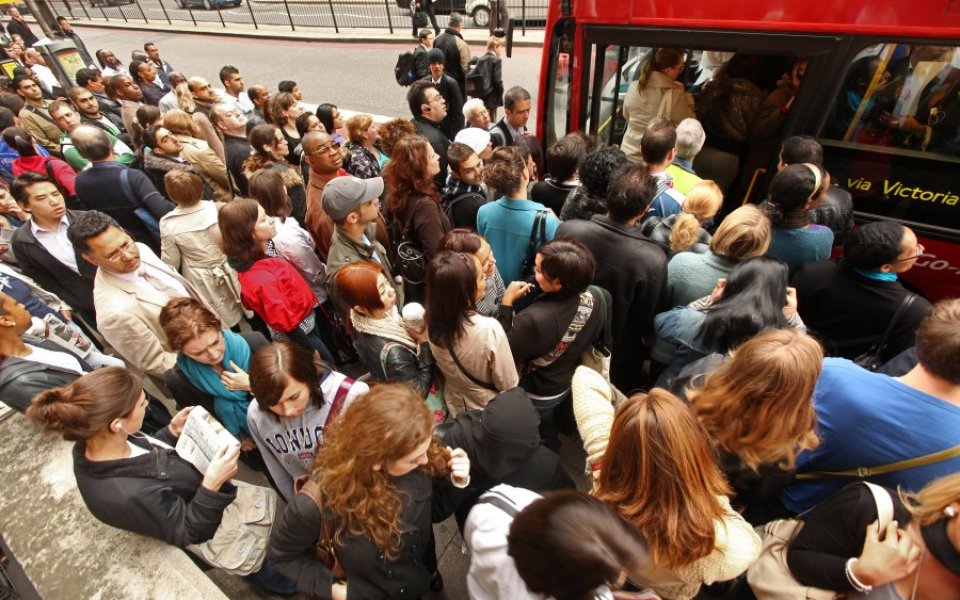
After a disruption in the summer, where industrial action from RMT derailed commuters and brought the capital to a near stand-still, we are once again bracing ourselves for further Tube strikes.

The London Chamber of Commerce (LCC) estimates that the London Underground strikes cost the capital £48m each day; however it’s not just an organisation’s bottom line at stake.

With customer expectations continuing to rise, and many now expecting a constant, 24/7 service from businesses, any interruption or delay can prove especially costly and leave a business at risk of losing the trust of its customers and the reputation of its brand. This is particularly true in the financial service industry, in which speed of response and constant availability are critical.

Read more: There's going to be a 48-hour Tube strike from 6 February

A central part of the UK’s – and indeed the world’s – economic landscape, being brought to its knees by public transport, or any other form of disruption, is simply unacceptable. Be it flooding, snow or even technology failures, organisations in the City must ensure they remain ‘business as usual’.

It is vital to have a solid Business Continuity Management (BCM) plan in place. This is more than a certificate pinned on a wall. An effective BCM plan should be tested and rehearsed to the point where it becomes intuitive; everyone across the business needs to know what is expected of them, and what their role and responsibilities are when disruption or crisis occurs. As circumstance change, so should the plan.

Take the fire brigade for example: no two incidents a fire officer comes across are the same, but they are able to respond to each incident by applying the extensive training and education they have received. It is this instinctive principle that businesses should aim for when it comes to their approach to continuity and recovery.

Secondly, organisations need to look to develop new working practices. In 2016, is it still necessary for employees to waste hours struggling through crowds and cancelled trains to reach the office? The adoption of cloud computing and other technologies is critical in unlocking employee productivity regardless of time or place. If the workforce can access business critical information securely from any device or location this would reduce the impact of any disruption.

With the first of the planned strikes set to go ahead next Wednesday, London’s businesses must begin to prepare.

This means having in place a clear continuity plan: one that makes the most of the technology solutions available to ensure that day to day operations run smoothly – even if the Tubes don’t.

Share this article

  • Facebook
  • X
  • LinkedIn
  • WhatsApp
  • Email

Similarly tagged content:

Sections

  • News

Categories

  • Business
  • Transport & Infrastructure

Trending Articles

  • Pensioners to hand over bank statements in government benefits crackdown

  • Jamie Carragher: HMRC petitions for Sky Sports star to be declared bankrupt

  • Brewdog founder James Watt hits out at ‘total silence’ over new venture

  • Lloyds Bank and Halifax users unable to use app in latest outage

  • Economists urge Bank of England to halt bond sales as borrowing costs climb

More from Morning Wire

  • Which is the smelliest Tube line?

    Opinion
    Passenger wearing a blue surgical mask and coat on a London Underground train.
  • Burnham’s devolution drive could ‘push 90,000 jobs out of London’

    Economics
    In 2022, rolling Tube strikes led to massive queues for crowded buses. (Photo by Chris J Ratcliffe/Getty Images)
  • Point2 Completes $136M Series B Funding with Arm, LB Investment, and Maverick Silicon

    Business Wire
  • Trump suspends strikes amid new peace hopes

    Politics
    Donald Trump speaking at press conference podium, addressing media with serious expression, American flags in background
  • The BBC shouldn’t push Londoners to accept antisocial phone behaviour 

    Opinion
    Passengers inside a graffiti-covered London Underground train car, some looking at phones, others observing the interior.
  • Doctors union tops up £1m reserve pot for strikes

    Healthcare
    GettyImages 2246649047: Business professionals discussing strategy at a conference table, highlighting teamwork and collab...
  • Oil price falls but Trump and Iran clash on negotiations claim

    Markets
    Donald Trump smiling in a blue suit and tie with an American flag pin, US flag in background
  • Ordnance Survey revenue jumps as map maker goes digital

    Markets
    Ordnance Survey has revealed that an increase in demand for its data from financial services firms has helped its revenue near the £200m mark.
MorningWire

Independent European business, markets and political news for decision-makers.

Morning Briefing

Europe

  • Germany
  • France
  • EU Institutions
  • Europe

Business

  • Markets
  • Business
  • Economy
  • Regulation
  • Competition
  • Public Affairs

Editorial

  • Opinion
  • Editorial Policy
  • Corrections
  • Contact

Company

  • About Morning Wire
  • Privacy Policy
  • Terms of Use
  • Cookie Policy
© 2026 Morning Wire Ltd · Published by Morning Wire Media, Bahnhofstrasse 65, 8001 Zürich, Switzerland
Privacy · Terms · Cookies · Facebook