Uber’s robotaxi launch and the end of the chatty driver

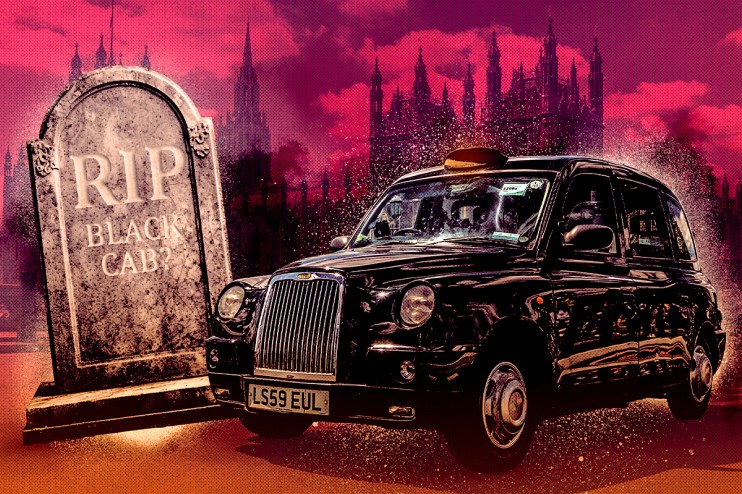
There is a weird kind of intimacy in the back of a London black cab, or in a San Francisco Uber.
It’s the shared silence, the occasional grumble about the traffic on Oxford Street, or the often unsolicited life advice from a driver named Gary.
But at this year’s annual CES conference, the annual consumer trade show hosted in Las Vegas, taxi hailing giant Uber made it clear: Gary is being forced to retire.
And in his place is a six-passenger electric SUV with a glowing ‘halo’, and the precision of an AI supercomputer.
Uber’s grand reveal on Monday was its custom robotaxi, a collaboration with California-born Lucid Motors and Nuro, powered by Nvidia’s silicon.
The move is a declaration of intent. By stripping away the steering wheel, as well as the human element, Uber is finally attempting to solve its labour problem.
A lounge on wheels
The vehicle, heavily based on the Lucid Gravity platform, is a far cry from the battered hatchbacks of Uber’s early days. It is, essentially, a mobile lounge of sorts.
Inside, the experience is ‘passenger-first’, claims the firm. Uber has designed a cabin where screens replace the rearview mirror, allowing its riders to customise their journeys – from seat heaters, to a ‘quiet mode’ (that would make even the most stoic London commuter weep with joy).
The exterior features a ‘halo’ sensor, not unlike Waymo’s famous roof-mounted pod, that uses light to assess pedestrian movement.
Waymo paves the way
To understand where Uber is going, one has to look at where its rival, Waymo, has already landed.
I recently hailed a Waymo in its birthplace, San Fransisco, and the experience was surprisingly smooth, albeit slightly unnerving.
There is a slight dystopian quality to watching a steering wheel spin itself, while the seatbelt clicks over an empty seat.
My trip cost $13.43, roughly 28 per cent more than a human-driven Uber, but what you buy is a completely different experience.
Waymo managed to handle the city’s hills with patience, navigating almost too slowly, as it yielded to erratic jaywalkers with impressive precision.
It’s the introvert’s ultimate dream. No ‘where are you from?’, no political rants, juist a digital display tracking its surroundings like a high-stakes video game.
But the road to autonomy is rarely a straight line. Just last month, a power outage in San Francisco left a fleet of Waymos idling in the same junction, hazard lights blinking, while human drivers circled around them.
This led to a city-wide gridlock, pointing to how dependent on the vehicles are on functioning infrastructure.
It was a reminder that these cars are geniuses until the grid goes down. And in those moments, you’d give anything for Gary to navigate a four way stop without calling customer support for permission.
The London test
This battleground is now shifting across the pond.
Waymo has already begun laying the groundwork for a London launch this year, partnering with Jaguar Land Rover.
Not to be outdone, Uber is hedging its bets by partnering with the homegrown UK titan Wayve.
And the feat may prove to be harder for Londoners, where wide streets and unpredictable roundabouts dominate the capital.
If AI can handle a rainy commuter traffic in the City without a breakdown, then – and only then – will we know the tech has truly landed.
Efficiency vs human cost
Uber’s goal is to scale to 100,000 robotaxis by 2027.
For investors, it’s a promise that promises to finally turn a consistent profit. But for drivers, it’s looming, mounting pressure.
While the robot is cleaner, arguable safer (Waymo claimed 85 per cent fewer injuries happen than with human drivers), and doesn’t expect a tip, it lacks the local knowledge.
You can’t ask Lucid Gravity for the best spot in Soho, or have a random, sometimes life affirming 10 minute chat with a bot. Most importantly, a bot can’t reason in times of crisis, if the algorithm goes dark.
The future of ride-hailing is sleek and efficient. But, as I hoped out of my Waymo ride I realised that while I don’t miss the traffic stress, I did – just a bit – miss the Garys of the world.