Skip to content
Wednesday 12 August 2026London --:--Frankfurt --:--Zurich --:--
NewslettersSearchEN · DE
MorningWire

European business, markets and politics

FTSE 100
10,833.15
-0.10%
DAX
26,331.07
-0.23%
CAC 40
8,674.94
-0.46%
STOXX 50
6,533.99
-0.26%
  • Europe
  • Markets
  • Business
  • Economy
  • Technology
  • Politics
  • Opinion
More
GermanyFranceBankingAIEnergyFintechPropertyCapital Markets
  • Germany
  • France
  • Europe
  • Markets
  • Business
  • Economy
  • Technology
  • Politics
  • Opinion
  • DE
Thursday 28 March 2024 12:00 am  |  Updated:  Wednesday 27 March 2024 3:05 pm

Why UK consumers had to foot a £7bn (and-growing) gas bill for National Grid

By: Rhodri Morgan

Add as a preferred source on Google
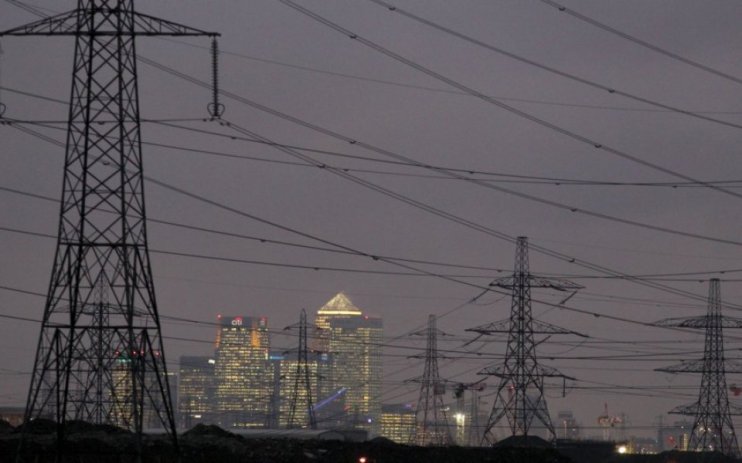
In 2023 alone, balancing the grid cost billpayers £2.85bn, equivalent to every electricity consumer in Britain paying an extra £80 per year.

The cost of balancing Britain’s National Grid has leapt 55 per cent in the last two years, according to research by a leading energy body.

Research conducted by the Nuclear Industry Association (NIA) and shared exclusively with City A.M, show that in 2022 and 2023, the National Grid Electricity Systems Operator (ESO) spent £7bn of consumer money on gas to fill in when renewable energy sources were not meeting demand.

This is has more than doubled from the combined £3bn spent through 2019 and 2020.

In 2023 alone, balancing the grid cost billpayers £2.85bn, equivalent to every electricity consumer in Britain, including households and businesses, paying an extra £80 per year.

Since electricity cannot be stored, National Grid must pay to either bring on or turn off electricity generation to keep supply and demand in balance at all times.

The more unpredictable sources of generation are, the more difficult the task becomes.

The NIA said that the soaring costs are a consequence of a shrinking baseload capacity given that nuclear stations retire without replacement, coupled with a reliance on expensive gas to fill the gaps in electricity generation.

In comparison to renewable sources such as solar and wind that only power the grid when the sun shines and the wind blows, nuclear energy is comparable to gas in providing a reliable baseload energy source that cannot as yet be sourced from nascent battery storage facilities.

Read more

Energy minister says AI must ‘bring down bills’ as data centres squeeze the grid

National Grid has raised billions from investors for the energy transition

Indeed the NIA estimated that nuclear has saved the UK over 2.3bn tonnes of carbon emissions, more than any other source.

Furthermore, government guidance suggests that a nuclear project would likely “at most add a few pounds to typical consumer bills during this Parliament and on average less than £1 per month during the full construction phase of the project.”

Currently, the UK has five generating nuclear power stations, providing around 14 per cent of the country’s electricity from 5.9 GW of capacity and last year was the lowest amount of National Grid electricity generated from nuclear in 40 years.

All but one (Sizewell B) are currently scheduled to come offline by 2030 and major projects Sizewell C and Hinkley Point C are mired in multi-year delays and sky-rocketing project costs.

Tom Greatrex, chief executive of the Nuclear Industry Association, said: “These costs are the price of the UK not investing in nuclear power, but if we ramp up nuclear at scale and at pace to the levels needed for energy security and net zero then we can avoid having to rely on expensive fossil gas to fill gaps in generation.

“For that we need to act at pace and at scale with a new fleet of large stations and SMRs to provide stable, predictable, clean power alongside renewables.”

The UK released a nuclear sector roadmap in January of this year, outlining programmes to bring on the development of small module reactors (SMRs) as well as another major Hinkley-sized project, a developer for which is yet to be confirmed.

Elsewhere, the Grid last week revealed a £60bn plan to overhaul the UK’s electricity system, underpinned by hugely ambitious offshore wind project targets.

Read more

Grid delays force Starmer-backed AI data centre to seek alternative power

Sir Keir Starmer's government has prioritised investment data centres as a major pillar of its plans to boost economic growth.

Share this article

  • Facebook
  • X
  • LinkedIn
  • WhatsApp
  • Email

Similarly tagged content:

Sections

  • News

Categories

  • Business
  • Energy

People & Organisations

  • National Grid

Related Topics

  • Hinkley Point C nuclear power station
  • National Grid
  • nuclear power

Trending Articles

  • Five-star Mayfair hotel hit with HMRC winding-up petition

  • Nottingham Forest owner Marinakis sues Crystal Palace for defamation

  • Back to basics: Sainsbury’s gradual retreat from the British high street

  • It’s not just Jason Arday, most of sociology is a scam

  • Hargreaves Lansdown orders staff back to office

More from Morning Wire

  • Energy minister says AI must ‘bring down bills’ as data centres squeeze the grid

    Tech
    National Grid has raised billions from investors for the energy transition
  • Grid delays force Starmer-backed AI data centre to seek alternative power

    Tech
    Sir Keir Starmer's government has prioritised investment data centres as a major pillar of its plans to boost economic growth.
  • Grid operator issues fresh heatwave warning over power supplies

    Energy
    Air conditioning vents in a grid pattern, illustrating cooling solutions during a heatwave
  • Energy operator ‘flying blind’ as net zero push threatens hiked bills and blackouts

    Energy
    Energy prices are high due to a range of factors including volatile gas prices and high net zero levies.
  • Ofgem targets speculative AI data centres to free up Britain’s energy grid

    Tech
    2024 was a transformational year for GlobalData.
  • Europe has made a ‘major mistake’ on slow electrification, IEA chief warns 

    Energy
    UK industrial electricity prices are the highest in the G7 and 46 per cent above the average of the International Energy Agency.
  • Ofgem data centre crackdown risks ‘driving AI investors away’ from UK

    Tech
    Sir Keir Starmer's government has prioritised investment data centres as a major pillar of its plans to boost economic growth.
  • Energy discount scheme for homes near new pylons branded ‘bribe’ by Reform

    Energy
    Pylons standing tall against a clear sky following Engies acquisition of UK Power Networks, symbolizing energy sector growth.
MorningWire

Independent European business, markets and political news for decision-makers.

Morning Briefing

Europe

  • Germany
  • France
  • Europe
  • UK & Ireland

Business

  • Markets
  • Banking
  • Technology
  • Energy
  • Property
  • Fintech

Editorial

  • Opinion
  • Editorial Policy
  • Corrections
  • Contact

Company

  • About Morning Wire
  • Privacy Policy
  • Terms of Use
  • Cookie Policy
© 2026 Morning Wire Ltd · Published by Morning Wire Media, Bahnhofstrasse 65, 8001 Zürich, Switzerland
Privacy · Terms · Cookies · Facebook