Skip to content
Tuesday 25 August 2026London --:--Frankfurt --:--Zurich --:--
NewslettersSearchEN · DE · FR
MorningWire

European business, markets and politics

FTSE 100
10,854.32
+0.35%
DAX
26,106.60
0.00%
CAC 40
8,453.01
0.00%
STOXX 50
6,447.98
0.00%
  • Europe
  • Markets
  • Business
  • Economy
  • Regulation
  • Politics
  • Opinion
More
GermanyFranceEU InstitutionsCompetitionPublic AffairsBankingTechnologyEnergy
  • Germany
  • France
  • Europe
  • Markets
  • Business
  • Economy
  • Regulation
  • Politics
  • Opinion
  • DE
Wednesday 21 June 2023 7:49 am  |  Updated:  Wednesday 21 June 2023 4:06 pm

UK debt pile tops size of entire economy for first time since 1960s
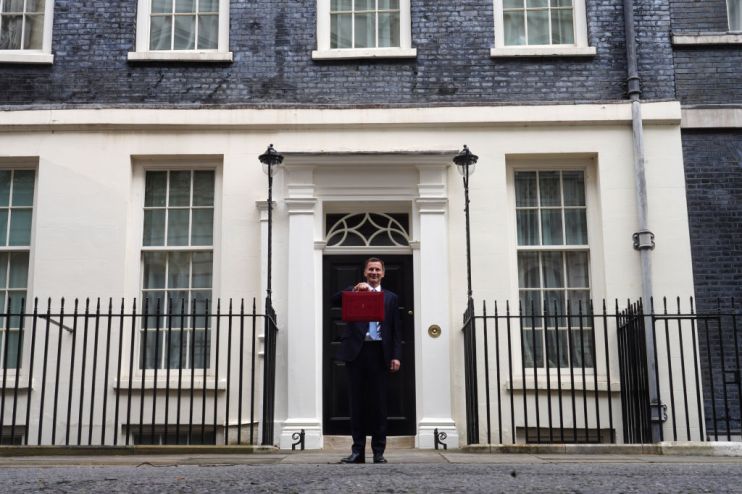
Chancellor Jeremy Hunt will take centre stage tomorrow when he delivers the Autumn Statement but investors are likely to pay just as much attention to the Office for Budget Responsibility (OBR).

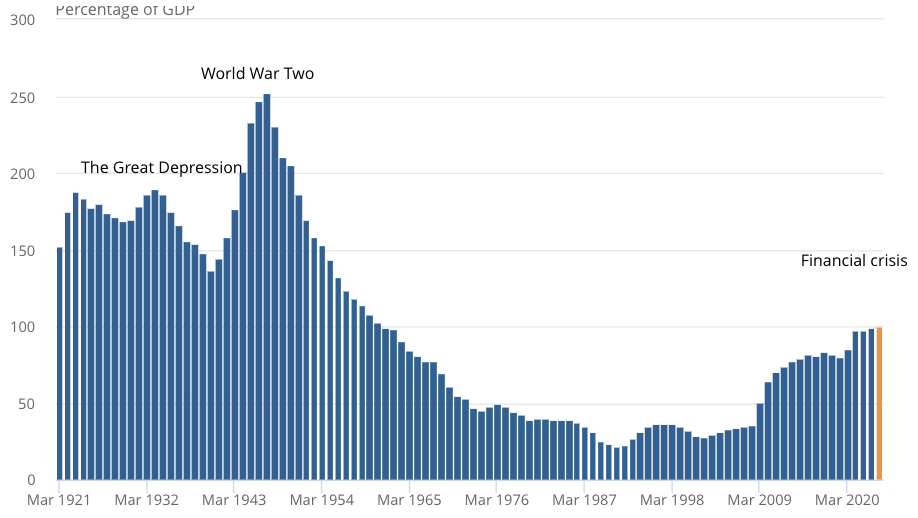
Britain’s debt stock has swelled to larger than the size of its economy for the first time since March 1961, pushed higher by the government helping families with their energy bills, new numbers out today show.

The UK’s over £2.5 trillion debt pile represents 100.1 per cent of the value of its gross domestic product, according to official figures from the Office for National Statistics (ONS).

The debt-to-GDP ratio – a measure of the strength of a country’s public balance sheet – has been pushed higher by a series of shocks that have prompted the government to raise spending to marshal the economy.

Banking turmoil during the 2008 global financial crisis, Brexit, the Covid-19 pandemic and the energy price shock after Russia’s invasion of Ukraine have raised government borrowing.

Pandemic help including the furlough scheme, vaccine programme and household income support measures all lifted government spending at a time the economy was struggling.

ONS experts calculated that May’s £20bn borrowing total was the second highest record for that month since data started. It was slightly below the City’s expectations.

UK’s debt-to-GDP ratio has been rising quickly since 2008
Source: ONS

Last month’s debt increase means Chancellor Jeremy Hunt is on course to top the Office for Budget Responsibility’s (OBR) borrowing forecast. Borrowing has reached £42.9bn so far this financial year, £2.1bn higher than the OBR’s projections.

Chancellor Jeremy Hunt said: “It would be manifestly unfair to leave future generations with a tab they cannot repay. That’s why we have taken difficult but necessary decisions to balance the books in order to halve inflation this year, grow the economy and reduce debt.”

At the March budget, the OBR judged Hunt to have the slimmest headroom against his fiscal targets of any Chancellor since the organisation was created in 2010.

However, the ONS often revises its public finances estimates. Stronger than expected economic growth would also aid the public finances.

Read more

US bond market jitters spark UK economy recession warning

Donald Trump delivering a speech at a podium during a formal event, emphasizing key points to an attentive audience.

When the amount of cash a government collects in taxes falls short of its spending, it runs a budget deficit. It plugs the gap by borrowing money from investors.

Since last autumn, the government has capped typical annual household energy bills at £2,500. The Treasury has been paying the difference between what gas and electricity have to pay to source energy on wholesale and what they can charge customers.

That support package will end this summer. Rising benefit payments have also pushed up borrowing.

Britain’s sluggish economic performance since the 2008 financial crisis has knocked tax revenues, while an ageing and growingly sicker population has raised health spending, putting upward pressure on the deficit.

Rapidly rising prices have also boosted the amount of money the government has to repay investors who have hoovered up UK debt. A large chunk of the country’s debt stock is tied to the retail price index, an old measure of inflation, which has surged over the last year and a half.

Britain’s interest bill came in at £7.7bn last month, lower than May 2022’s £7.9bn figure.

Separate ONS numbers out this morning showed inflation held steady at 8.7 per cent in May, beating the City’s forecast of a drop to 8.4 per cent.

While inflation is still tipped to fall over the next 12 months, it is on track to outstrip the OBR’s calculations, eroding the Chancellor’s room for tax cuts.

“The sharp deterioration in the outlook for debt interest payments over the last month suggests that the Chancellor will not have scope to cut taxes before the next general election, which must be held by January 2025,” Samuel Tombs, chief UK economist at consultancy Pantheon Macroeconomics, said.

“Indeed, we estimate that the OBR would revise up its forecast for debt interest payments by about £39bn in 2024/25, and about £17bn in five years’ time,” he added.

Read more

UK debt ‘hits £3 trillion’ milestone

Houses of Parliament in Westminster showcasing historic architecture under a clear sky, central to UK government and politics

Share this article

  • Facebook
  • X
  • LinkedIn
  • WhatsApp
  • Email

Similarly tagged content:

Sections

  • Markets & Economics
  • News

Categories

  • Economics

Trending Articles

  • Budget 2026: Which taxes will Burnham and Healey hike?

  • An overly complicated tax system is holding the UK back

  • Top business group urges Healey to cut NICs to ‘solve Neets crisis’ 

  • Aggreko Announces Filing of Registration Statement for Proposed Initial Public Offering

  • KPMG seeks financial support from parent group in wake of audit scandal

More from Morning Wire

  • US bond market jitters spark UK economy recession warning

    Economics
    Donald Trump delivering a speech at a podium during a formal event, emphasizing key points to an attentive audience.
  • UK debt ‘hits £3 trillion’ milestone

    Economics
    Houses of Parliament in Westminster showcasing historic architecture under a clear sky, central to UK government and politics
  • Can debt-ridden Morrisons become a Big Four supermarket again?

    Retail
    Green Instacart shopping cart outside a modern Morrisons supermarket entrance with large glass windows
  • Morrisons pledges to slash prices as price war intensifies

    Retail
    Shopper holding a basket filled with Morrisons groceries, including tortilla chips, bread, and flour, next to an Unbeatabl...
  • Government debt repayment ‘could rise to half’ of total taxes

    Economics
    OBR chiefs told the Treasury Select Committee that a higher tax burden could stifle growth.
  • Asda credit card firm Jaja faces 15 per cent loan interest as debt pile swells

    Fintech
    ASDA storefront exterior showcasing the latest promotions and branding in a bustling retail environment
  • Healey oversees unexpected rise in borrowing in first month as Chancellor 

    Economics
    Man in suit and red tie speaking at a podium to an audience in a modern building.
  • Andy Burnham is on course to rack up the second highest debt interest bill on record

    Opinion
    UK National Debt Clock showing £3 trillion, with Big Ben and the Union Jack in the background.
MorningWire

Independent European business, markets and political news for decision-makers.

Morning Briefing

Europe

  • Germany
  • France
  • EU Institutions
  • Europe

Business

  • Markets
  • Business
  • Economy
  • Regulation
  • Competition
  • Public Affairs

Editorial

  • Opinion
  • Editorial Policy
  • Corrections
  • Contact

Company

  • About Morning Wire
  • Privacy Policy
  • Terms of Use
  • Cookie Policy
© 2026 Morning Wire Ltd · Published by Morning Wire Media, Bahnhofstrasse 65, 8001 Zürich, Switzerland
Privacy · Terms · Cookies · Facebook