Skip to content
Saturday 8 August 2026London --:--Frankfurt --:--Zurich --:--
NewslettersSearchEN · DE
MorningWire

European business, markets and politics

FTSE 100
10,901.09
+0.31%
DAX
26,319.45
+0.69%
CAC 40
8,714.93
+0.17%
STOXX 50
6,523.86
+0.33%
  • Europe
  • Markets
  • Business
  • Economy
  • Technology
  • Politics
  • Opinion
More
GermanyFranceBankingAIEnergyFintechPropertyCapital Markets
  • Germany
  • France
  • Europe
  • Markets
  • Business
  • Economy
  • Technology
  • Politics
  • Opinion
  • DE
Thursday 26 March 2026 10:11 am

UK economy set for second lowest growth in G7 – OECD

By: Mauricio Alencar

Politics and Economics Reporter

Add as a preferred source on Google
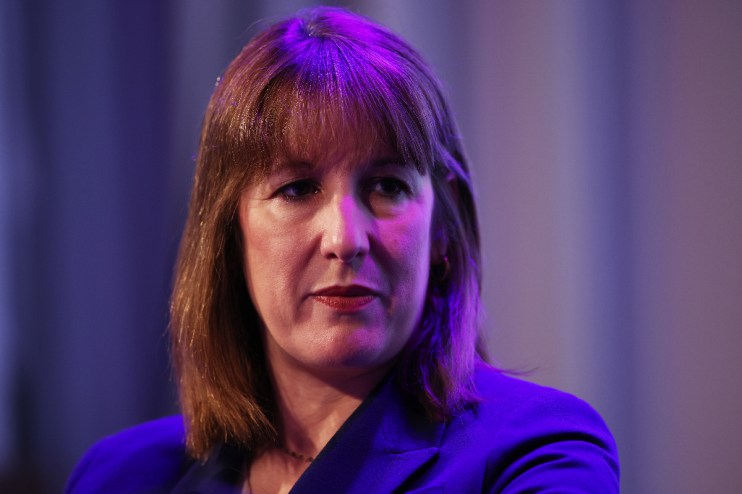
The UK economy has seen low growth under Chancellor Rachel Reeves.
Rachel Reeves has ordered the Treasury to claw back Covid-19 losses.

The UK economy is set to suffer the second lowest growth and second highest level of inflation in the G7, the OECD has predicted, in a damning set of forecast revisions for the Labour government and the Bank of England. 

Growth in the UK will slow to around 0.7 per cent, according to the OECD, which stands for Organisation for Economic Co-operation and Development.

It is the second lowest rate among G7 countries – ahead of just Italy – and far behind the three per cent growth rate for the G20. 

The slowdown in the UK economy will add to scrutiny on the government after ministers hailed having the fastest growth of any European country in the G7 in 2025.

Inflation is also set to hit the UK economy more than other countries, shooting up to four per cent this year. OECD economists revised forecasts up for price growth this year by 1.5 percentage points.

The US is the only country that could suffer from higher inflation this year, with its predicted rate to be 4.2 per cent. 

The Paris-based think tank’s revision exposes the UK economy’s vulnerability to disruptions brought by President Trump and Prime Minister Netanyahu, and the Iranian’s regime war in the Middle East. 

The blocking of the Strait of Hormuz has led to spiralling oil and gas prices, which have risen by around 70 per cent since the start of the war, while analysts have suggested that higher borrowing costs and a heavy tax burden has dampened confidence among businesses and consumers. 

UK economy ‘weakened’ by Reeves

The prospect of spiralling energy costs are set to unnerve households and firms, with elevated levels of price sensitivity likely to keep inflation higher in the medium term. 

But interest rates will not be hiked beyond the Bank of England’s 3.75 per cent rate this year, in stark contrast to market predictions set by traders. 

Chancellor Rachel Reeves emphasised the UK had not started or joined the war in the Middle East but admitted it would “have an impact on our country”. 

Read more

The pensions triple lock is a travesty. Our politicians must fess up

Young people face the risk of failing to save enough in their pension

“In an uncertain world we have the right economic plan,” Reeves said. “The decisions we have taken have put us in a better position to protect the country’s finances and family finances from global instability.

“Our economic plan means going further to build a stronger, more secure economy. That means going further on our three big choices: empowering regional growth, embracing AI and innovation, and establishing a closer relationship with the EU.”

Shadow Chancellor Sir Mel Stride said the downgrade was a “damning verdict” on the Labour government. 

“Rachel Reeves has ramped up borrowing, spending and taxes,” Stride said. 

“As a result we have stagnant growth, while inflation, unemployment, the deficit and debt interest costs have all shot up. At the same time, Ed Miliband’s net zero obsession has left us reliant on imported energy instead of using our own supplies in the North Sea.

“Rachel Reeves can blame the world all she wants, but it’s her choices that have weakened our economy at the worst possible moment.”

OECD flags British vulnerabilities

OECD analysts also highlighted that the UK was “especially” affected by rising bond yields, which push up government borrowing costs. 

The crumbling jobs market, and in particular falling numbers ofjob vacancies, was also flagged as a weakness particular to the UK. 

The OECD projected growth to be 2.9 per cent across the world this year. The war is “testing the resilience” of the global economy while markets may be underestimating the damage the war will have on goods supplies, analysis suggested. 

“Potential supply disruptions could be exacerbated by the current relatively low level of European gas reserves and the  difficulties in exporting the vast majority of the world’s spare crude oil production capacity, which is primarily in Saudi Arabia,” the OECD’s latest report said. 

“In addition to a further spike in prices, energy shortages could weigh on production activity in some economies, especially net energy importers.”

Read more

London workers most exposed to AI jobs cull

London skyline with modern skyscrapers and lush green foliage in foreground on a clear day, highlighting urban nature balance

Share this article

  • Facebook
  • X
  • LinkedIn
  • WhatsApp
  • Email

Similarly tagged content:

Sections

  • News

Categories

  • Business
  • Economics
  • Politics

People & Organisations

  • Bank of England
  • G7
  • growth
  • Inflation
  • Keir Starmer
  • Labour Party
  • Mel Stride
  • OECD
  • Rachel Reeves
  • UK economy
  • UK Government

Trending Articles

  • WPP slashes jobs as revenue continues to fall

  • Liverpool owners tipped to sell – but not to Amazon boss Bezos – by former CEO

  • Revolut founder’s wealth set to balloon amid talks of share award at $500bn valuation

  • Starling plans to ‘come out swinging’ in diversification bid

  • As it happened: Stocks rise despite new tensions in Strait of Hormuz; Oil price climbs

More from Morning Wire

  • The pensions triple lock is a travesty. Our politicians must fess up

    Opinion
    Young people face the risk of failing to save enough in their pension
  • London workers most exposed to AI jobs cull

    Economics
    London skyline with modern skyscrapers and lush green foliage in foreground on a clear day, highlighting urban nature balance
  • OECD sounds alarm on pension triple lock in challenge to Burnham

    Economics
    Andy Burnham discussing AI advancements at a business conference podium with delegates in the background
  • UK economy grows despite Iran war hit

    Economics
    Detailed view of a breaking news event related to general topics, showcasing key elements of the story in a business context.
  • Devolution is the shakeup Britain needs

    Opinion
    Andy Burnham speaking passionately at a public event, wearing a suit, highlighting his role as a prominent political figure.
  • IMF offers UK modest growth upgrade despite fresh Iran war tension

    Economics
    Rachel Reeves delivering Spring Statement 2026 at UK Parliament, addressing economic policies and fiscal strategies.
  • London doesn’t need more social housing, it needs more housing full stop

    Opinion
    Luxurious mansions surrounded by manicured gardens in an upscale residential neighborhood, highlighting opulent housing tr...
  • Industry bodies call on Burnham to bring down energy bills to fire up growth

    Energy
    North Sea oil terminal with tankers, storage tanks, and cranes under a cloudy sky, highlighting energy industry infrastruc...
MorningWire

Independent European business, markets and political news for decision-makers.

Morning Briefing

Europe

  • Germany
  • France
  • Europe
  • UK & Ireland

Business

  • Markets
  • Banking
  • Technology
  • Energy
  • Property
  • Fintech

Editorial

  • Opinion
  • Editorial Policy
  • Corrections
  • Contact

Company

  • About Morning Wire
  • Privacy Policy
  • Terms of Use
  • Cookie Policy
© 2026 Morning Wire Ltd · Published by Morning Wire Media, Bahnhofstrasse 65, 8001 Zürich, Switzerland
Privacy · Terms · Cookies · Facebook