Skip to content
Tuesday 1 September 2026London --:--Frankfurt --:--Zurich --:--
NewslettersSearchEN · DE · FR
MorningWire

European business, markets and politics

FTSE 100
10,824.26
+0.29%
DAX
26,258.11
0.00%
CAC 40
8,334.50
0.00%
STOXX 50
6,420.16
0.00%
  • Europe
  • Markets
  • Business
  • Economy
  • Regulation
  • Politics
  • Opinion
More
GermanyFranceEU InstitutionsCompetitionPublic AffairsBankingTechnologyEnergy
  • Germany
  • France
  • Europe
  • Markets
  • Business
  • Economy
  • Regulation
  • Politics
  • Opinion
  • DE
Wednesday 10 February 2016 4:53 pm

UK wealth inequality is widening as climbing house prices due to quantitative easing drive home ownership down – Standard & Poor’s

By: Caitlin Morrison

Add as a preferred source on Google

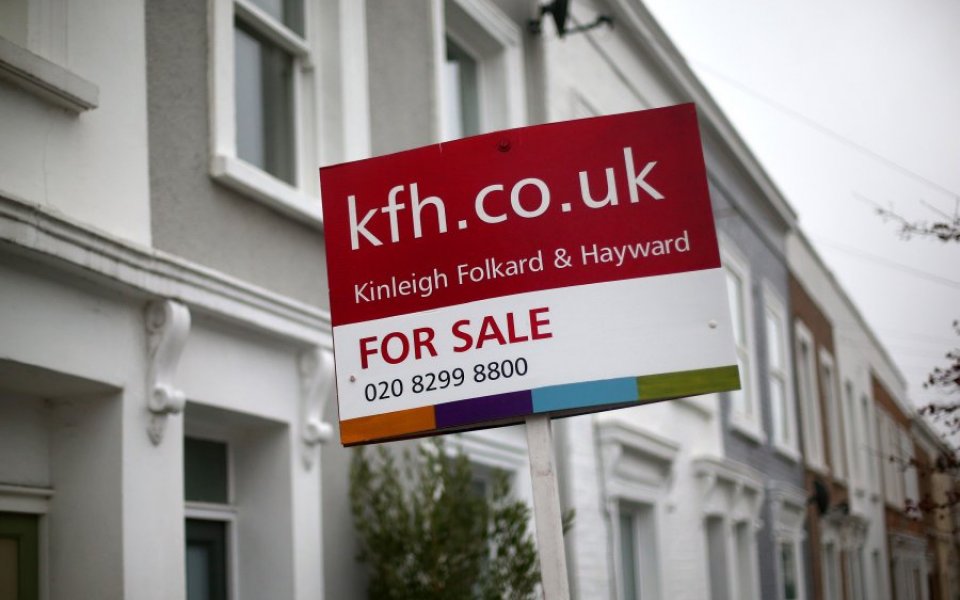
While quantitative easing (QE) may have helped to stabilise the UK economy, it has also led to a wider gulf between rich and poor, according to Standard & Poor's (S&P) – and it has also pushed home ownership even farther out of reach for younger people.

QE has exacerbated wealth disparity by boosting financial asset and house prices, the ratings agency said, with the result that home ownership is likely to drop over coming decades "perpetuating high income and wealth inequality far into the future".

Research by S&P shows that between 2006 and 2008 (before QE) and 2010-2012 (after QE started),  average wealth held directly in stocks increased by 55 per cent for the wealthiest 10 per cent and by 130 per cent for wealthiest one per cent of UK households.

"In addition, the Bank of England's unconventional monetary policy since 2008 likely increased inequality in the UK through its impact on the housing market, given that housing supply is extremely rigid and is persistently outstripped by demand," said S&P's senior economist Boris Glass.

Very low central bank rates translated into low mortgage rates, the ratings agency said, making borrowing less costly and supporting credit availability which kept the slump in house prices short and underpinned the house price recovery.

"Low interest rates and QE helped lessen the negative impact of the crisis on aggregate housing wealth, the most widely held form of assets, especially in middle- and low-income groups," said Jean-Michel Six, S&P's chief economist for EMEA.

"But in conjunction with the tight housing market, it is now also one of the drivers behind the widening wealth and income gap between younger and older generations and between those on the housing ladder and those not on it."

Six added that younger low- and middle-income households (would-be first-time buyers) are the ones affected most.

"As buying a home becomes ever more expensive, they are increasingly forced to rent, spending a large share of their income on accommodation and unable to save to buy a home or otherwise accumulate wealth," he said.

"It also contributes to an even higher income inequality when accounting for housing costs. In fact, while income inequality fell slightly immediately after the crisis and has remained broadly stable since then, inequality when accounting for housing costs is on the rise again."

Share this article

  • Facebook
  • X
  • LinkedIn
  • WhatsApp
  • Email

Similarly tagged content:

Sections

  • Markets & Economics
  • News

Categories

  • Business
  • Economics

Trending Articles

  • Jaguar reveals the Type 01’s screen-free interior

  • Treasury ‘tells Healey’ to consider tax on banks and oil

  • Pensioners to hand over bank statements in government benefits crackdown

  • City firms mandate phone and face-to-face comms bootcamps for Gen Z lawyers

  • Jamie Carragher: HMRC petitions for Sky Sports star to be declared bankrupt

More from Morning Wire

  • Economists urge Bank of England to halt bond sales as borrowing costs climb

    Economics
    Bank of England headquarters with financial charts overlay, illustrating private credit stress test analysis
  • Surely Gary Stevenson is smart enough to know a wealth tax won’t work?

    Opinion
    Gary Stevenson speaking at a Patriotic Millionaires event, addressing wealth inequality and economic reform proposals.
  • Schroders sells financial planning arm as it accelerates high net-worth shift

    Investing
    Schroders office building exterior with modern architecture and company logo prominently displayed in a business district ...
  • ‘War on wealth creation’: capital gains tax raid would lose government money, Tories argue

    Politics
    Mel Stride speaking at a press conference, addressing key issues, in a formal setting with a backdrop of the events logo.
  • Here’s an idea for you Gary Stevenson: a 0 per cent wealth tax

    Opinion
    Gary Stevenson debates economist Dr Kristian Niemietz on wealth tax issues during a live event.
  • Billions in pensions go missing: JP Morgan and Standard Life reconnect Brits with lost wealth

    Personal Finance
    Stacks of various currency bills symbolizing financial news and economic trends on a business website
  • Wealthy Brits fear Burnham tax consequences

    Personal Finance
    Andy Burnham, Mayor of Greater Manchester, speaking at a podium with microphones.
  • How can wealthy Scots save £46,000 on income tax? Commute from England

    Tax
    Baillie Gifford runs three of the trusts targeted by Saba Capital.
MorningWire

Independent European business, markets and political news for decision-makers.

Morning Briefing

Europe

  • Germany
  • France
  • EU Institutions
  • Europe

Business

  • Markets
  • Business
  • Economy
  • Regulation
  • Competition
  • Public Affairs

Editorial

  • Opinion
  • Editorial Policy
  • Corrections
  • Contact

Company

  • About Morning Wire
  • Privacy Policy
  • Terms of Use
  • Cookie Policy
© 2026 Morning Wire Ltd · Published by Morning Wire Media, Bahnhofstrasse 65, 8001 Zürich, Switzerland
Privacy · Terms · Cookies · Facebook