Skip to content
Sunday 23 August 2026London --:--Frankfurt --:--Zurich --:--
NewslettersSearchEN · DE · FR
MorningWire

European business, markets and politics

FTSE 100
10,816.56
+0.64%
DAX
26,136.56
+0.59%
CAC 40
8,484.43
+0.37%
STOXX 50
6,462.22
+0.63%
  • Europe
  • Markets
  • Business
  • Economy
  • Regulation
  • Politics
  • Opinion
More
GermanyFranceEU InstitutionsCompetitionPublic AffairsBankingTechnologyEnergy
  • Germany
  • France
  • Europe
  • Markets
  • Business
  • Economy
  • Regulation
  • Politics
  • Opinion
  • DE
Monday 17 July 2023 3:48 pm  |  Updated:  Monday 17 July 2023 4:14 pm

Ultra-high food prices here to stay as Russia exits Black Sea grain deal with Ukraine 
By: Nicholas Earl and Laura McGuire

Add as a preferred source on Google
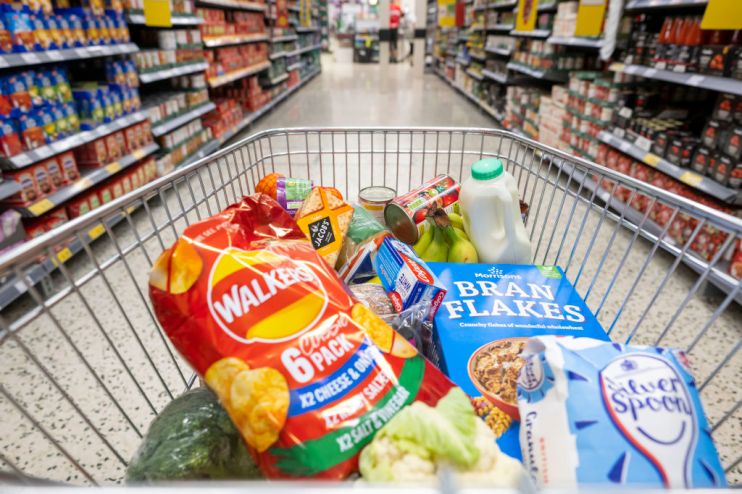
Grocery Prices Reflect Rising Cost Of Living In UK
Analysts expect prices to have climbed 9.1 per cent over the year to May, slightly higher than April’s reading (Photo by Matthew Horwood/Getty Images)

Soaring food costs may not fall as quickly as markets had hoped, retail and pub industries have warned, as Russia’s decision to withdraw from the Black Sea grain deal places fresh pressure on struggling businesses and consumers across Britain.

“Russia withdrawing from the Black Sea grain deal will likely put renewed pressure on global corn, wheat and fertiliser prices,” Harvir Dhillon, economist at the British Retail Consortium (BRC), told Morning Wire

He said: “As a result, food inflation on some products, such as meat, dairy and cereals, might not fall as quickly over the coming months as consumers and retailers had hoped.

“This additional cost pressure will come at a difficult time for retailers, who are already battling other headwinds. Nonetheless, they will continue to work hard to keep prices as low as possible for their customers.”

Over the past few weeks, there have been talks of food prices being lowered, with figures from the BRC’s grocery price inflation measure falling to 14.6 per cent in June, down from 15.4 per cent in May.

However, Russia has exited a UN-led deal which enabled the safe export of grain from Ukraine through the Black Sea over the past year.

Nearly 33m metric tons of corn, wheat and other grains have been exported by Ukraine under the arrangement – helping to alleviate a global food crisis as the invaded country is considered ‘the breadbasket of Europe’.

Whilst the Kremlin cited concerns over supplies not reaching poorer countries under the deal, EU Commission president Ursula von der Leyen derided Russia’s decision as a “cynical move.”

Read more

Supermarkets ‘actively shielding’ shoppers as food inflation falls again

Shopper in a supermarket produce aisle browsing various packaged vegetables and fruits.

Both Russia and Ukraine are among the world’s top grain exporters, and Russia’s ongoing invasion of Ukraine has played a key role in rising food prices for UK consumers, triggering a global economic shock and squeezing supply.

The end of the export agreement has also sparked fears amongst the UK’s hospitality sector, which is battling high energy prices.

“Ukrainian grain is essential for many parts of the world, particularly North Africa, the Middle East and southern Europe, and the end of this deal could have serious implications for global food prices. As we saw last year, this volatility in the supply chain can hit prices hospitality businesses face in the UK,” Kate Nicholls, chief of UK Hospitality, told Morning Wire

“With food input inflation remaining above 20 per cent, as it has done for months, any further increases in food prices would compound the pressures hospitality businesses are facing. We’ll continue to monitor the situation and work with stakeholders across the food supply chain, should we see a sharp increase in price.”

Domestic wheat prices have so far remained stable following the latest setback for grain supplies.

James Walton, chief economist at market insights specialist IGD argued that the UK is less exposed to the crisis due to its robust domestic production and steady trade with Europe and North America.

As for immediate headwinds, he pointed to the the current heatwave in Europe as a major factor that could hamper production across much of the continent.

He said: “The UK is unlikely to escape the impact entirely since food supplies will naturally flow to wherever prices are highest (subject to transport). IGD forecasts that food price inflation will slow gradually over 2023 and into 2024, but price levels are not expected to fall significantly for the foreseeable future.”

Read more

El Nino heatwaves to ‘fuel inflation next year’

Firefighter in helmet and uniform watching a blazing forest fire at night, red glow in the sky

Share this article

  • Facebook
  • X
  • LinkedIn
  • WhatsApp
  • Email

Similarly tagged content:

Sections

  • News

Categories

  • Energy

Related Topics

  • Company
  • environment

Trending Articles

  • Can debt-ridden Morrisons become a Big Four supermarket again?

  • Ratcliffe’s Ineos saves Runcorn plant

  • Mike Ashley’s Frasers offers to pay personal shoppers in Harvey Nichols takeover

  • Burnham predicted to raise taxes for ‘fundamental’ cost of living support

  • Amazon says it buys books in bulk to ‘improve products’

More from Morning Wire

  • Supermarkets ‘actively shielding’ shoppers as food inflation falls again

    Retail
    Shopper in a supermarket produce aisle browsing various packaged vegetables and fruits.
  • El Nino heatwaves to ‘fuel inflation next year’

    Economics
    Firefighter in helmet and uniform watching a blazing forest fire at night, red glow in the sky
  • Retailers hit back at Healey’s ‘profiteering’ threat

    Retail
    Chancellor John Healey smiling, wearing a navy suit, white shirt, and red tie.
  • Aldi boss wades into supermarket ‘price-gouging’ row

    Retail
    Giles Hurley, Aldi UK CEO, stands in a supermarket produce aisle with fresh fruits and vegetables.
  • Soaring energy bills set to fuel inflation spike

    Economics
    Smartphone displaying an energy bill notification with British coins and a banknote nearby.
  • Brits think supermarkets are profiteering – despite slowing food inflation

    Retail
    Shopper with red backpack and blue basket walking through a supermarket aisle filled with groceries
  • Emergency government meeting held over high temperature amid ‘strain on public finances’

    Economics
    Aerial view of dry, brown farm fields affected by high temperatures, with a road and farm buildings.
  • Burnham’s crackdown on ‘price-gouging’ splits supermarkets 

    Retail
    Every Lidl helps: Tesco looses appeal in the supermarket logos dispute
MorningWire

Independent European business, markets and political news for decision-makers.

Morning Briefing

Europe

  • Germany
  • France
  • EU Institutions
  • Europe

Business

  • Markets
  • Business
  • Economy
  • Regulation
  • Competition
  • Public Affairs

Editorial

  • Opinion
  • Editorial Policy
  • Corrections
  • Contact

Company

  • About Morning Wire
  • Privacy Policy
  • Terms of Use
  • Cookie Policy
© 2026 Morning Wire Ltd · Published by Morning Wire Media, Bahnhofstrasse 65, 8001 Zürich, Switzerland
Privacy · Terms · Cookies · Facebook