UMA Unveils Its Vision for the Next Generation of Humanoid Robots
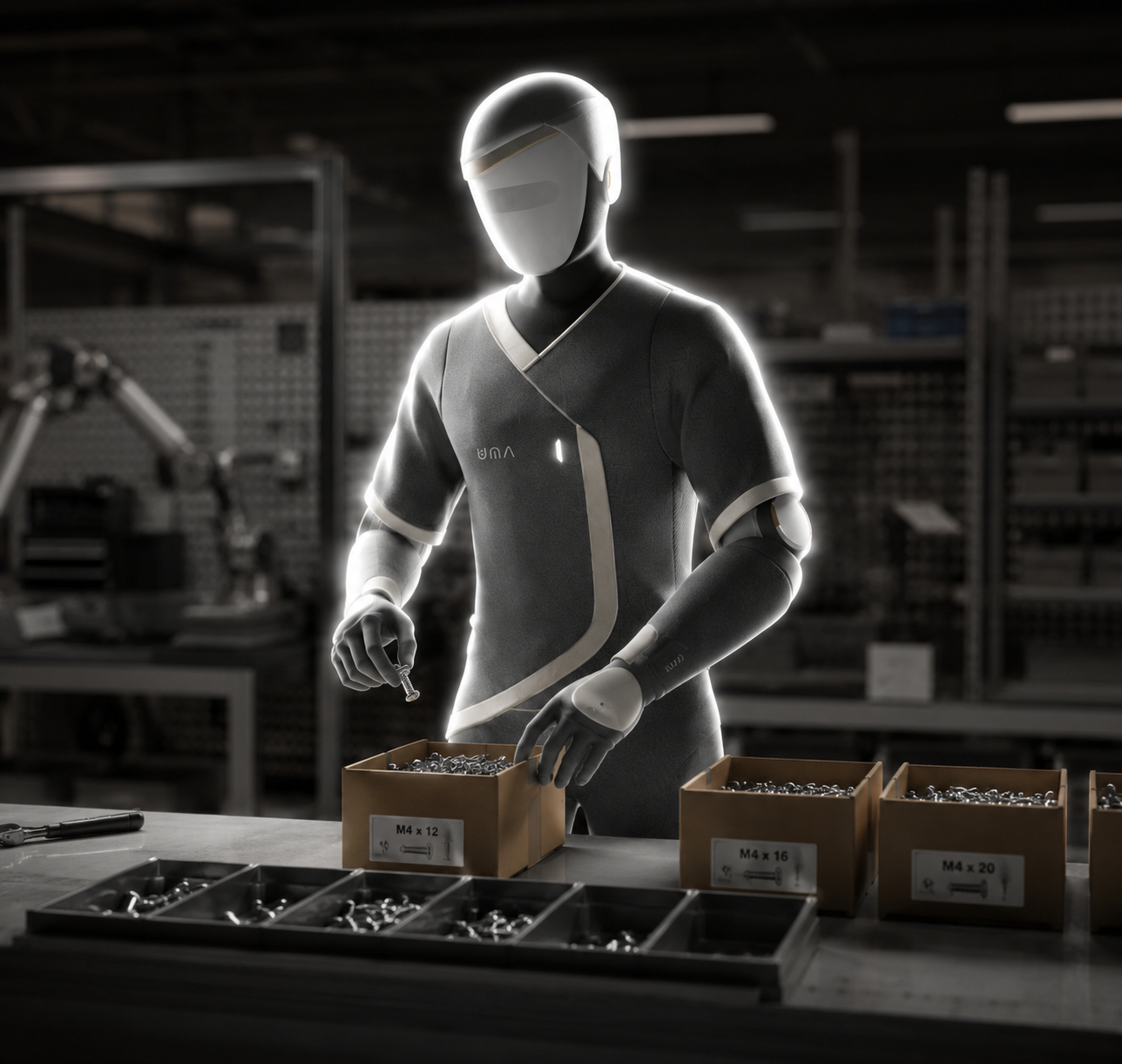
At Machina Summit, UMA, a Physical AI company, unveiled the design of its first humanoid robot and introduced Real-Time Learning, a learning architecture that enables robots to acquire new skills through demonstration instead of manual programming.
This press release features multimedia. View the full release here: https://www.businesswire.com/news/home/20260707215927/en/
The announcement comes as aging populations, industrial reshoring, and the energy transition place increasing pressure on labor markets across advanced economies. According to Korn Ferry, the global economy could face a shortage of 85 million workers by 2030, representing as much as $8.5 trillion in unrealized economic output. Against this backdrop, UMA is developing a new generation of intelligent robots built to assist people by taking on physically demanding, repetitive, or hazardous work.
“Demographic, industrial, and environmental challenges all point to the same reality: societies need greater productive capacity,” said Rémi Cadène, CEO and co-founder of UMA. “We believe intelligent robots will become part of the solution, not as a substitute for people, but as a new class of tools that enables them to devote more time to what machines will never replace: creativity, judgment, innovation, and caring for others.”
Robotics Designed for the Real World
For UMA, humanoid robotics is not about building technology demonstrations. It is about developing robots capable of creating immediate value in environments already built for people, including factories, warehouses, logistics centers, and industrial facilities. Their humanoid architecture enables them to use existing tools, integrate seamlessly into current infrastructure, and collaborate naturally alongside existing teams.
This engineering approach extends beyond hardware. By interacting with the physical world in ways that mirror human behavior, UMA’s robots can learn more efficiently from demonstrations, receive guidance when necessary, and continuously improve their performance in operational environments.
While much of today’s humanoid robotics industry oscillates between highly mechanical machines that showcase engineering complexity and consumer-inspired products designed to appear friendly, UMA has deliberately chosen a different direction.
UMA has chosen a different direction. This is what UMA calls the dressed machine: its robot combines human-scale proportions with a neutral visor instead of facial features, eliminating ambiguity between person and machine. A soft technical outer shell is paired with intentionally visible mechanical joints, embracing the robot’s identity rather than concealing it.
Rather than optimizing for short-lived demonstrations, UMA has engineered its robot to earn trust through everyday use. The objective is not to build a machine that impresses on stage, but one that integrates naturally into industrial operations and becomes a reliable partner over time.
Real-Time Learning: Teaching Robots the Way People Learn
At the heart of UMA’s platform is a simple conviction: future robots should learn the way people do.
When people encounter a new task, they observe, experiment, practice, and progressively improve until they master it. Real-Time Learning applies the same principle to robotics by allowing robots to acquire new capabilities from demonstrations, adapt to unfamiliar situations, and continuously refine their execution through experience.
Instead of requiring engineers to manually reprogram robots for every new application, the platform enables robots to continuously learn from their environment, making them significantly more flexible and easier to deploy across a broad range of industrial settings.
As Cadène explains, the industry’s challenge is no longer building robots capable of executing individual tasks. The next breakthrough lies in building robots capable of learning new ones.
Building Physical AI in Europe
While today’s humanoid robotics race is largely driven by the United States and China, UMA believes Europe offers a unique opportunity to lead the next chapter of Physical AI.
The region combines world-class scientific research, a strong industrial base, and growing demand for automation driven by structural labor shortages. For UMA, Europe is not simply where the company was founded, it is where intelligent robots can create value the fastest.
Technology That Expands Human Potential
Today’s unveiling represents more than the introduction of a humanoid robot. It reflects UMA’s broader vision for Physical AI: intelligent machines capable of continuously learning, adapting, and working alongside people to address some of society’s most pressing demographic, industrial, and environmental challenges.
“We’re still at the beginning of this journey,” said Cadène. “Humanoid robots will take years to reach large-scale deployment, just as the internet and smartphones required time before transforming entire industries. We believe intelligent robots will reshape the physical economy in much the same way.”
“One day, robots will contribute to manufacturing future generations of robots, accelerating their own deployment. But our ambition has never been to replace people. It is to expand what people are capable of, to give everyone more time to create, solve problems, and focus on what makes us uniquely human. That vision guides every scientific, technological, and industrial decision we make at UMA.”
About UMA
UMA is a European Physical AI company developing the next generation of intelligent humanoid robots.
Founded in 2025 by Rémi Cadène, Pierre Sermanet, Robert Knight, and Simon Alibert, the company combines expertise in frontier AI, robotics, embodied intelligence, embedded systems, and industrial engineering to build robots capable of learning through demonstration and operating safely in real-world environments.
Headquartered in Paris, with teams across London and Geneva, UMA is building a Physical AI platform designed to help industries address labor shortages while enabling people to focus on higher-value work.
View source version on businesswire.com: https://www.businesswire.com/news/home/20260707215927/en/
Contact
Press contacts Outcast France
Yana Rogers, [email protected], +33 698335048
Nalia Kailali, [email protected], +33 652755653