Skip to content
Sunday 13 September 2026London --:--Frankfurt --:--Zurich --:--
NewslettersSearchEN · DE · FR
MorningWire

European business, markets and politics

FTSE 100
10,650.44
+0.39%
DAX
25,568.56
+0.82%
CAC 40
8,179.77
+0.78%
STOXX 50
6,325.13
+0.90%
  • Europe
  • Markets
  • Business
  • Economy
  • Regulation
  • Politics
  • Opinion
More
GermanyFranceEU InstitutionsCompetitionPublic AffairsBankingTechnologyEnergy
  • Germany
  • France
  • Europe
  • Markets
  • Business
  • Economy
  • Regulation
  • Politics
  • Opinion
  • DE
Wednesday 02 February 2022 6:15 am  |  Updated:  Tuesday 01 February 2022 6:05 pm

Uncertainty from our leaders is keeping our economic recovery wavering on the brink

By: Paul Ormerod

Add as a preferred source on Google
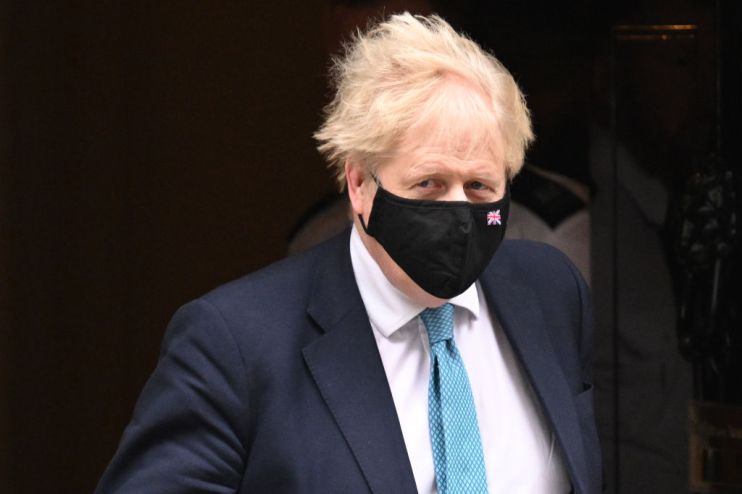
Boris Johnson Departs For PMQs As Westminster Awaits 'Partygate' Report

In November last year, the UK’s total GDP output finally regained its pre-pandemic level. But although the economic recovery is on an upward trajectory, there is a disconcerting stop-start hesitancy to it.

A reasonable indicator of where the economy stands in any given month is the purchasing managers’ index which shows the prevailing direction of economic trends in the manufacturing and service sectors. Both sectors in January had an index above 50 – the level that indicates growth. They were at 57.3 and 53.3 respectively, but both of these had fallen from the previous month.

The key factor holding things back is a lack of confidence.

Consumers accumulated large amounts of savings during the pandemic but are reluctant to spend. Many companies are awash with cash, but are not investing.

Keynes regarded confidence as being absolutely critical to whether or not the economy expanded. “The state of confidence”, he wrote in his major work The General Theory, “is a matter to which practical men always pay the closest and most anxious attention”.

There are just too many uncertainties for either consumers or company boards to feel confident.

Although we have made it through the winter and the government has promised not to introduce further restrictions, the Prime Minister has caved in to health bureaucrats too often in the past. His fickle promises are still ringing in the ears of business owners and employers up and down the country.

Read more

UK jobs seekers rise despite recovery in permanent hiring

Andy Burnham in a Sainsburys fleece, adjusting his jacket, at a retail event with other attendees.

According to the King’s College London ZOE data, the total number of people with Covid peaked on 9 January and the current Omicron wave started to quickly fall away. But in the past week, Covid cases have started to rise again. An obvious culprit is the new “variant” of Omicron. Virologists are not concerned, but there are early reports of more transmissibility, creating an aura of angst around its potential.

The impending threat of a cost of living crisis is also ensuring people keep their wallets closed. Energy prices have soared, with natural gas more than 80 per cent higher than a year ago. And the unfolding tensions in Ukraine have only spurred fears there will be a rush on gas.

Hanging over all of this is the massive debt which the government accumulated during the pandemic.  The December public sector borrowing figures were indeed lower than expected.  But the amount is a drop in the ocean compared to the £500bn which the government will have run up in the financial years 2020/21 and 2021/22.

At some point, this has to be paid back. In the meantime, there is a stream of interest payment associated with servicing the debt, a problem intensified at a time of high inflation by the fact that around a quarter of all UK public debt has payments index-linked to the Retail Prices Index.

This creates a huge uncertainty around both the scale and the timing of future tax increases. Boris Johnson has already refused to delay or scrap  the April National Insurance rise. But, again, this is just a small fraction of the rises in tax which are needed.

The overall level of uncertainty is high. As Keynes argued many years ago, this means that the state of confidence of the private sector, both households and firms, is low.

In other words, unless the government lays out its plans, and sticks to them, our economic prosperity will continue to waver.

Read more

Burnham bounce? Business confidence tells a different story

Andy Burnham, John Healey, and Louise Haigh by a doorway, discussing tax policy for a news article.

Share this article

  • Facebook
  • X
  • LinkedIn
  • WhatsApp
  • Email

Similarly tagged content:

Sections

  • Opinion

Categories

  • Opinion

Trending Articles

  • Wetherspoon boss: ‘Not up to Burnham’ to choose who is on the high street 

  • Badger Beer maker Hall & Woodhouse doubles profit ahead of tie-up with James May

  • Four interest rate hikes loom despite surprise economic growth

  • Primark sales slip as owner dresses up retailer for demerger

  • As it happened: FTSE 100 rallies as economy beats forecasts; oil falls back

More from Morning Wire

  • UK jobs seekers rise despite recovery in permanent hiring

    Economics
    Andy Burnham in a Sainsburys fleece, adjusting his jacket, at a retail event with other attendees.
  • Burnham bounce? Business confidence tells a different story

    Opinion
    Andy Burnham, John Healey, and Louise Haigh by a doorway, discussing tax policy for a news article.
  • Manufacturers overcome gloomy economy as output surge continues

    Industrials
    Manufacturing sector faces mounting tribunal pressures amid economic uncertainty
  • As it happened: FTSE 100 rallies after JD Sports drags on blue chips; oil jumps again

    FTSE 100 Live
    Londons Stock Exchange orb with FTSE 100 display, symbolizing business and market updates
  • Manufacturing growth loses momentum as economic risks loom 

    Industrials
    Manufacturing has suffered yet another downturn in activity over September.
  • As it happened: FTSE 100 rallies as economy beats forecasts; oil falls back

    FTSE 100 Live
  • UK economy to ‘reverse gains’ as construction drags growth

    Economics
    Retail sales slowed in September
  • Jobs market ‘stops moving’ as employment costs weigh on hirers

    Economics
    The recruitment industry is grappling with a slowdown in hiring among UK employers and wider macro-economic uncertainty.
MorningWire

Independent European business, markets and political news for decision-makers.

Morning Briefing

Europe

  • Germany
  • France
  • EU Institutions
  • Europe

Business

  • Markets
  • Business
  • Economy
  • Regulation
  • Competition
  • Public Affairs

Editorial

  • Opinion
  • Editorial Policy
  • Corrections
  • Contact

Company

  • About Morning Wire
  • Privacy Policy
  • Terms of Use
  • Cookie Policy
© 2026 Morning Wire Ltd · Published by Morning Wire Media, Bahnhofstrasse 65, 8001 Zürich, Switzerland
Privacy · Terms · Cookies · Facebook