Skip to content
Wednesday 12 August 2026London --:--Frankfurt --:--Zurich --:--
NewslettersSearchEN · DE
MorningWire

European business, markets and politics

FTSE 100
10,830.29
-0.13%
DAX
26,425.70
+0.13%
CAC 40
8,689.25
-0.29%
STOXX 50
6,550.23
-0.02%
  • Europe
  • Markets
  • Business
  • Economy
  • Technology
  • Politics
  • Opinion
More
GermanyFranceBankingAIEnergyFintechPropertyCapital Markets
  • Germany
  • France
  • Europe
  • Markets
  • Business
  • Economy
  • Technology
  • Politics
  • Opinion
  • DE
Wednesday 18 March 2020 6:09 am  |  Updated:  Tuesday 17 March 2020 6:16 pm

The three-year university degree is heading for a failing grade

By: Sophie Phillipson

Add as a preferred source on Google
university
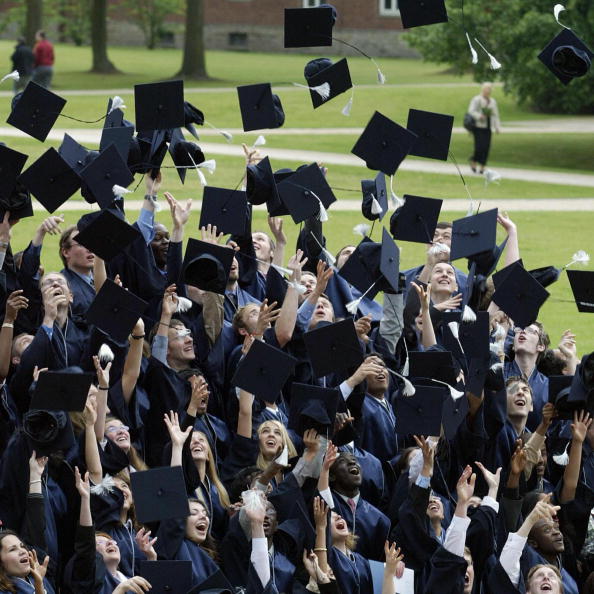
BREMEN, GERMANY: Students of the International University of Bremen (IUB) throw up their doctoral caps on the campus of their university, 02 June 2004. These students are the first graduates of the international private institution existing since 2001. 580 young men and women from 70 nations study at the IUB. AFP PHOTO DDP/DAVID HECKER GERMANY OUT (Photo credit should read DAVID HECKER/DDP/AFP via Getty Images)

A report last month by the Institute for Fiscal Studies has found that, although higher education is a very good investment for most, a fifth of students — around 70,000 every year — actually make a net financial loss from going to university.

Not every student factors in potential earnings when deciding what to do after they leave school, and nor should they. But the high price tag of a degree is prompting students to at least consider other options.

One is the new degree apprenticeship. Taking three to six years to complete, these programmes are being developed and run by employers, universities, and professional bodies in collaboration. Students earn as they learn, both in the classroom and on the job, and they get a degree at the end. It’s a win-win for students, who don’t leave university with huge debts, and for industries facing skills shortages.

Academic institutions, too, are looking at new models, like lifelong admittance to higher education, paid for on a subscription basis. University of Stanford students came up with the idea for an “Open Loop University” where students get access to six years of education that can be used over a lifetime, and with alumni reinvented as “populi” that return to campus as expert practitioners, enriching the learning experience for other students.

In theory, this makes perfect sense. People change careers and their interests wax and wane. At 18, who can be certain what they want to do? 

And who can predict how the workplace will transform within their lifetime? Learning and development is part and parcel of any career, making lifelong access to university potentially appealing.

Right now, university is what IT people might call a “legacy system”. Very little has changed in hundreds of years, apart from who’s allowed to study in them, and what courses are on offer. 

In his 2018 book The Case Against Education, economist Bryan Caplan suggests that degrees don’t actually arm us with much by way of skills or knowledge but, instead, signal our value — things like your intelligence and conscientiousness — to employers.

Read more

Improve technical education for women to plug engineer shortage

Two engineers in hard hats and high-visibility gear inspecting a large, illuminated tunnel under construction.

Many university experiences involve no preparation for the workplace at all, while access to university-led work experience may be limited and competitive. 

So there’s plenty of room for improvement and innovation. Sensible ideas might include transforming campus careers centres (a mythical place for many students) into dynamic training rooms, offering expert-led workshops in communication, collaboration, persuasion or time management, and making participation count towards course completion. 

Here in the UK, students doing creative arts degrees could get the option to “minor” in hard skills much coveted in the workplace, such as cloud computing or programming. And institutions could forge much stronger relationships with smaller businesses, instead of leaning on the handful of huge corporations that offer graduate schemes on the milkround.

Of course, there’s life in the three-year degree yet. While antiquated in some ways, it won’t die entirely while UK working-age graduates earn on average £10,000 more than non-graduates and have higher employment rates. In many cases, the experience is as good as students make it. I’ve spoken to graduates who used their years at university to widen their networks and build contacts for life, who become entrepreneurs and tested their products on the captive student market, who joined and ran societies that added new dimensions to their CVs. 

Students today are discerning — they will be looking harder for high-quality teaching at well-established institutions offering reputable courses. Just like our TV-watching habits, learners today want convenient, on-demand access to education. 

And whether universities offer more subscription-based learning, partner with businesses for degree apprenticeships, or find other ways to adapt, the time to start future-proofing is now.

Main image credit: Getty

Read more

Stop peer pressuring young people into the student debt swindle

UK university graduate in cap and gown holding diploma at a campus ceremony, celebrating academic achievement and success

Share this article

  • Facebook
  • X
  • LinkedIn
  • WhatsApp
  • Email

Similarly tagged content:

Sections

  • News
  • Opinion

Categories

  • Business
  • Opinion

Related Topics

  • Higher education

Trending Articles

  • Five-star Mayfair hotel hit with HMRC winding-up petition

  • Nottingham Forest owner Marinakis sues Crystal Palace for defamation

  • Back to basics: Sainsbury’s gradual retreat from the British high street

  • Hargreaves Lansdown orders staff back to office

  • As it happened: Intel, Arm shares slide; Oil climbs higher

More from Morning Wire

  • Improve technical education for women to plug engineer shortage

    Opinion
    Two engineers in hard hats and high-visibility gear inspecting a large, illuminated tunnel under construction.
  • Stop peer pressuring young people into the student debt swindle

    Opinion
    UK university graduate in cap and gown holding diploma at a campus ceremony, celebrating academic achievement and success
  • Has The Odyssey made the classics cool now?

    Life&Style
    Christopher Nolan directing a scene from his film The Odyssey, highlighting the modern revival of ancient Greek classics.
  • Government ‘mis-sold student loans’ to teenagers, MPs say

    Politics
    UK university graduate in cap and gown holding diploma at a campus ceremony, celebrating academic achievement and success
  • Students urged to rethink idea of a ‘safe job’ as Labour pledges major education reform

    Politics
    Bald man in glasses and a tie kicking a soccer ball on an indoor artificial turf field.
  • Hult International Business School Secures Five Year Unconditional AMBA Reaccreditation, Retaining Elite Triple Crown Status

    Business Wire
  • We can’t all create jobs. But we can all create opportunities.

    AD
    Smiling woman in glasses giving a presentation in front of a bright pink ARRIVAL screen.
  • It’s not just Jason Arday, most of sociology is a scam

    Opinion
    Jason Arday smiling, wearing academic regalia with a blue cap and gown with red accents.
MorningWire

Independent European business, markets and political news for decision-makers.

Morning Briefing

Europe

  • Germany
  • France
  • Europe
  • UK & Ireland

Business

  • Markets
  • Banking
  • Technology
  • Energy
  • Property
  • Fintech

Editorial

  • Opinion
  • Editorial Policy
  • Corrections
  • Contact

Company

  • About Morning Wire
  • Privacy Policy
  • Terms of Use
  • Cookie Policy
© 2026 Morning Wire Ltd · Published by Morning Wire Media, Bahnhofstrasse 65, 8001 Zürich, Switzerland
Privacy · Terms · Cookies · Facebook