Upgrading the grid risks ending up like HS2

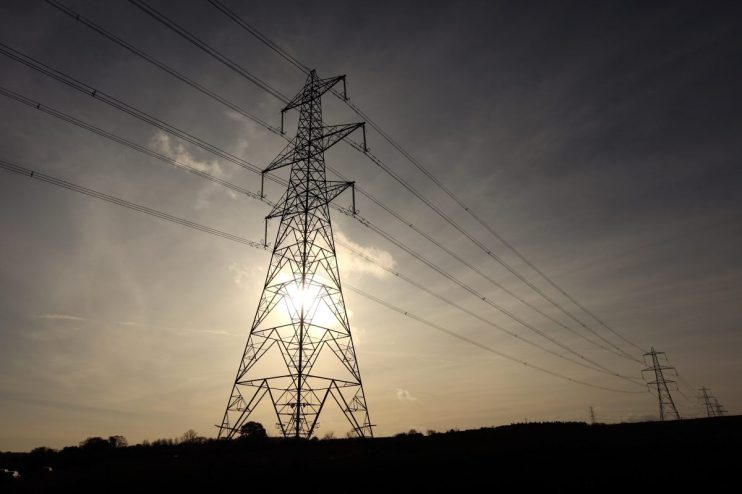
Upgrading the UK’s electricity grid is a vastly complex project. I hope the government’s learned from HS2, writes John Lazar
The complexities of upgrading the grid
The GB electricity system is being upgraded in line with the UK’s Clean Power 2030 target to accommodate a vast increase in renewable power over the next decade, as we shift to decarbonised forms of power that require a more flexible system, such as wind, solar and nuclear. National Grid and the National Energy System Operator have made good progress in getting clean power generation and transmission infrastructure up and running.
But I hope the government is paying attention to the wider systems integration needed to get this right. We know from HS2 and Crossrail how essential systems integration is and the risks if it is neglected at the early stages of such major projects.
Clean energy and electricity generation is essential to combat the impact of climate change. But it must also be affordable to improve our national competitiveness and reduce the cost of living. And it must be resilient, including being resistant to the economic and geopolitical shocks that seem to be a feature of today’s world.
Our future electricity system will be vastly more complex than anything we have seen before. Unless it is digitally enabled, operators will not be able to respond rapidly to shifting demand across distributed devices such as EVs and solar panels that will use, store and generate energy, making it impossible to balance the system and keep it stable. Without a fully digitalised grid, we will all miss out on the savings that smart appliances will make possible by optimising our electricity use so we consume most when it is cheapest.
This is also an economic opportunity for the taking. The UK’s “net zero” economy now supports 1.1m workers and delivered £105bn in economic value in 2025, according to a new report by the CBI. Some 200,000 more energy sector workers are needed by 2030, and these are high quality jobs, including solar panel installers, clean energy executives, renewable technology suppliers and electric car production line engineers.
However, consistent, stable policy is vital to support the completion of the modern energy transition. Government should prioritise end-to-end coordination of the electricity system upgrade, with a single body in charge and accountable across both the public and private sector. If ever there was a time that policymakers should appreciate the benefits of systems engineering it is now, and the sooner they identify and empower an overall systems architect to oversee the complete digitalisation of the grid, the better.
Recycling wind turbine magnets
Could the UK be sitting on a future gold mine of the rare earth element neodymium? Quite possibly, according to a new report by the National Engineering Policy Centre with Warwick Manufacturing Group.
As an early adopter, we will be one of the first nations to decommission offshore wind turbines at scale once they reach the end of their 15- to 25-year design life. Neodymium from the permanent magnets in these turbines can be recycled and used in electric vehicles motors: a single large turbine could yield enough neodymium to produce motors for 12,000 electric vehicles. Recovered neodymium could also be used in ships, planes or heating and cooling systems – ‘urban mining’ builds resilience and is likely to be cheaper than importing the raw mineral mined overseas.
Good news on spinouts
Good news this week on the UK’s track record in monetising innovation. New data shows us leading in Europe for commercialising university research. The UK hosts five of the top 10 European universities for spinout value creation, including Oxford, Cambridge, Bristol, University College London and Imperial College London.
Ahead of London Tech Week, it’s good to see clear evidence that our spinouts landscape is becoming globally competitive. Oxford University is top of the European league and has seen two of its spinouts sold for over $1bn: the medical device innovators OrganOx and quantum tech pioneers Oxford Ionics.
According to our Enterprise Hub’s latest Spotlight on Spinouts report, 2,000 companies have been created in the UK since 2010, generating 27,000 jobs, 70 per cent of them after 2020. And it’s not just the usual players: I’m delighted to see strong regional growth in spinout activity in the North of England, the Midlands and Scotland.
50 years young
Fifty years ago this month, the late Prince Philip convened a meeting of 126 leading engineers at Buckingham Palace. Conceived during the excitement of the Apollo space programme and the buzz of Prime Minister Harold Wilson’s ‘white heat of technology’, the Royal Academy of Engineering was appropriately born in 1976, the year of Concorde’s first commercial flight, and the founding of Apple Computer, Inc.
Today, our 1,700 Fellows work with our wider networks to engineer better lives by backing talent and providing advice to government. From optical fibre communications and artificial intelligence to engineering biology, engineers are changing the world.
Pope Leo thinks like an engineer
I’ve been reading Pope Leo’s new Encyclical Letter, which urges us to take what I think is a true engineering approach to AI. We should put people at the centre, take responsibility for its impacts and acknowledge that this is a technology that we engineers have built and we have the ability to change it, shape it and adapt it to serve our needs.
AI is not a force in its own right that we need to manage, but a human endeavour that we must cultivate in a sustainable, practical and people-centred way.
Sir John Lazar CBE FREng is president of the Royal Academy of Engineering