Skip to content
Wednesday 19 August 2026London --:--Frankfurt --:--Zurich --:--
NewslettersSearchEN · DE · FR
MorningWire

European business, markets and politics

FTSE 100
10,743.35
+0.14%
DAX
26,091.33
-0.14%
CAC 40
8,501.91
-0.09%
STOXX 50
6,444.46
-0.37%
  • Europe
  • Markets
  • Business
  • Economy
  • Regulation
  • Politics
  • Opinion
More
GermanyFranceEU InstitutionsCompetitionPublic AffairsBankingTechnologyEnergy
  • Germany
  • France
  • Europe
  • Markets
  • Business
  • Economy
  • Regulation
  • Politics
  • Opinion
  • DE
Wednesday 12 July 2023 1:59 pm  |  Updated:  Wednesday 12 July 2023 5:14 pm

US inflation slumps to lowest level in more than two years and is now well below UK
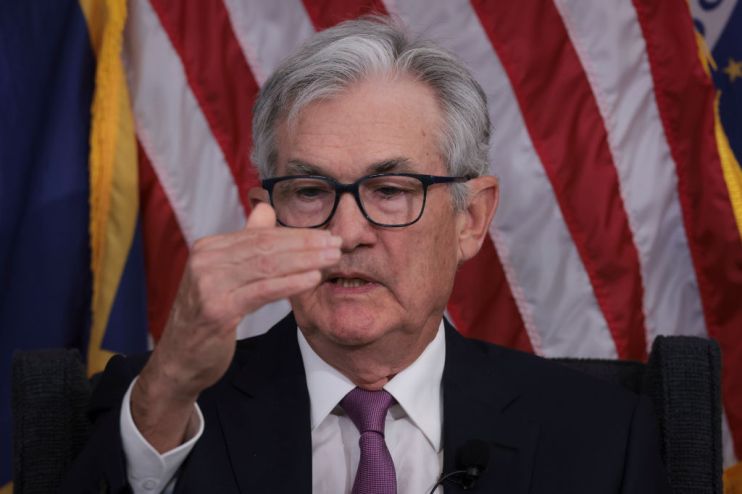
Federal Reserve chair Jerome Powell has led a hawkish campaign to tame inflation, but oil investors are hoping the central bank will begin easing pressure.

Inflation in the US has slumped to its lowest level in more than two years and is now far below the UK’s rate, official figures out today reveal.

American inflation fell to three per cent in June on an annual basis, down from four per cent in the previous month, according to the US Labour Department.

Core inflation – which strips out volatile food and energy prices – dropped to 4.8 per cent. Both measures came in lower than Wall Street’s expectations.

Rapidly declining energy costs, down 16.7 per cent over the last year caused by international oil and gas prices scaling lower after they were jolted by Russia’s invasion of Ukraine, led headline inflation lower. Petrol prices also dropped more than a third over the last year and 0.4 per cent over the last month.

Overall monthly headline and core inflation lifted to 0.2 per cent in June.

US treasuries sold off rapidly on the news. The yield on the 2-year government bond, which is highly sensitive to interest rate expectations, dropped 11 basis points to 4.76 per cent. Yields and prices move inversely.

The Wall Street Journal US dollar index – which measures the greenback against a basket of rich nation countries – dropped 0.66 per cent.

Price increases have fallen dramatically in the US since inflation reached a peak of more than nine per cent last summer in stark contrast to the UK’s experience.

British inflation peaked at just over 11.1 per cent last October and has been more resistant to downward pressures. It is stuck at 8.7 per cent, while services and core inflation is running at more than seven per cent. UK headline inflation is the highest in the G7.

Economists have said the UK is suffering the worst of both worlds: a tight jobs market and exposure to European energy markets, both of which have generated tougher inflation.

America has a large domestic energy industry, meaning it has been able to better withstand last year’s oil and gas price shock.

Read more

Supermarkets ‘actively shielding’ shoppers as food inflation falls again

Shopper in a supermarket produce aisle browsing various packaged vegetables and fruits.

UK and European inflation has been primarily driven by supply-side shocks, while US inflation has been engineered by rampant consumer spending and strong labour demand.

Despite the consumer price index falling to its lowest level in over two years, analysts still think the Federal Reserve will resume raising interest rates at its meeting later this month.

In June, Chair Jerome Powell and the rest of the federal open market committee elected to pause their tightening cycle to assess the effects of their previous rate rises on the US economy.

That was the first time the Fed did not lift borrowing costs in 10 meetings. The federal funds rate – the world’s most important interest rate – is now at a range of five and 5.25 per cent.

June’s core inflation 0.2 per cent rate “won’t stop the Fed from hiking rates again later this month,” Andrew Hunter, deputy chief US economist at Capital Economics, said.

There is mounting speculation that July’s rate rise may be the Fed’s last in the current tightening campaign. 

Analysts now think the US could be entering a period of “disinflation”. In its last meeting, the Fed in its “dot plot,” which measures the average view of FOMC officials’ on where rates are headed, projected two more rate increases by the end of this year.

“The downward trend in core inflation is set to accelerate over the second half of the year,” Hunter added, which, alongside slowing GDP growth, may compel the Fed to begin cutting interest rates some time next year.

FOMC officials’ preferred inflation measure – the core personal consumption expenditures price index – is still very high at 4.6 per cent, but is soothing.

Powell and the rest of the Fed are trying to bring headline inflation back to their two per cent target by raising interest rates, which makes it more attractive to save and more expensive to borrow. In theory, this should reduce spending and put downward pressure on prices.

Read more

Soaring energy bills set to fuel inflation spike

Smartphone displaying an energy bill notification with British coins and a banknote nearby.

Share this article

  • Facebook
  • X
  • LinkedIn
  • WhatsApp
  • Email

Similarly tagged content:

Sections

  • Markets & Economics
  • News

Categories

  • Economics

Related Topics

  • Bank of England
  • Federal Reserve
  • UK inflation
  • UK interest rates

Trending Articles

  • Jobless Banquet: Youth unemployment surge ‘sends Neets to KFC’

  • As it happened: FTSE 100 drops as oil prices rise after Trump makes Hormuz threat

  • US bond market jitters spark UK economy recession warning

  • Amanda Blanc has worked her magic at Aviva

  • City law firm sues prominent Emirati business family

More from Morning Wire

  • Supermarkets ‘actively shielding’ shoppers as food inflation falls again

    Retail
    Shopper in a supermarket produce aisle browsing various packaged vegetables and fruits.
  • Soaring energy bills set to fuel inflation spike

    Economics
    Smartphone displaying an energy bill notification with British coins and a banknote nearby.
  • Temporary inflation slowdown set to boost Burnham

    Economics
    Rising inflation graph with increasing percentage symbols, highlighting economic trends and financial market impact
  • Hold interest rates but ‘sound hawkish’, Morning Wire Shadow MPC tells Bank of England

    Economics
    Andrew Bailey, Governor of the Bank of England, with the Bank of England building and Union Jack flag in the background
  • How patient can the Bank of England be?

    AD
    Historic Royal Exchange building in London with modern skyscrapers behind, clear blue sky.
  • As it happened: Stocks rise but oil tops $95; inflation eases

    Markets
    Man in suit and red tie speaking at a podium to an audience in a modern building.
  • Interest rate cut is ‘off the table’, says Bank of England governor

    Economics
    Governor Andrew Bailey has launched a defence of the Federal Reserve's independence.
  • ‘False dawn’: June inflation falls to 2.6 per cent but analysts say rises ahead

    Economics
    Till sales growth slowed to 2.7 per cent in the last four weeks
MorningWire

Independent European business, markets and political news for decision-makers.

Morning Briefing

Europe

  • Germany
  • France
  • EU Institutions
  • Europe

Business

  • Markets
  • Business
  • Economy
  • Regulation
  • Competition
  • Public Affairs

Editorial

  • Opinion
  • Editorial Policy
  • Corrections
  • Contact

Company

  • About Morning Wire
  • Privacy Policy
  • Terms of Use
  • Cookie Policy
© 2026 Morning Wire Ltd · Published by Morning Wire Media, Bahnhofstrasse 65, 8001 Zürich, Switzerland
Privacy · Terms · Cookies · Facebook