
A US recession is imminent, and Germany may suffer the most

“We have to wait for Germany to make its move,” George Friedman declared at the 2017 CFA Institute European Investment Conference.
Friedman, the founder and chair of Geopolitical Futures, has a history of being right when others are wrong and being predictive when others are reactive. He has spent his career navigating the convergence of geography with history, politics, economics, and societal imperatives.
In his presentation to financial professionals in Berlin, he explained that “there is one last piece” of the global financial crisis that must play out “before we can move on.”
Friedman challenged the definition of “normal” for the global financial system. “The period between 1991 and 2008 was an anomaly,” he said. A growing interdependence among nations, along with an unprecedented degree of connectedness, eroded the safeguards that had protected individual countries from the global crises of the past.
As Friedman sees it, individual nations had built and configured their banking and legal systems for their own interest and benefit — and for their own protection. That work was abandoned “in an interesting fantasy that nations are not relevant.”
“It was a belief that the world had changed, that somehow human beings had changed,” he said. But financial cycles of boom and bust kept playing out, culminating in the ruinous consequences of 2008.
“There’s no reason to think that it’s different this time,” Friedman said. “In fact, it’s never different this time. It’s pretty much the same.”
Since the global financial crisis, national politics have re-emerged to protect against the extremes of a financial system that is too interconnected. “Nations are essential,” said Friedman. “The ability to disengage at critical times from the system is what prevents fires from spreading.”
A geopolitical perspective views politics and economics as parts of the same system. Friedman provided an example from medicine: “The doctor may think of your heart and your liver differently,” he said, “but you have both, and they’d better work.”
Politicians must find a balance among the needs of their constituents. In contrast, “the financial community is moving in one particular direction: optimising aggregate growth,” Friedman said. As a result, financial actors can be blind to the dangerous imbalances, either among or within nations, that politicians cannot afford to ignore.
In this model, the political system manages the failures of the financial system, and “the most important consequences of financial crises are political,” Friedman said. A worldwide financial crisis triggers massive political shifts that unfold much more slowly than the crisis itself.
Friedman sees this in the way that unrest and realignment have played out across the globe. The changes in China, Russia, and Saudi Arabia over the last 10 years demonstrate how states have addressed their financial problems by adjusting their political systems and reinstating their firewalls.
As nations work through the aftermath of such financial crises, “You will get Donald Trumps,” Friedman said. “You will find Le Pens.”
That leaves an important question: Which nations are still vulnerable to financial shocks that could trigger major political adjustments?
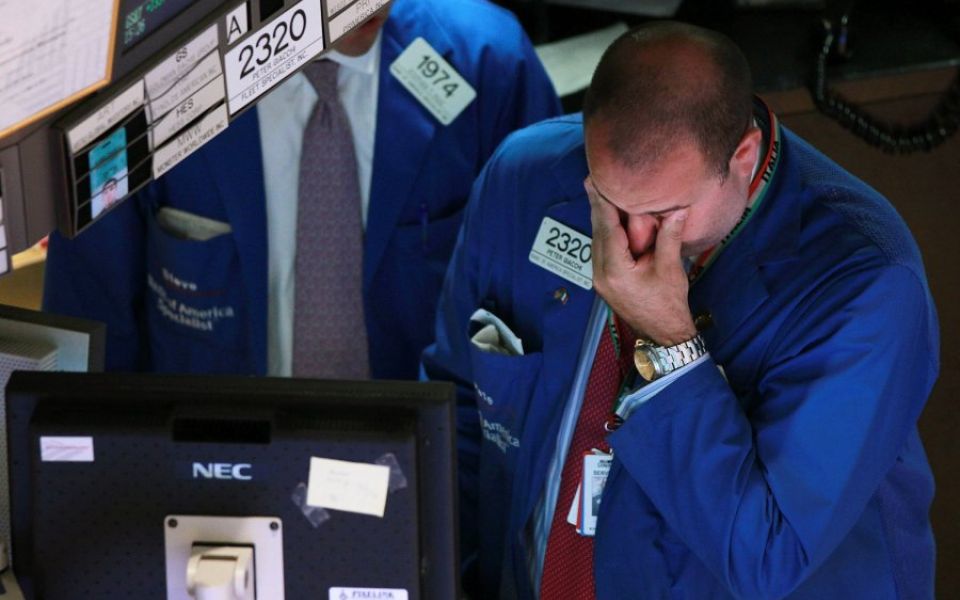
Friedman expects a recession in the United States. “Right now, we are seeing completely irrational numbers in the stock market,” he said, “which is a normal, healthy bubble. We are also seeing a flattening yield curve. We are seeing all the forerunners of a recession.”
But the most dramatic political changes triggered by a US recession may play out in Europe.
“The United States has become a critical export partner of Germany,” Friedman noted. And Germany, currently the fourth largest economy in the world, “is absolutely dependent on its customers’ ability to buy.” In a country where almost half of the gross domestic product (GDP) comes from exports, a 5% decline in exports leads to an almost 2.5% decrease in GDP.
“The United States is heading for a period when it’s not going to be able to buy as much,” Friedman said. But the United States has gone through such periods before and isn’t overly dependent on exports to drive its economy. “For us, a cyclical crisis. For Germany, a secular crisis.”
In the aftermath of such a crisis, Friedman will be watching the steps Germany takes to address its declining GDP — and the rising unemployment that accompanies it.