US-UK tech deal falls short: trillion-dollar talk, but little digital alignment

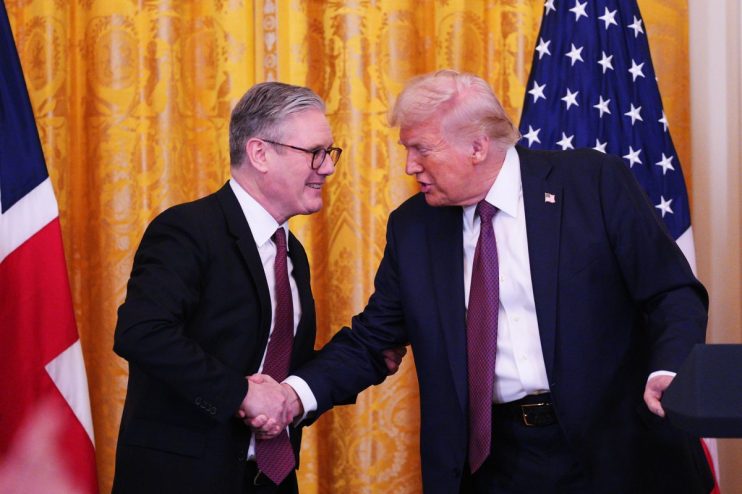
The new US-UK tech pact may offer political optics of partnership, but falls far short of real digital alignment, exposing widening policy divergence and limited strategic substance, says Paul Armstrong
The recently announced US-UK trade agreement was billed as a major reset in transatlantic cooperation, with Prime Minister Keir Starmer positioning the UK as America’s closest tech ally. His message was sharp: the UK and US are the only countries with a “trillion-dollar tech sector,” implying parity, shared ambition, and a unique bilateral edge in a fractured global tech landscape. On paper, it looked like a win. In reality, the deal reflects how thin real digital alignment remains and how quickly it could unravel.
For all the lofty language, the agreement stops well short of reshaping digital trade. There were no major breakthroughs on data flows, AI regulation, digital services taxation, or IP protection, issues at the core of today’s tech economy. The UK’s Digital Services Tax, a long-standing irritant for US tech giants, remains untouched. We continue to apply a two per cent levy on revenues from large digital platforms operating in the UK, a policy Washington has consistently argued unfairly targets US companies. Despite extensive lobbying, the Biden administration opted not to push the issue further. No resolution, no timeline, no guarantees. Just more can-kicking.
Tariff changes on steel, aluminium and autos made headlines, but digital was conspicuously absent from the main deliverables. All of which suggests one of two things: either the UK government knows digital alignment with the US is a longer-term play, or it knows that trying to hammer out a framework now, under political and legal uncertainty on both sides, would do more harm than good.
Growing divergence
US-UK digital policy divergence is growing, not shrinking. The UK is rolling out new frameworks on AI safety and competition through the Digital Markets, Competition and Consumers Bill, while the US remains gridlocked on almost all fronts (privacy, AI liability, antitrust enforcement) depending largely on sector-specific interventions and agency action. Attempts at coherence inside the US are already difficult. Coordinating with a transatlantic partner whose regulatory stance leans closer to the EU in tone, if not form, only compounds the problem.
While the UK continues to push its narrative as a bridge between Silicon Valley and Brussels, that position is becoming harder to maintain. The US is increasingly focused inward, consumed by regulatory uncertainty, political polarisation, and looming election instability. Even the UK’s preferred positioning as an AI governance leader through the Bletchley Park summit and posturing around “AI safety” hasn’t led to tangible alignment on policy or enforcement with the US. American firms are treating London’s frameworks as advisory; relevant, but non-binding.
The political outlook doesn’t help. A third Trump administration, assuming we all survive the second, and it actually happens, would introduce more volatility into an already fragile transatlantic tech axis. Trump’s first term was marked by hostility toward multilateral trade deals, unpredictability in tech regulation, and selective enforcement targeting specific foreign firms. His second isn’t looking great, but he and his team clearly don’t want to lose the AI battle, but this is at odds with the slowly slowly catchy money approach we currently have.
So where does this all leave us totally aligned, all fine, no-problem islanders?(!) The trillion-dollar claim offers political punch, but it’s worth unpacking. The US tech sector is driven by Apple, Microsoft and Alphabet, each individually worth over $1 trillion. The UK’s $1 trillion figure is a sector-wide valuation, encompassing start-ups, mid-market players, and established firms across fintech, biotech, deep tech and digital services. While still a remarkable achievement, third in the world, first in Europe, it isn’t a peer-sized match to Silicon Valley. Not yet, nor anytime soon.
If we want to turn the optics of this deal into substance, it needs to double down on strategic areas where the US sees value but isn’t leading. AI safety is one option, but the opportunity lies in building trusted frameworks for interoperability on data portability, transparency, digital IDs, and green tech standards. London has room to become a regulatory sandbox that US firms can actually operate in without triggering federal scrutiny, which is where the value (and the danger) lies.
The UK also needs to invest in scale. Not just seed-stage innovation but scale-up funding, industrial deployment of AI, and sovereign capability in semiconductors and advanced compute. The US won’t treat the UK as a serious tech partner if it can’t deploy technology at scale, support its own chip supply chain, or defend its data infrastructure. Tech sovereignty is no longer optional, it’s table stakes.
The next step
Joint investment mechanisms could be a logical next step. A shared UK–US innovation fund targeting emerging tech could cement the alliance beyond speeches and slogans. Strategic support for dual-listed companies and smoother regulatory alignment between the FCA and SEC could help high-growth UK firms stay local without needing to relocate or re-incorporate. There are also near-term wins to be had in talent mobility, easing high-skilled visa flows between the two markets, especially for AI researchers, quantum specialists, and cybersecurity engineers. Digital trade has been semi-parked, but the pressure to un-park it will return quickly. AI deployment is accelerating, and UK-based firms using American models or integrating US APIs will face regulatory questions that neither country has answered yet. Jurisdiction over output, liability for misuse, data protection across borders; none of this is settled. Without a bilateral framework, courts and platforms will likely decide in a piecemeal fashion.
For now, the tech pact is more mood than muscle that signals intent and boosts confidence that is made to keep doors open. Can you build a long-term strategy around it? Unlikely with US policy in limbo, and with UK growth still fragile, but they’re…er…trying(?). The trillion-dollar sectors may exist on both sides of the Atlantic. Whether they behave like a single market is a completely different matter entirely.
Paul Armstrong is founder of TBD Group(including TBD+), and author of Disruptive Technologies