The key to rapidly vaccinating Africa from malaria and Covid is in our hands

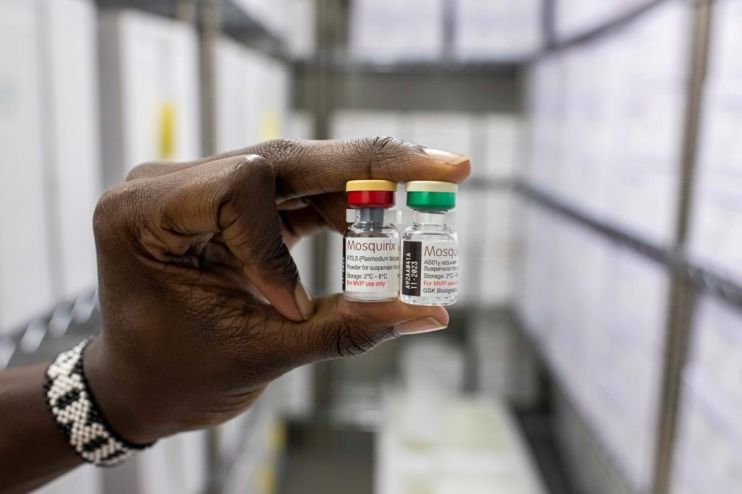
For over a thousand years, malaria has made victims out of everyone from neolithic dwellers, early settlers in ancient China and Greece and now the poorest people in sub-Saharan Africa. In the 20th Century, it took between 150m and 300m lives.
Last week, the first malaria vaccine was approved, hot on the heels of the Covid vaccine. But even with an effective inoculation, getting the vaccines where they are needed most is the largest challenge.
President Biden and other global leaders have been blunt: no economy can return to normal until Covid-19 vaccination programmes are effective everywhere. Getting it right in some places and ignoring others condemns us all to waves of new Covid-19 strains.
Nations across Africa have a significant task on their hands. Many have limited health infrastructure and decentralised primary healthcare. Across the continent, over 1.2bn people need to be vaccinated against Covid-19. Many live across vast and remote areas. So far only around 4 per cent of Africa is vaccinated.
The infrastructure we develop to vaccinate people against Covid-19 will also be able to save lives that would otherwise be lost to malaria.
The US has set a target of at least 70 per cent of the population fully vaccinated across the country, in all income categories by 2022. There are funds to back it up – with US$3bn in 2021 and US$7bn in 2022 to ensure it gets to where it needs. If supply chains are complicated in the US, for Africa, without the technology to back it up, it’s an existential trial.
The African Union is leading the sourcing of vaccines using Covax, the vaccine access enabler. To vaccinate 60 per cent of the population, Africa will need around 1.5bn Covid-19 vaccine doses, costing between US$8bn and US$16bn. On top of this, the programme must cater for the over 25 million migrant workers moving around within the continent.
Securing vaccine supplies is one thing – and an effective public-private partnership will be key to delivering this. But using the technology we have available to ensure smooth access to injections is another. In this case it’s deceptively simple: mobile phones.
In order to work, a vaccination programme must tell people when their vaccine is due, ensure the vaccine is available, call in priority groups first, validate they are who they say they are, schedule the locations, administer the jabs and give patients a record of the vaccination. In the UK, this was enabled by the NHS. But even that didn’t go without a hitch, with people accidentally bumped up or down priority lists. It’s an even tougher challenge in African nations without a tradition of centralised health services.
Most vaccine programmes in Africa currently rely on cumbersome paper records. Where there is the NHS app in the UK, all of these cues need to be managed by phones. In sub-Saharan Africa, 46 per cent of the region are subscribed to mobile phone carriers. So while it’s no panacea, it will take a significant burden off of the struggling systems.
Initiatives such as mVacciNation, a partnership between Vodacom and the African Union Development Agency, is already being used by South Africa’s Department of Health. There, over 15m vaccinations have already been delivered.
It directs patients on when and where to get their vaccine, but it also helps health workers have access to real-time information on vaccine supplies and medical equipment. After their first jab, the digital record is updated and a next dose scheduled, if needed. It also provides certification.
The implementation of systems like this means ministries and health departments have full visibility and control by registering all vaccines in specific locations, ensuring there is no stock shortage. Patients and healthcare providers are all connected in a full ecosystem, visible on a dashboard by the country’s healthcare system.
According to the World Bank, Covid-19 vaccination campaigns offer countries with lagging health care systems the opportunity to improve their overall information systems and create a ready-made mechanism for the WHO-mandated rollout of the malaria vaccine. It will save lives.
The success of GAVI, the global vaccine alliance, in leading the Covax vaccine procurement mechanism is a testament to urgent public-private partnerships.
Our supply chains need a similar shake-up to deliver health programmes which save lives. it would guarantee African countries receive vaccines but also have the means to get them vaccinated for Covid-19, malaria, and any other disease which threaten us in the future.