Vauxhall job losses are an inevitable result of destructive net zero policies

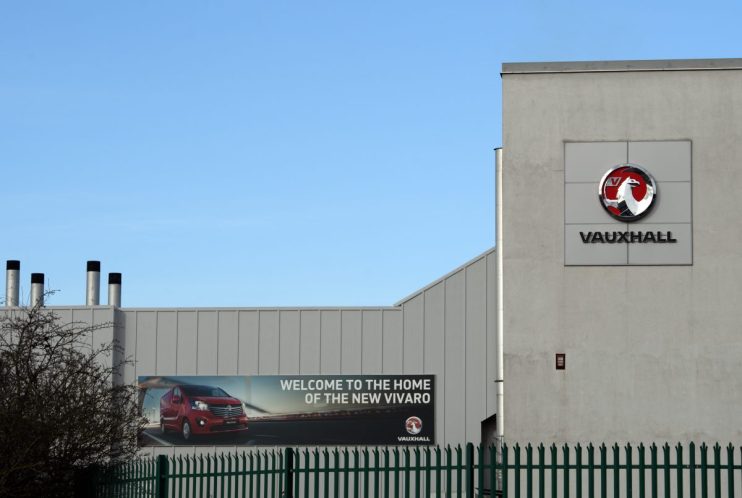
The self-destructive petrol car ban has incentivised Vauxhall to destroy a productive car factory with potential to manufacture EVs instead of investing in green technology, says Andy Mayer
The decision by Vauxhall owner Stellantis to close their Luton van production plant, risking 1,100 jobs, only nine months after announcing expansion plans that included a new electric model (EV) is a dire commentary on the state of the UK’s net zero policies. Manufacturers are often shy about their reasons for these decisions, but not this time. Vauxhall have directly cited the UK’s Zero Emissions Vehicle (ZEV) mandate, and the new Labour government’s tone-deaf response to long-standing concerns.
The ZEV is a policy introduced in 2020 by the Conservatives that requires car and van manufacturers, from 2024 to sell a rising share of their output as qualifying EVs from 22 per cent to 80 per cent by 2030, or face fines of £15,000 per vehicle. This was to support a proposed ban on new petrol and diesel – or internal combustion engine – vehicles (ICE) sales by the same date, and hybrids by 2035. Part of a suite of measures that enabled then Prime Minster Boris Johnson to signal his global leadership on climate change before hosting COP26 in Glasgow in 2021.
Following weak sales growth, the Sunak government relaxed those targets by five years in 2023, but this was reversed by Labour in September. As a result, Vauxhall are incentivised to destroy a highly productive ICE facility with EV potential, rather than accelerate EV investment. Rarely are policies so transparently self-destructive in their unintended consequences. In response, Labour have promised to consult and tinker with the ZEV mandate, perhaps spreading qualification criteria over several years, with proposals expected in January, but not change the targets or bin the policy. They are very much wedded to aping Johnson’s zeal for waving green flags, even when red flags are waved back.
The transition is happening regardless
Behind the drama the UK transition from ICE to EV was happening regardless, albeit slowly, as you might expect for systemic change in a market where the product’s average lifecycle is about two decades. The Conservatives had unwisely attempted to stimulate the change with indirect subsidies (plug-in car grants that reduced purchase prices by up to £5,000) from 2011. However, they closed the scheme in 2022, citing a preference for investment in the charging infrastructure, but also underpinned by a growing concern with the morality of having the general taxpayer fund the consumption choices of generally rich adopters of EVs who could well afford the 40-50 per cent higher prices. Woke welfare for the well-off is not a wise policy strategy.
Woke welfare for the well-off is not a wise policy strategy
The ZEV then was in part a technocratic wheeze to hide the subsidies. Car makers would be compelled to discount EVs to avoid the fines, and this is happening, with industry estimating ZEV will cost them £6bn this year, near £2bn in fines and £4bn in discounts. The fines nonetheless landing as despite lower prices as consumers are still not buying. Range-anxiety persists, more are working from home since the pandemic, 40% of households can’t have easy access to a charging point, electricity is expensive and expected to become more so, higher interest rates make car finance less affordable, EV vans are less powerful, and second-hand vehicles are less than half as expensive as new.
Meanwhile, China continues to dominate new EV development, rooted in cost advantages in scale and the supply chains for key components like batteries. A protectionist Western carbon tariff wall merely maintains high prices, which in turn slows the pace of any transition. Or other future ZEV technologies, for example fuel-cell, hydrogen, or biofuel-based powertrains may provide alternative solutions. So if there’s an upside to this woeful tale, it may be that in the end, none of this matters.
Andy Mayer is chief operating officer at the Institute for Economic Affairs