We can’t just teach kids maths, they need to understand the stock market

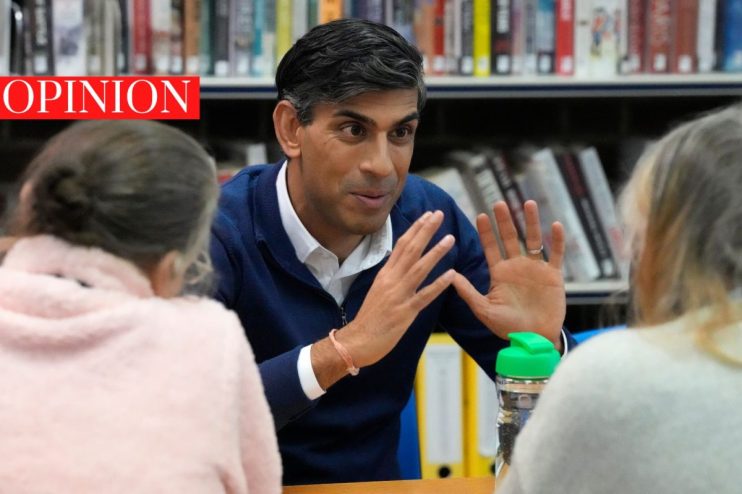
Rishi Sunak’s plan to fix Britain’s mathematical and numerical skills is a good one, but it needs to be complimented with plans to teach kids how to save and invest their cash, writes Daniel Harrison
Over the past few months, we’ve finally seen politicians advocating for more practical education. Rishi Sunak’s pledge to teach maths to 18 and Labour’s idea of teaching real-life maths are commendable, but it’s no good just learning how to do a household budget. If we want our children to not only manage their money but become wealthy as individuals and as a nation then we need to teach them how to invest.
In the UK, we are already paying the price for low levels of individual investment in the financial markets. Earlier this year, research from the Centre for Policy Studies found that UK retail investors (that’s everyone who isn’t a professional) control just 21 per cent of the country”s assets under management. Earning a fifth of those assets might sound like a lot, but it’s the lowest percentage in Europe, and it’s just one of the reasons why our economy is struggling.
Put simply, the UK has chronically low investment. Compared to other G7 countries, the UK has the lowest levels of business investment and the last time the UK exceeded the medium level of investment as a proportion of GDP was in 1990. Investment is the fuel that powers our economy. Want more jobs? Better jobs? More innovation? The answer is, and always has been, investment. Without it, the engine of the economy stalls.
It’s no surprise then that investment is something the government is concerned about. In response we’ve had the Chancellor’s Mansion House reforms, the Kent Review, and Lord Hill’s UK Listing Review – all of which have focussed on what the low levels of investment mean for the country. What we haven’t had, is enough focus on individual savers. I believe that politicians’ plans for maths reforms could provide that focus.
Across the UK, Britons are sitting on £1.8tn worth of cash in savings accounts, enough to buy the entire FTSE100. However, as a nation too few of us have been taught the effect of leaving this money in savings. If you think that money in your bank account is setting you up for retirement you could be in for a shock – it’s losing value.
The pernicious combination of a culture in which we save rather than invest and the eroding effect of inflation is that too many Britons reach retirement and find themselves with no safety net, a poor standard of living in retirement, working well into their 60s and perhaps even their 70s. The maths of inflation is cruel and inescapable. Next year, every £100 you have saved will be worth less than £94.
Even if you have money invested in a high street savings account, according to Moneyfacts the average interest you will earn on an easy-access savings rate on a £10,000 investment is 3.21 per cent. With inflation at 6.7 per cent you’re still losing money – just a little more slowly.
The answer to this puzzle, again, is investment. It’s the engine of the economy, but it’s also how individuals can build wealth. Yet every day millions of us fail to grasp this solution. As a country, too often we are afraid of stock markets. We are scared that we will lose all our money. We ignore the lessons of history – that markets and therefore investments recover from stock market drops – just as they did after 2008, 2016 and 2020.
It’s time we taught that history to children. We should be teaching our children how over the past ten years, the MSCI World Index (a global stock market index) has risen over ten per cent each year. And we should be teaching them that for that reason, investing usually provides greater returns than even today’s relatively high savings accounts can provide.
We should be teaching our children that although the stock market may seem daunting, there are more ways than ever to get involved. We should be teaching our children that there are financial advisers to help, companies like mine who provide information in easy-to-digest graphics, and lower-risk exchange-traded funds. To help bridge this gap we have stepped in with our On the Money Campaign. We have 115 of our own financial advisers in schools up and down the country, providing lessons to 30,000 children. We’ll keep going, but much more needs to be done.
It’s not good enough to use maths reforms to teach kids about how to pay the gas bill and have enough money left for a takeaway. Our politicians need to be more ambitious and make learning about investing the core of our new curriculum. Our children deserve to know that the path to wealth might be slow, but that it’s available for far more of them than we recognise.