We meet Kate Holt, the photographer capturing the lives of refugees

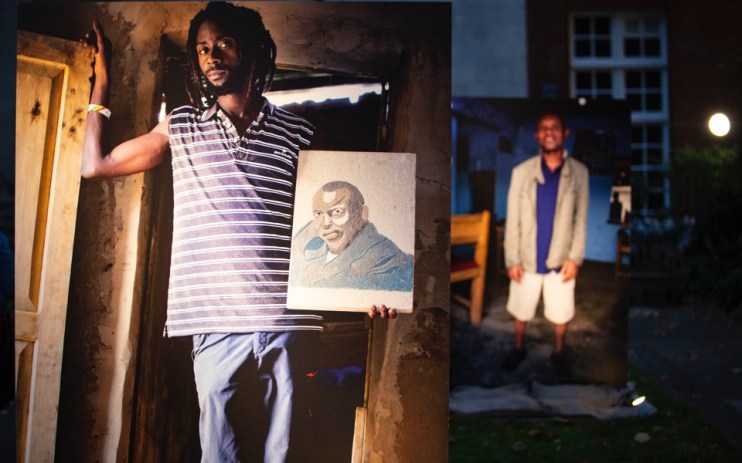
Opportunity International is one of Morning Wire’s favourite charities, working with refugees to provide them with financial loans and training to enable them to work their own way out of poverty. We caught up with photographer Kate Holt, who recently hosted an open-air exhibition to help raise awareness of the charity’s vital work.
Tell us a little about yourself
Born in Zimbabwe, I travelled extensively with my family while young, but my first trip alone was to Romania, following the fall of Ceausescu in 1991.
News of the horrific conditions in which Romania’s unwanted children were being kept had hit the British headlines and I decided to see if I could help. Arriving in Negru Voda orphanage, home to 360 severely disabled children, in1992 after leaving school I was deeply moved. Many of the children had never left the confines of their wards where they were crammed three to a bed – beating their heads against the walls in violent frustration, or rocking silently to comfort themselves after years of neglect. At the age of 19 I had no idea the world could be so cruel. I worked there for a year and returned every summer while studying at university.
Realizing that aid work touched the tip of much bigger issues, I turned to journalism and photography as a way to expose these to a wider audience, and those with power to make a difference. After leaving St Andrew’s University, I joined the BBC’s News and Current Affairs department and subsequently went on to study photojournalism at the London College of Printing. From there I worked on different photo desks for London newspapers before moving to Africa in 2005 full time to cover the humanitarian issues throughout the region for UK newspapers and NGO’s such as Opportunity International
How did your lasting relationship with Uganda come about?
In 2005 I moved to Kenya from the UK and travelled extensively throughout East Africa. Uganda was one country I have returned to frequently. It’s vibrant culture with friendly people and stunning landscapes, full of interesting stories. It is also a melting pot of cultures from across the region, being one of the largest refugee-hosting nations in the world, with over 1.4m refugees in 2020.
Your work is very candid – how do you build trust with the people you photograph?
As a photographer, it is essential to talk to people first about their lives and experiences before starting to take photographs of them. It is always important to have enough time to talk to people to make them feel comfortable about telling their stories. Everyone has a unique story to tell and I am always surprised by what people are willing to disclose to a total stranger. I find that the more open I am with people about myself the more open they are with me.
How have you seen the lives of the people you have photographed change over the years?
I have been photographing humanitarian crises now for over 20 years. There are several marked differences now to the stories I hear from when I first started out. The first is the impact of climate change and how this now forms an element of everyone’s story. Whether is is because they have experiences floods, the impact of droughts or illness due to lack of access to water – it is now part of everyones narrative.
Travelling through a lot of countries I have also noticed the impact of the increasingly large numbers of refugees on landscapes – when war or drought causes people to flee their homes and they have to move to find safety or food, the impact on the landscape and forests can be devastating as they forage for food, chop trees for firewood or find grazing for their animals. More support is needed to support people who need to find safety to ensure their basics needs are met to reduce this environmental impact.
How did you begin working with Opportunity International?
I first began working with OI in 2009 – the first trip I did was to Ghana to document their work with Coco famers in Kumasi. I was stuck by their work – as it was totally different to other organisations I worked with. OI wasn’t offering hand outs – it was offering people financial means to improve their lives through small loans, banking services and education that empowered them to make choices for themselves. The impact I saw on women particularly was transformative.
I have met so many of their clients over the years in Ghana, DR Congo, Mozambique and Uganda. Through very small loans thousands of women have been able to set up small businesses that have given them financial freedom.
How was your work affected by the pandemic?
Last march when the pandemic struck, like everyone, I was forced into staying in one place. As well as being a photojournalist I also run a communications agency that specialises in using locally based talent to gather photographs and stories. This model came into it’s own during Covid as there was a huge demand for locally based photographers so I have been building this company over the last 18 months.
The Covid Pandemic has definitely changed so much about the way people live, work and think. I am very positive about the way individuals and communities are coming together to tackle some of our most pressing issues, like climate change and poverty. For years people have turned to governments for the answers but with Covid people have learnt that they have to take more responsibility for themselves and the world they want to live in.
Tell us about your open-air London exhibition
I really wanted people to feel like they were meeting the subjects in the photos and be able to interact with them. If you print a photo and put it in a frame on a wall there is very little sense of engagement with the person in the image. I wanted this to be a more personal experience so visitors felt a connection and were given the opportunity to absorb the power of the stories.