Skip to content
Saturday 8 August 2026London --:--Frankfurt --:--Zurich --:--
NewslettersSearchEN · DE
MorningWire

European business, markets and politics

FTSE 100
10,901.09
+0.31%
DAX
26,319.45
+0.69%
CAC 40
8,714.93
+0.17%
STOXX 50
6,523.86
+0.33%
  • Europe
  • Markets
  • Business
  • Economy
  • Technology
  • Politics
  • Opinion
More
GermanyFranceBankingAIEnergyFintechPropertyCapital Markets
  • Germany
  • France
  • Europe
  • Markets
  • Business
  • Economy
  • Technology
  • Politics
  • Opinion
  • DE
Tuesday 17 March 2020 4:30 am  |  Updated:  Monday 16 March 2020 10:31 pm

We need a carbon border tax to get Britain to net zero

By: Eamonn Ives

Add as a preferred source on Google
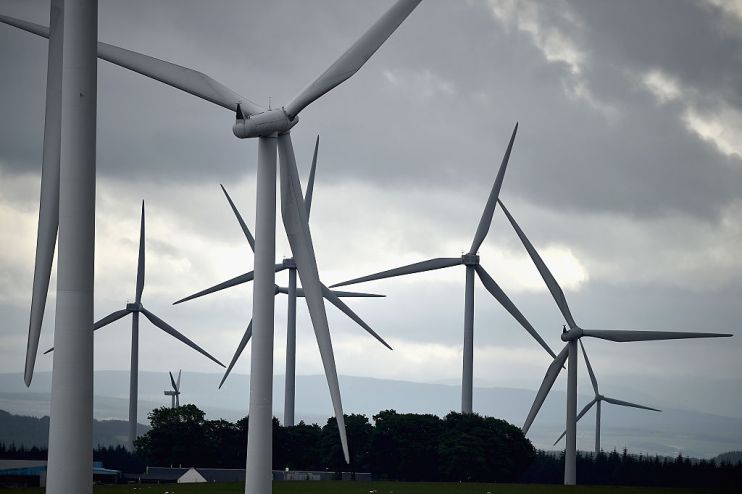
Scotland's Onshore Wind Farm Policy At Risk From Government Cuts
The government will reintroduce controversial subsidies for onshore wind farms as it looks to meet carbon reduction targets.

Later this year, the eyes of the world will be on the UK as it hosts COP26. 

While delegates won’t convene at the UN’s annual climate change conference until mid-November, the government needs to consider now how it can showcase leadership on climate action. 

The UK starts from a position of strength. In 2019, it became the first major economy to legislate for a net-zero target for greenhouse gas emissions, and can also boast the fastest rate of decarbonisation among G20 nations this century. 

Much of that success has been down to cleaning up its energy sector. Britain now has a flourishing wind power industry, which generates a sizeable portion of its electricity needs. Indeed, owing partly to this, the grid went without coal-generated power for more than 18 continuous days between May and June last year. 

Or so it would seem. In fact, a new paper from the Centre for Policy Studies explains how, even then, the UK was reliant on electricity produced by burning coal. 

Undersea cables, known as interconnectors, provide Britain with power generated elsewhere. As ministers cannot trace exactly how each unit of imported electricity is produced, power from interconnectors are largely omitted from official statistics. 

But modelling of energy flows during the so-called “coal-free fortnight” shows how the largest share of interconnector electricity would have come from the Netherlands, which produced 535.8 gigawatt hours of coal-fired power over that period. Alas, impressive as the run was, Britain still depended on coal — albeit indirectly — for energy. 

This statistical sleight of hand is a serious problem. It allows the government to pat itself on the back, while hiding emissions off the balance sheet. If the UK is sincere about genuinely getting to net zero, it must think of how to square this circle. The fact that eight new interconnectors are due to come online by 2027 — supplying perhaps a fifth of our electricity — only underlines this.

Read more

Miliband refused to meet motor trade body to discuss zero emissions mandate

Ed Miliband speaking at a podium during a press conference, addressing energy policy reforms and climate change initiatives.

The solution we propose is a carbon border tax. 

Applied to electricity imports, the tax would be levied on the basis of the exporting state’s electricity generation mix and its respective carbon intensity. For a country like France, which generates much of its electricity from nuclear power, the tax would be relatively low. For one like the Netherlands, which won’t phase out coal until 2030, it would be higher. 

The Centre for Policy Studies seldom advocates for higher taxes, but there is good reason to support this one. 

First, British electricity is already taxed through the carbon price floor, which levies an £18.08 charge for every tonne of carbon dioxide created in the process of generating electricity. Introducing a carbon border tax would simply level the playing field between domestic and imported electricity.

Second, carbon taxes of all sorts are — rightly — hailed by economists as the easiest and most efficient way to tackle global warming. Climate change is, fundamentally, a market failure, in that more carbon dioxide is produced than is socially optimal. Even hard-nosed free-marketeers can be sympathetic to taxes in order to price in negative externalities. A carbon border tax could also prevent the ill-advised “solutions” of the left from gaining traction. 

COP26 is a critical moment, both for the environment and for Britain to stand tall on the international stage. The government must be bold, and there are scarcely few better places to start than by introducing a carbon border tax on our electricity imports.

Main image credit: Getty

Read more

Get ready for new energy minister Miatta Fahnbulleh’s war on London’s drivers

Miatta Fahnbulleh, director of New Economics Foundation, smiling and holding red documents, wearing a black blazer.

Share this article

  • Facebook
  • X
  • LinkedIn
  • WhatsApp
  • Email

Similarly tagged content:

Sections

  • News
  • Opinion

Categories

  • Business
  • Opinion
  • Tech

Trending Articles

  • Why the Loire Valley is about so much more than fairytale castles

  • Why HMRC is huge Premier League transfer window tax headache

  • Thames Water faces fresh threat to survival after pensions regulation breach

  • Back to basics: Sainsbury’s gradual retreat from the British high street

  • Thunder Call set to Strike in Shergar Cup Sprint

More from Morning Wire

  • Miliband refused to meet motor trade body to discuss zero emissions mandate

    Transport & Infrastructure
    Ed Miliband speaking at a podium during a press conference, addressing energy policy reforms and climate change initiatives.
  • Get ready for new energy minister Miatta Fahnbulleh’s war on London’s drivers

    Opinion
    Miatta Fahnbulleh, director of New Economics Foundation, smiling and holding red documents, wearing a black blazer.
  • Energy operator ‘flying blind’ as net zero push threatens hiked bills and blackouts

    Energy
    Energy prices are high due to a range of factors including volatile gas prices and high net zero levies.
  • Sizewell B granted 20-year life extension

    Energy
    Sizewell B nuclear power station in Norfolk with clear skies and surrounding landscape, highlighting energy infrastructure.
  • Meet the new energy minister who believes lower growth is “good news”

    Opinion
    Katie White, a woman with curly blonde hair, smiling in a navy blazer and white collared shirt against a dark background.
  • BP eyes finalising sale of solar arm to Kuwait-backed wealth fund

    Energy
    British Petroleum BP forecourt with fuel pumps and company signage visible in a business setting, highlighting energy serv...
  • From Mongolian camels to Tibetan verbs: the absurdity Ed Miliband’s aid spending plans

    Opinion
    Ed Miliband speaking at a podium during a press conference, addressing energy policy reforms and climate change initiatives.
  • Give London power to level up the rest of the country

    Opinion
    Business professionals in formal attire engaged in a lively discussion at a corporate meeting in a modern office setting.
MorningWire

Independent European business, markets and political news for decision-makers.

Morning Briefing

Europe

  • Germany
  • France
  • Europe
  • UK & Ireland

Business

  • Markets
  • Banking
  • Technology
  • Energy
  • Property
  • Fintech

Editorial

  • Opinion
  • Editorial Policy
  • Corrections
  • Contact

Company

  • About Morning Wire
  • Privacy Policy
  • Terms of Use
  • Cookie Policy
© 2026 Morning Wire Ltd · Published by Morning Wire Media, Bahnhofstrasse 65, 8001 Zürich, Switzerland
Privacy · Terms · Cookies · Facebook