We need a Hippocratic oath for planning rules: First do no harm

Planning has become so complicated that applications get approved despite the system rather than because of it. If we want growth, we must accept that regulations cannot be used to solve every societal problem, says Gordon Adams
To misquote Sir Humphrey, the English planning system has the engine of a lawn mower and the brakes of a Rolls Royce. Great at stopping things, but requires a herculean effort to get anything through.
At its core though, the planning system is simple – create a local plan to guide development and applications submitted are assessed in accordance with the plan and either approved or refused. The problem (which has been growing unchecked) is a conga line of additional policies put into the system that new developments are required to address.
The infamous bat tunnel has rightly captured attention, but it is just one example of the policy metastasisation. I am the first to agree that planning departments need to be properly resourced, but that is not the first action: give them less to do. For no doubt well-intentioned reasons, town planning has gone from ‘land use and appearance’ to seeking to solve every problem in society, to the point where the system itself becomes the problem. Applications get approved despite the system rather than because of it.
The noises coming out of government on planning reform are to be welcomed, but this needs to be followed through with action. There is precedent for reform – the coalition government created the National Planning Policy Framework (NPPF) which reduced over a thousand pages of national planning policies to 52 pages; the world did not end and the NPPF has been an effective policy tool. However, the unfortunate by-product of this has been the explosion of local plans, with the 492-page Wandsworth Local Plan a classic case.
If the priority is growth and delivery, the creation of homes and commercial space to generate jobs, then the complexity needs to be stripped out. Biodiversity net gain? Strip it out. Nitrate neutrality? Strip it out. There needs to be an unapologetic focus on the basics of ‘what is it’ and ‘what does it look like’, of using the planning system as an enabling tool to create great places. When setting policy, there should be a planning equivalent of the Hippocratic oath: first, is this necessary? Will it harm growth? Will it enable delivery?
Biodiversity net gain? Strip it out. Nitrate neutrality? Strip it out
If the priority is to try and create a utopia where new development fixes every societal problem from economic inequality to sustainability, there needs to be acceptance that not much will get built. It is a choice – you cannot have both.
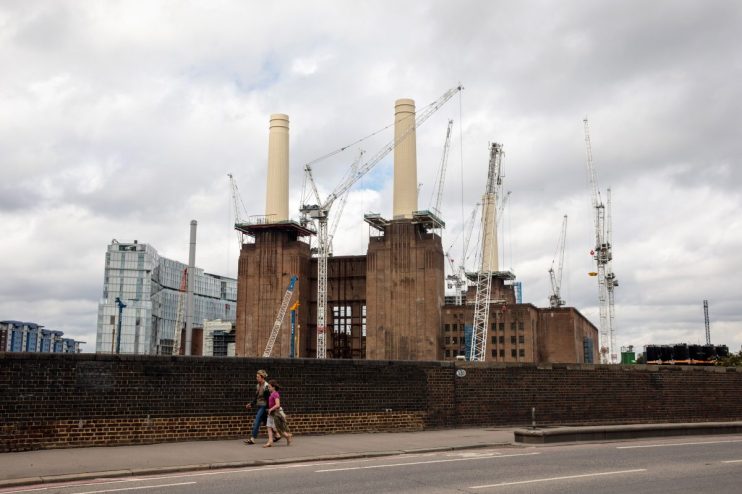
I was very lucky at Battersea Power Station to have supportive shareholders who funded the consultant machine required to process circa 600 planning applications, one of which was 9,000 pages. But is it right that the cost and complexity of new development prices out small and medium developers unable or unwilling to take on the cost and risk of planning?
Outcomes, not processes
In 12 years, 2,200 new homes and a new town centre were delivered as part of the Battersea Power Station masterplan, with the wider Nine Elms Vauxhall Opportunity Area ultimately delivering 20,000 new homes and 25,000 new jobs. Growth and delivery can be done, but only with an enabling planning framework and collaboration.
Good planners are focussed on outcomes, not processes, and use the system to negotiate and collaborate to achieve delivery of new, well-designed, attractive development that everyone will be proud of. It is frustrating then for everyone when countless hours are wasted arguing over technical requirements to the point where everyone has forgotten what is being built. Less is more.
We need a planning system with the engine of a Rolls Royce, not just the brakes of one.
Following a career in the public sector, Gordon Adams spent 12 years as head of planning for Battersea Power Station Development Company.