Skip to content
Friday 28 August 2026London --:--Frankfurt --:--Zurich --:--
NewslettersSearchEN · DE · FR
MorningWire

European business, markets and politics

FTSE 100
10,792.54
-0.79%
DAX
26,367.24
+0.31%
CAC 40
8,319.87
0.00%
STOXX 50
6,424.73
-0.71%
  • Europe
  • Markets
  • Business
  • Economy
  • Regulation
  • Politics
  • Opinion
More
GermanyFranceEU InstitutionsCompetitionPublic AffairsBankingTechnologyEnergy
  • Germany
  • France
  • Europe
  • Markets
  • Business
  • Economy
  • Regulation
  • Politics
  • Opinion
  • DE
Wednesday 25 September 2019 4:27 am  |  Updated:  Tuesday 24 September 2019 6:30 pm

We should celebrate the glory of Britain’s unwritten constitution

By: John Oxley

Add as a preferred source on Google
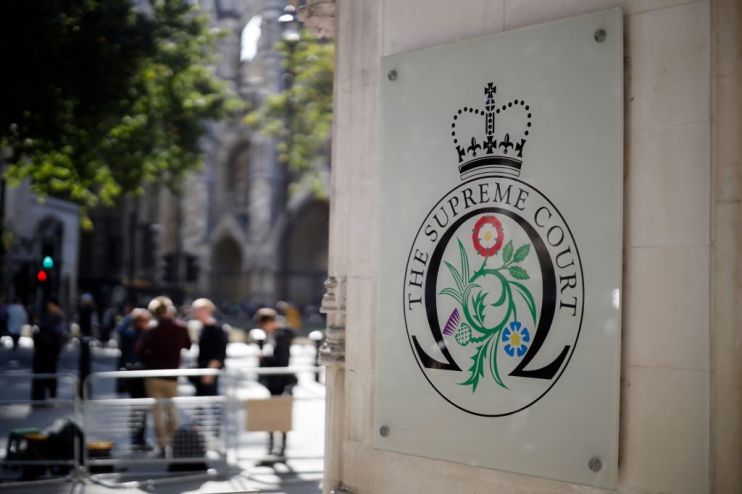
The logo for the Supreme court at the entrance to the court in central London on the third and final day of the hearing into the decision by the government to prorogue parliament on September 19, 2019. (Photo by Tolga Akmen / AFP) (Photo credit should read TOLGA AKMEN/AFP/Getty Images)

For most of the Cold War, there sat in a safe in Whitehall a 16-chapter document. It was a game plan for when the bombs started falling. 

In four minutes, as the warning sirens wailed, the United Kingdom would be turned from a constitutional monarchy to 12 regional mini-kingdoms. Each would be overseen by a cabinet minister, a general, a chief constable and a judge, vested with powers that would undo half a millennium of liberal reforms – from opening private post without a warrant to the summary execution of looters. 

Yesterday, we saw a far less dramatic twist of constitutional history, but a significant one. 

The Supreme Court held, for the first time, that a prorogation of parliament was unlawful and therefore null. That the justices could unanimously resolve a knotty issue of law, chastening the executive in a unique case, is tribute to the strength of our unwritten constitution. 

We are fortunate to be governed by a system which celebrates flexibility, marrying pragmatism with respect for immutable concepts of justice and the rule of law. As the court itself observed, the judges’ role in this was established in 1611, with the early modern court striking down King James I’s use of proclamations to rule without parliament. 

The courts have similarly acted in the past to protect the rights of those producing seditious pamphlets in 1765 and considering the outer limits of emergency powers in both World Wars. As the state’s position and power has changed, so too has that of the court to oversee it. 

Through the ebb and flow of history, we have arrived at an excellently functioning constitutional settlement. Parliament sits supreme, able to make law as it wishes. The executive governs within the limits of those laws – and the judges interpret that law. 

Tuesday’s decision was no great change in this, but merely a new application to a new question. 

This system means that Britain can absorb changes both in society and in politics without fundamentally challenging the foundations of our state. Like a skyscraper which sways in an earthquake, our fluid constitution can manage challenges posed by new technologies, political developments, and systems in a way quite unlike most others. 

Read more

Jamie Carragher: HMRC petitions for Sky Sports star to be declared bankrupt

Jamie Carragher speaking into a Sky Sports microphone during an interview, with a blurred background.

A look across the Atlantic shows us the alternative. A document written in 1787 largely reigns supreme. It balances powers in a way that prevents progress on key issues, while making the packing of a court with political supporters, rather than great lawyers, an important electoral prize. 

Any issue which collides with the constitution (gun control, abortion) is likely to end in impasse. Changing the constitution requires super-majorities in both Houses and three quarters of the states to affirm it – one amendment took from 1789 to 1992 to pass.

Closer to home, Ireland’s constitution highlights the problems of codified rules tied to a certain time. It has prohibited divorce, limited abortion, and prevented same-sex marriage – each law having to be repealed or amended by a nation-wide vote. 

Even now, the state is obligated “to ensure that mothers shall not be obliged by economic necessity to engage in labour to the neglect of their duties in the home”. With any change necessitating a referendum, the road to pragmatic progress to keep pace with society is a fraught. 

A nation’s constitution only really comes into play when things have become messy. In such situations, rigid rules carved out in very different circumstances are often more of a hindrance than a help. 

Our unwritten constitution lets the system cope with new challenges without ever needing a great upheaval. It has been hammered out by history, capturing the wisdom of the ages.

And if something isn’t working – over-powerful courts, an unruly executive, or the country becoming an irradiated wasteland – change can be rapid and effective.

Main image credit: Getty

Read more

Clio hires legal tech veteran to overhaul backlogged courts

The SRA has criticised law firms that handle high-volume consumer claims for poor practices

Share this article

  • Facebook
  • X
  • LinkedIn
  • WhatsApp
  • Email

Similarly tagged content:

Sections

  • News
  • Opinion

Categories

  • Legal
  • Opinion
  • Politics

Trending Articles

  • Pensioners to hand over bank statements in government benefits crackdown

  • Andy Burnham hints at tax rises in Autumn Budget

  • Brewdog founder James Watt hits out at ‘total silence’ over new venture

  • Lloyds Bank and Halifax users unable to use app in latest outage

  • Economists urge Bank of England to halt bond sales as borrowing costs climb

More from Morning Wire

  • Jamie Carragher: HMRC petitions for Sky Sports star to be declared bankrupt

    Sport Business
    Jamie Carragher speaking into a Sky Sports microphone during an interview, with a blurred background.
  • Clio hires legal tech veteran to overhaul backlogged courts

    AI
    The SRA has criticised law firms that handle high-volume consumer claims for poor practices
  • Prince Harry hit with £9.5m Daily Mail legal bill

    Legal
    Prince Harry, Duke of Sussex, in a navy suit, white shirt, and striped tie, looking down.
  • Prince Harry braces for eye watering legal bill after Daily Mail defeat

    Lawsuit
    Prince Harry, Duke of Sussex (Photo by Yui Mok - WPA Pool/Getty Images)
  • Travelodge boss quits amid backlash over hotel sexual assault

    Hospitality
    Travelodge London Central Elephant & Castle sign with a blurred red double-decker bus in the background
  • Trainees ‘exploiting’ aspiring lawyers by monetising advice on social media

    Legal
    Smartphone screen displaying Social Media folder with Facebook, WeChat, Telegram, Twitter, Instagram, and Snapchat app icons.
  • Law firm at centre of BHP mammoth lawsuit sued by its own funder

    Lawsuit
    UK class actions surge, lawyers perceived as primary beneficiaries, public awareness highest since 2020, report finds
  • City law firm sues prominent Emirati business family

    Lawsuit
    Due to the provided information being incomplete, I am unable to generate specific alt text for the image in question. Ple...
MorningWire

Independent European business, markets and political news for decision-makers.

Morning Briefing

Europe

  • Germany
  • France
  • EU Institutions
  • Europe

Business

  • Markets
  • Business
  • Economy
  • Regulation
  • Competition
  • Public Affairs

Editorial

  • Opinion
  • Editorial Policy
  • Corrections
  • Contact

Company

  • About Morning Wire
  • Privacy Policy
  • Terms of Use
  • Cookie Policy
© 2026 Morning Wire Ltd · Published by Morning Wire Media, Bahnhofstrasse 65, 8001 Zürich, Switzerland
Privacy · Terms · Cookies · Facebook