We will all pay the price for Starmer’s weakness on welfare

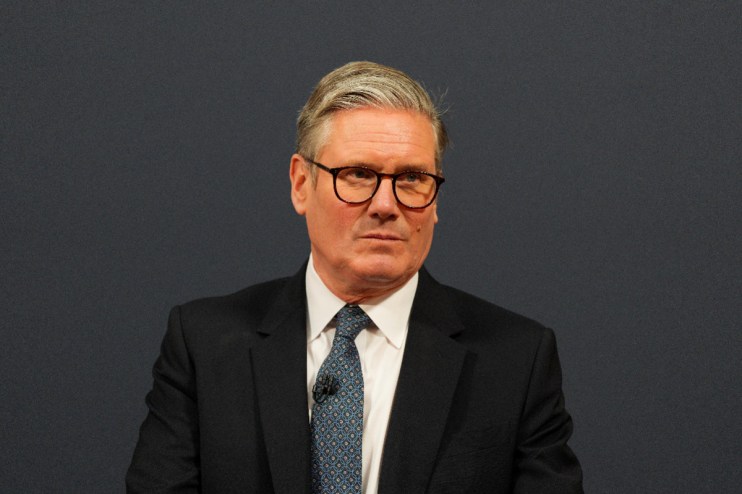
Keir Starmer is a weak Prime Minister and parliament has proved it can’t condone any reduction in public spending. This will end very badly, says Simon Clarke
The collapse of Labour’s plans for welfare reform marks the end of its first year in government – and perhaps the end of any kind of serious reforming ambition.
“The most expensive poverty in the world” was how Fraser Nelson described the scandal of the welfare system at the end of the New Labour years. For many people in 2010, a benefits trap meant they were quite rationally better off on welfare than in work, or than by choosing to work more hours.
The introduction of Universal Credit helped to fix this, and it stands alongside Michael Gove’s education reforms as the most important domestic policy success of the last Conservative government. But Covid blew the doors off – and then some. The progress made in reducing welfare dependency during the 2010s went into sharp reverse, in part because of much less exacting testing requirements. More applications were granted and fewer reassessments led to ongoing access to welfare being refused: the disallowal rate for UC claims fell below one per cent.
As a result, there are a staggering 1.2m more people of working age on health-related benefits than there were five years ago. This is massively economically unsustainable: as the House of Lords Economic Affairs Committee has pointed out, spending on incapacity and disability benefits has now risen by over 40 per cent in real terms since 2013. The Institute for Fiscal Studies has calculated that getting just 400,000 people who are out of work due to ill health back into the workforce would save £10bn through higher tax revenue and lower welfare spending – that’s the equivalent of two pence on income tax.
Labour has neutered its own welfare reforms
It is against this backdrop that the Parliamentary Labour Party has neutered its own welfare legislation to the point of uselessness. What Liz Kendall proposed was already significantly less ambitious than the plans the Conservatives had in place when they left office. It did not seek to reduce welfare spending in overall terms, but simply to slow the rate of increase – an almost unbelievably modest target. Even if Kendall’s plans had been implemented, welfare spending was still set to soar to £97.7bn in 2029/30, up from £66.3bn in 2023/24. Now, the bill will be much higher again.
This is a political crisis of the first order for Keir Starmer. Thirty years ago this summer, Tony Blair mocked John Major: “I lead my party, he follows his”. It’s now painfully clear this is no longer true of Mr Starmer. The spectre of a Prime Minister in office, but not in power, has returned to Downing Street.
The Labour MPs agitating against welfare reform hid behind a lack of consultation. But their true aim, of course, is to push the burden onto either taxation or more borrowing
But more seriously still, Britain’s fiscal credibility is hanging by a thread. If the government cannot secure these desperately-needed savings, what signal does that send to our creditors in the international markets? The Labour MPs agitating against welfare reform hid behind a lack of consultation. But their true aim, of course, is to push the burden onto either taxation or more borrowing. There is a lot of talk – rightly – about the inevitability of tax rises in the Autumn Budget. That much was already a sunk cost because of the Spending Review (now one of the great works of contemporary fiction, only weeks after it was published). But as Helen Thomas of the financial analysis website Blonde Money has rightly observed: “The issue with ‘tax rises are inevitable’ is that there comes a point where even the higher tax burden cannot produce enough revenue. Markets are currently distracted by war but at some point will return to debt sustainability.”
Britain is going bust. We cannot borrow more – our borrowing costs are already the highest in the G7. We have the highest tax burden since the Second World War. And now we have a parliament that cannot face any reduction in spending. This is going to end very, very badly.
Sir Simon Clarke is the Director of Onward, the centre-right thinktank, and was Chief Secretary to the Treasury 2021-22