Weapon of choice: How nutrition brand Grenade has exploded into the market

Grenade is the kind of brand that just appears out of nowhere – you blink and suddenly the products are a staple stock in shops around the country.
For those who have somehow missed the craze, Grenade is a food company specialising in healthy snacks – and now you’ve heard the name, you’ll probably start seeing the logo everywhere.
Founded by married couple Alan and Juliet Barratt, the company started out as a sports supplement brand in 2010 for people hoping to be strong and lean – think track and field athletes, as opposed to gym-bunny, body-builder types.
But as Alan (who has worked in the sports nutrition industry for 28 years) explains, once Grenade supplements had hit number one on best-selling lists, there was nowhere else to go in that market, so they decided to branch out. “The products were being sold at specialist retailers like Holland & Barrett, but we wanted something that we could sell in convenience stores.”
The idea was to take the technology that Grenade had perfected on Olympic athletes and military personnel, and transition it – targeting people who don’t necessarily obsess about going to the gym, but who want to eat better, consume more protein, and less sugar.
Now that Grenade has moved into the much larger food and beverage sector, it’s reaching a far wider group of health-conscious consumers.

The taste of victory
Crucially, though, the aim was to create protein-filled bars and shakes that normal people would actually enjoy eating. “We knew that there are good ways to make compromises, without compromising on taste,” says Alan.
“Protein bars have been around for 30 years, but the nice-tasting ones were full of sugar, and the low-sugar products tasted terrible. But why can’t it be good for you, and taste nice?”
The pair spent two years working with nutritionists and suppliers to make their protein bars taste better (they rejected over 40 batches of Carb Killa bars until they got to the first product they were happy with), and Alan says that this has set the benchmark for their competitors.
While it’s now commonplace to see nutrition bars being sold in grocery shops, it’s a trend that has only really emerged in the past few years.
The Grenade founders saw huge demand for healthy snacks in America, and they were at the forefront when this trend came to the UK. “We knew everything was moving towards being on-the-go,” says Juliet. “But protein has also become a lot more normalised, especially over the past two years.”
Another day another diet
The past decade has been beleaguered by a revolving door of diet and fitness programmes, with crazes like clean eating, Atkins, and the Insanity workout all getting their brief 15 minutes of fame.
When I ask the Grenade founders about the fad mentality that is rife in the sector, Juliet blames the way that programmes pigeon-hole themselves. “Low-carb brands like Atkins are too specific, so they can easily go out of fashion. But being a healthy snacking brand means different things to different people, so we have more chance to diversify.”
In the early days, some people claimed that Grenade was only a gimmick. But the company has proved critics wrong, sealing two private equity deals in the past four years, and in 2017, it was valued at £72m. Its products are sold in 80 countries around the world, and it saw growth of 48 per cent in the 12 months ending June this year. Eventually the pair want their products to be as common as Cadburys chocolate – a feat which seems entirely plausible if recent growth is anything to go by.
Alan suggests that a business is only really a fad when it focuses on just one tiny subdivision within fitness. “The only way that Grenade is going to go away is if consumers stop investing in their health, and that’s just not going to happen. People are more educated about health now. And it’s not about looking good, it’s about feeling good.”
Psychological warfare
The founders frequently mention balance throughout the interview – a word which is becoming increasingly important in a world where people seem to fly towards extreme ends of the spectrum.
And while there is plenty of debate about exercise obsession and extreme weight loss, the couple stress that their company is about bringing healthy eating into the mainstream.
Juliet explains that Grenade looks to educate people, helping them understand how protein fits into a healthy diet, and why it’s beneficial.
“We have a credible team of athletes, and we’ve got nutritionists on board as well – it’s all about the sources of whey protein, and how it helps you recover and feel stronger. There is a misconception that protein makes you massive, which needs to be broken down.”
While Grenade can’t force people to have a balanced diet, the company is giving consumers more choice – feeding on the psychology of snacking.
While it might be healthier to eat a carrot than a chocolate bar, few of us will regularly pick up the former, and Grenade is giving customers the option of something that sits in between (a fudge brownie Carb Killa bar will cost you around £2.50).
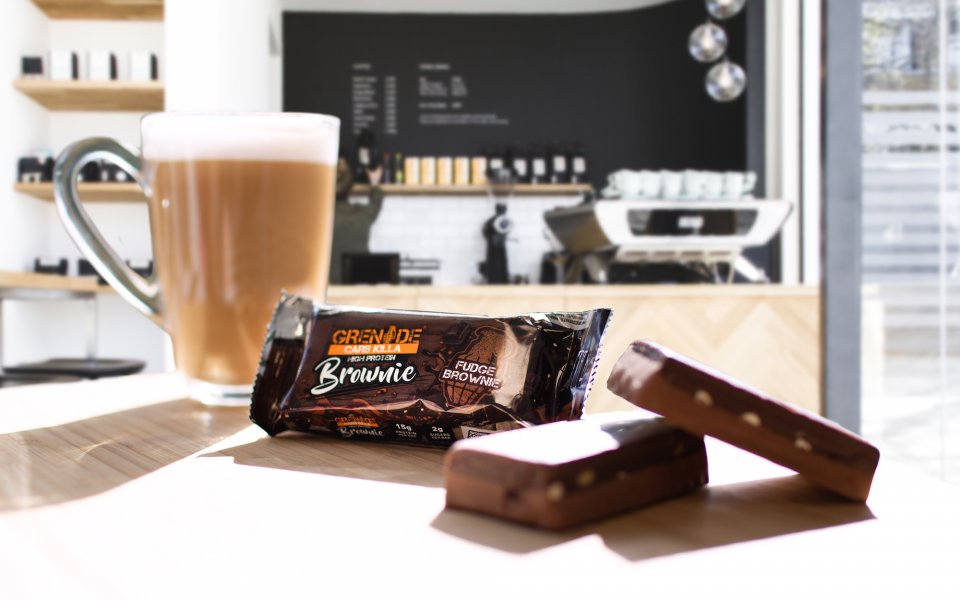
“We are not trying to get people to change their lives, we are trying to give them a slightly healthier alternative to their everyday drink or snack,” says Juliet.
And it’s clearly an option that many consumers are taking up, with 80 per cent of the growth from the UK healthy snacking sector coming from Grenade last year. “You need two things to make business huge: demand and availability – and if you’ve only got one, it doesn’t work,” says Alan.
Marriage material
When I ask how the couple managed to stay happily married while enduring the stress that comes with building a business, Juliet explains that they have clearly defined roles: Alan is the company’s chief executive, while she focuses on the marketing side of the business.
“It’s a combination of the best and the worst,” she says. “We’ve both got the same values, work ethic, and that trust is there. But the worst part is that there is no break, so work tends to spill into home. We haven’t got kids though, so Grenade is our baby.”
The pair certainly seem to complement each other, often expanding on or clarifying a point that the other has made. And what Alan, Juliet, and most entrepreneurs have in common is eccentricity – a refusal to fit into a neat little box or to follow the herd.
“Conventional people would look at someone like me and think that they’re just being stubborn,” says Alan. “But we refuse to accept what other people think is acceptable.”