Weekend Explainer: Why has Gordon Brown said Vladimir Putin should face a Nuremberg-style tribunal?

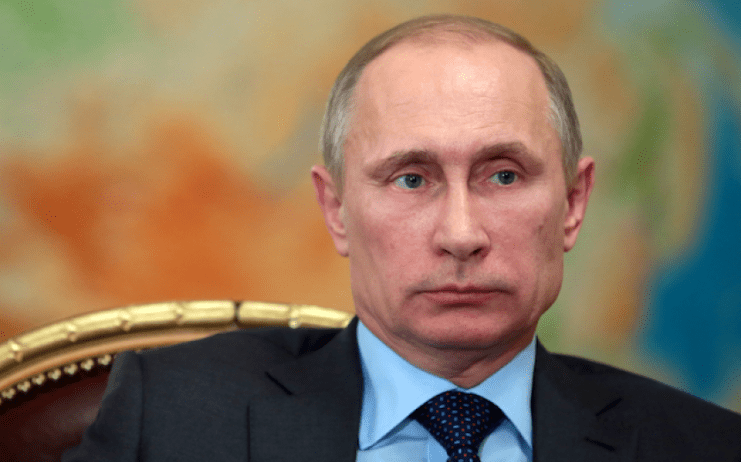
Today, at an online event hosted by Chatham House, former UK prime minister Gordon Brown called on countries to set up a special tribunal, in line with the model used in the Nuremberg trials, to punish Vladimir Putin over Russia’s invasion of Ukraine.
Speaking at the Chatham House event alongside Ukraine’s foreign minister Dmytro Kuleba, Brown called on countries to set up a “special tribunal on the lines proposed in 1942,” when several governments in exile joined forces to demand a trial of the leadership of Nazi Germany.
If pursued, Brown’s calls could see an international tribunal set up, and Putin put on trial. In Brown’s view, this tribunal should be modelled on the tribunals used to try the leaders of the Nazi Party in 1945-46.
Brown argued that such measures are needed to ensure the integrity of international law, as he argued that Putin is a threat to the “post-1945 international order” and that he has “sought to replace the rule of law with a misuse of force.”
What are the Nuremberg trials?
Brown’s reference to a “special tribunal on the lines proposed in 1942” refers to calls made by “governments-in-exile” during the second world war, for a trial of the Axis leaders.
These calls eventually led to the Nuremburg trials, during which leading Nazis were tried at a series of military tribunals for the crimes of Nazi Germany.
Notably, the Nuremberg Trials focused on the “crime of aggression” and the Nazi’s efforts to launch an “aggressive war.”
The initial calls, made in 1942, saw nine governments-in-exile – representing countries who had been occupied by Nazi Germany – team up with the United States, the USSR, and other countries across the world, to prosecute the Nazi leadership.
Initially, Britain opposed plans for a trial, as they instead called for Adolf Hitler and other members of the Nazi leadership to be killed in a series of summary executions.
However, following tense negotiations at the end of the second world war, the Allies agreed on plans for a trial at the Palace of Justice in Nuremberg.
The International Military Tribunal (IMT) in Nuremberg saw 24 individuals put on trial, of whom 12 were put to death.
The trial involved the cross-examination of leading figures in the Nazi party, including Hitler’s right-hand man, Herman Göring, who committed suicide by eating a cyanide pill the night before he was set to be hanged.
A separate trial was also set up in Tokyo, to try the leaders of imperial Japan. The Tokyo War Crimes Tribunal resulted in seven individuals being executed, and a further 16 being sentenced to life-imprisonment.
What is the ICC?
The International Criminal Court (ICC) was set up in 2002, with a view to acting as a permanent international court.
The ICC has powers to prosecute individuals for four separate crimes, including genocide, crimes against humanity, war crimes, and crimes of aggression.
Based in the Hague, in the Netherlands, the ICC has prosecuted 45 individuals during its 20-year history, including Libya’s former leader Muammar Gaddafi and Ugandan rebel leader Joseph Kony.
The court receives most of its funding from countries in the European Union, alongside major contributors including Japan.
What’s the need for a special tribunal?
Brown’s calls for a “special tribunal” come as legal experts fear that Putin may go unpunished for the invasion of Ukraine.
Brown explained that although the International Criminal Court (ICC), in the Hague, is able to prosecute individuals for war crimes and crimes against humanity, the court may not be able to prosecute Putin, as Russia is not signed up to a separate charter allowing the ICC to prosecute “crimes of aggression”.
Brown’s comments come after Putin approved plans for Russia’s withdrawal from the ICC in 2016, following Russia’s annexation of Crimea. The withdrawal means the Hague court now has no jurisdiction in Russia.
Russia’s withdrawal from the ICC puts it alongside the US, Israel and Sudan, as just a few countries which have rejected the Hague Court.
Notably, the crime of aggression was only added to the ICC’s Rome Statute in 2017, meaning Russia never signed up to the charter on crimes of aggression.
As such, it would be particularly difficult to prosecute Putin for such crimes. The situation means the UN Security Council, of which Russia is a member, would have to recommend that Putin is prosecuted by the ICC, for the court to push forwards with a prosecution.
Will the ICC be able to prosecute Putin otherwise?
The ICC may be able prosecute Putin for other crimes, including genocide, crimes against humanity, and war crimes, if evidence of these crimes is put forward.
However, the ICC may struggle to prosecute Putin directly, as it would be difficult to link the Russian leader to any crimes committed by troops on the ground.
Yesterday, the ICC launched an investigation into Russia’s invasion of Ukraine, specifically focused on finding evidence of war crimes, genocide, and crimes against humanity.
The ICC’s investigation will see a team of investigators sent to Ukraine, to find evidence of war crimes.
Even still, the investigators may find it hard to actually find evidence of crimes that could prosecuted by the ICC.
Furthermore, even if the ICC was able to secure a prosecution against Putin, it is unlikely that they would be able to arrest the Russian leader