Welcome aboard, this is a driverless train: unions begin their own demise

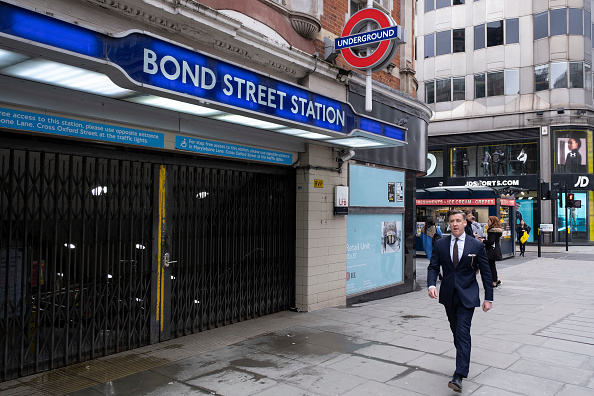
As the summer sun makes the UK feel like a Mediterranean resort, we are also about to see the perils of the labour problems that Southern Europe was so often bedeviled by. Trains have ground to a halt, the London Underground has stopped, and buses are stuck in their depots.
Millions of pounds will be lost – by restaurants, shops, and of course the rail sector. The hit to the already-stretched Treasury will make any effort to accommodate the inflation-driven wage demands even harder. But reasonableness, or macro-economic logic, was never a unionist quality.
Nor is any understanding of technology. The rail workers are being led by their foremen not just to the picket lines but also, eventually, to the dole queues. Their demands and their actions will expedite the transformation of Britain’s railways into a digitally-enabled system to best serve commuters.
The idea of driverless trains has been much debated. The Treasury even linked financial support for Transport for London to progress toward automation. New trains designed by Siemens and scheduled to be introduced from 2025 will have fully driverless capability. The new Elizabeth Line can be driverless when it operates in London. Perhaps the most quoted example is the DLR, driverless from its opening in 1987.
Still, we do not seem closer to using the available technology. As a result London remains hostage to bully-boy unionism.
Three reasons explain the impasse. A combination of union resistance and Sadiq Khan’s weakness has stymied all progress. It’s clearly not in either party’s interest to progress change. The London Mayor, who calls himself a “proud trade unionist” and has been supported in successive elections by the unions, is hardly going to break with his backers.
At the same time, the public hasn’t been brought along on the journey and there is little popular demand for change. Passengers are happy to let an autopilot fly them thousands of miles and content to be transported from terminal to terminal on driverless trains, but when it comes to mainline or underground trains, suddenly people are skittish.
Passengers need to know why we need driverless trains. The strikes, for many, will be a useful reminder. The benefits are legion. Removing the driver reduces cost, thereby reducing the price of tickets; capital can be freed up and allocated elsewhere, for example on station security. In a driverless train the driver’s cabin can be used for passengers, increasing efficiency. Driverless trains can be more flexible, with more services running 24/7 or increased during high-volume events like football matches, protests or concerts – with limited extra costs. The point to make is simple: if passengers want bigger, more frequent trains, driverless is the future.
Change has been stunted by bureaucratic caution which has taken the problems associated with introducing any new technology into an old system to unreasonable proportions. Updating a Victorian train system was always going to be a challenge. There are issues of the track, safety, stations, managing the randomness of human behaviour and much else.
But is this so different to what stood in the way of the Piasecki Helicopter Corporation producing the first ever autopilot for a helicopter in 1949 or more recently Tesla and Google automating cars?
While aviation and vehicle innovators develop solutions and enlightened regulators allow for change, when it comes to the obstacles facing the Tube, an overabundance of caution trumps pragmatism. Take the issue of emergency procedures in case of evacuation; tubes were built to be evacuated by trained staff, and an underlying assumption of driverless trains is that without workers, these procedures are prolonged. But do real life experience and tests really bear this out? What’s the likelihood that onboard staff genuinely help in the tiny number of instances where evacuation is required?
Automation reduces the risk of accidents and therefore the need for evacuation. Fully automated train systems run successfully in Vancouver, Copenhagen, Paris, Tokyo and Barcelona and post fewer accidents than their human-operated predecessors.
It is a case of TfL’s precautionary principle overriding commonsense. The best example of this retrograde philosophy is a much-quoted report commissioned by TfL and written by consultants KPMG on how to automate the underground. When the driverless discussion heats up, opponents quote the leaked report’s negative assessment and the price of automation, estimated to be £7bn.
The best way forward isn’t to commission work intended to thwart progress but to bring together innovators, entrepreneurs and transport experts to look at the challenges and create a financial incentive to make the needed changes. London needs to be on the move, not at the mercy of Luddite unions who care little for the city, its needs, business and passengers.