WeWork: Flexible office space giant raises ‘substantial doubt’ over its future
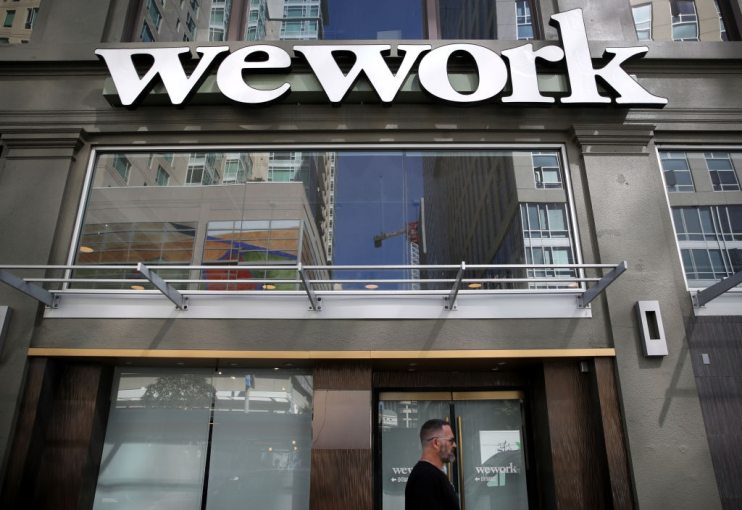
WeWork has suffered a sharp fall in its share price after raising “substantial doubt” over its future, as it races to secure the funds needed to stay afloat this year.
The flexible workspace giant warned in its latest result update that the company faces significant challenges including softer demand and a “difficult” operating environment – putting into question the “company’s ability to continue as a going concern,”
This has seemingly spooked investors, triggering an avalanche in its share price, which plummeted 24 per cent in extended trading New York last night to just 16p (21 cents) per share.
It said: “The company’s ability to continue as a going concern is contingent upon successful execution of management’s plan to improve liquidity and profitability over the next 12 months.”
The company’s revenues climbed 3.6 per cent to £661m ($844m) during its second quarter, with net losses narrowing from £497m ($635m) to £311m ($397m) – but this was not enough to ease its financial woes.
WeWork was once among the fastest growing companies in the world, but has been hit hard by the rise of home offices and hybrid working, which has weighed down demand since the pandemic when social distancing rules were brought in.
The troubled company has since failed to turn a profit even after workers returned to offices as coronavirus restrictions eased.
Founded in 2010 by Adam Neumann and Miguel McKelvey, the highly-vaunted start-up climbed to a peak value of £37bn ($47bn).
However, it was forced to shelve a listing in New York in 2019 amid concerns over its business model and Neumann’s leadership – who later left the group.
It was then bailed out by its largest shareholder, SoftBank, the Japanese conglomerate, before eventually going public in 2021, now valued at a considerably lower £353m ($450m).
The company currently has 512,000 members at its workspaces in 33 countries around the world, with an occupancy rate of 72 per cent across its estate.
Earlier this year, WeWork revealed it had struck deals with Softbank and other investors to reduce its debt by around £1.2bn ($1.5bn).
WeWork has also been hit by a boardroom exodus, with the exits of several top executives including former chief executive and chairman Sandeep Mathrani – with a permanent successor yet to be appointed.
Its future now depends on the “successful execution” of its turnaround plan including slashing rent and tenancy costs, reining in spending, ramping up sales, and seeking additional capital through stocks, bonds and asset sales.
“It is even harder to believe now than it was then that WeWork once carried a $47bn (£37bn) valuation,” Russ Mould, investment director at AJ Bell, said.
“The risks with the model were always evident (even before its almost evangelical former CEO had to leave) – too much debt, too much space in the event of any unexpected economic slowdown and too much exposure to young, start-up firms that would feel the strain of any downturn in business much more quickly than more mature, larger ones. “
Mould also said WeWork is underperforming when compared to its Swedish rival IWG, which doubled its profits in the first half of the year.
The Spaces owner reported an operating profit of £94m in the six months from June, up from £37m it made compared to last year.
“IWG has plenty of net debt, at £6bn, including £5.9bn of leases, but that figure came down by £1bn compared to June 2022 and IWG has stated it will focus on debt reduction going forward,” he added.
“That is why capital expenditure is down and IWG is neither paying dividends nor running a buyback scheme. It might not be immune from any economic downturn but it is at least preparing for one.”