What a room full of the Indian diaspora’s biggest names revealed about Britain’s AI opportunity


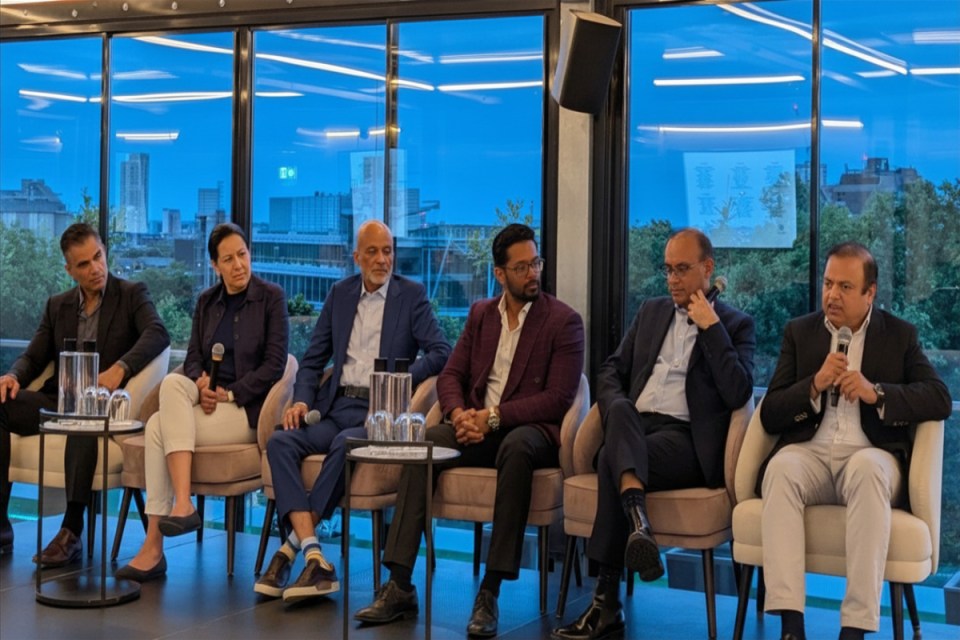
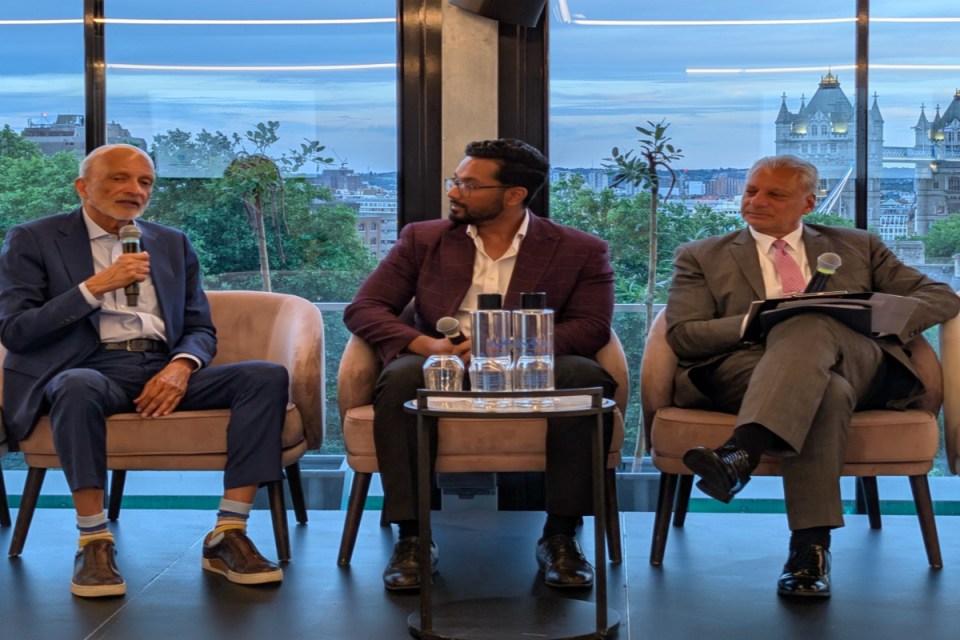
This week an Indiaspora dinner chaired by Tony Matharu, founder and Chairman of Integrity International Group and Central London Alliance CIC at The Skyline London, located in Tower Suites, brought together forty of the most accomplished business leaders, entrepreneurs and policymakers of Indian origin working across Britain today.
With the Indian diaspora creating a global annual turnover of $730 billion and the top 100 from the diaspora’s wealth in excess of $700 billion – the wealth creation of Indian origin must be recognised and valued.
The guest list told its own story: chief executives, investors, a government minister and the Indian High Commissioner, all in one room, wrestling with the same question. How does Britain make the most of the AI moment – and how does the UK-India relationship help it get there?
The keynote came from Kanishka Narayan MP, the Parliamentary Under-Secretary of State for AI and Online Safety, who set out a case that Britain’s opportunity in artificial intelligence rests on three things: the infrastructure to build it, the alliances to scale it, and the public trust to sustain it. On infrastructure, his point was blunt – a country that wants to be at the centre of the AI economy has to build the computing capacity to match its ambition. On alliances, he argued there is no partnership more valuable to Britain in this field than the one with India. On trust, he made the case that durable public confidence in AI has to be earned, not assumed, built on shared values rather than imposed from above.

Periasamy Kumaran, the Indian High Commissioner to the UK, put real numbers behind that ambition. India’s AI Mission is scaling fast, with a national push to deploy some 100,000 public GPUs, blending public investment with private capital and renewable-powered campuses. He was equally clear that India’s approach to AI governance favours principle-based regulation over heavy licensing – flexible enough to let innovation move, careful enough to keep safety at the centre.
Britain’s own position in this race is easy to underrate. The country has become, in effect, the place where the world’s AI is tested first. Britain has consistently been offered early access to the most advanced systems before they reach other markets, a reflection of the depth of AI talent already here. That is not a permanent advantage, but presently it is a genuine one, and it is the reason global AI labs and governments alike have come to the UK before they go elsewhere. However, the UK cannot afford to be complacent and the right environment for investment and innovation must exist.
What struck attendees most, though, was how the conversation kept returning to capital – or the lack of the right kind of it. Britain has been relatively good at seed-stage investment. Where it consistently loses ground, and loses talent, is at the growth-stage, when ambitious companies need serious money to scale rather than survive. The minister’s answer was to point to pension reform: unlocking the liquidity sitting in local government pension funds so more of it can be deployed into growth capital, rather than parked in low-yield safety. Wales was cited as an early proof point, where merging local pension funds has already started to shift what’s investable. The deeper challenge, as more than one guest put it, is cultural as much as regulatory – Britain still prizes steady yield over long-term appreciation. Turning that around, from 24-hour visa decisions for skilled workers to faster capital deployment, is as much a mindset shift as a policy one.
There is a useful precedent for the anxiety now surrounding AI and jobs, and it is one Britain has lived through before. At the turn of the millennium, there was no shortage of nerves about where computing would leave the workforce; two decades on, technology had created far more roles than ever anticipated. The UK’s dedicated AI sector alone now employs around 86,000 people, up a third in a single year, and the government’s own projections see AI-related roles growing from roughly 158,000 today to close to 4 million by 2035 – around 12 per cent of the entire UK workforce. The catch is that Britain is not yet training enough people to fill that pipeline: nearly half of AI roles are forecast to go unfilled by 2028 on current trends. These are decreasing incentives to employ young people and train them as reflected in the growing number of NEETs. Employers must be incentivised, not punished. The lesson from the last twenty years is not that the disruption isn’t real, it is that the response has to be new skills, not old fears, and that starts with how seriously Britain takes technology teaching in schools and NEET numbers (nearly one in five young people neither in work nor in education) as an AI policy question, not just a welfare one.
Lord Karan Bilimoria returned to a related theme: Britain’s strength is its openness – four of the world’s leading universities, the third-largest venture funding ecosystem globally, and a business culture still willing to test AI models before almost anywhere else. Indiaspora’s founder, Mr Rangaswami, added that none of that is guaranteed to last on its own; it has to be defended with policy that matches the ambition being talked about in rooms like the one Matharu chaired this week.
Britain and India, as the High Commissioner noted, share something rarer than convenient timing: independent institutions, a stable central bank, and a genuine cultural instinct toward partnership rather than competition. Vision 2035, the long-term framework guiding UK-India collaboration, will only mean something if it is backed by the capital, the infrastructure and the talent pipeline discussed at dinner this week. The diaspora has already shown what it can build. The question for the current government now is whether it will create the right investment environment and the conditions for that to happen.