Coronavirus public transport advice: What do lockdown rules say?

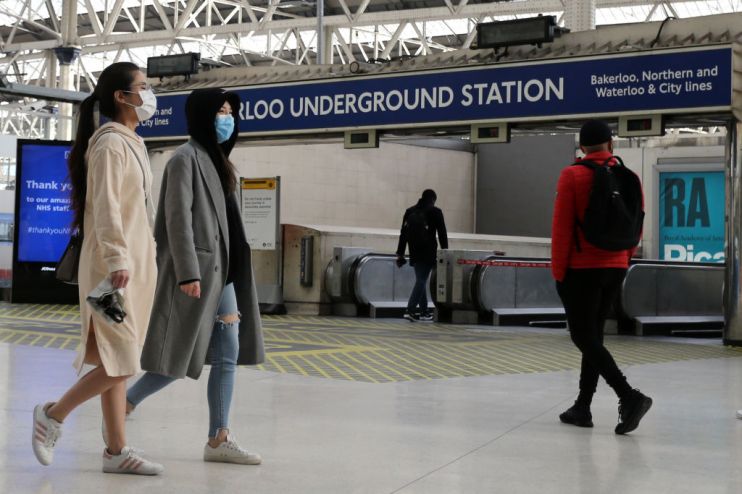
The government has released new public transport advice for would-be commuters as the UK takes its first tentative steps out of seven weeks of lockdown.
Although it once again stresses that people should avoid travelling it is totally necessary, the measures lay out steps people can take to keep themselves and others safe when making journeys on public transport.
Here’s what you need to know about the government’s advice.
Don’t use public transport if possible
Government advice states that people should not use public transport where possible to keep coronavirus from spreading.
Instead people should use alternative modes of transport, such as cycling, walking or driving.
The government said “this will help keep the transport network running and allow people who need to make essential journeys to travel”.
Who is allowed on public transport during coronavirus lockdown?
The government’s guidance states if you can work from home, you should continue to do so.
In addition, if you are suffering from symptoms of coronavirus you should not use public transport. The same goes if you are self-isolating or sharing a house with someone with symptoms, or are clinically vulnerable.
People without coronavirus who need to return to a workplace can travel, but are urged to avoid public transport if possible. However, that is often not feasible if people need to travel to large cities from further afield.
What if I have to use public transport?
If you have to use public transport, you should think carefully about what times and routes you use to give yourself and others as much space as possible.
Mayor of London Sadiq Khan has said only 20 per cent of pre-coronavirus commuters should use the Tube to maintain the two-metre gap on public transport.
There are a number of steps you can take to protect yourself if you must use public transport during the coronavirus lockdown.
First, people are asked to prepare for journeys to take longer than normal to account for social distancing measures and reduced capacity.
Crucially, people should take steps to try and remain two metres apart from other passengers at all times.
Where possible, try to travel at off-peak times to avoid busy services. People should talk to their employees to agree flexible or alternative working hours where necessary.
If possible, commuters should take the next service if they cannot maintain social distancing on the bus or train they want to take.
Commuters are also asked to refrain from eating or drinking on journeys.
People can also book tickets through the operator’s website or app or use contactless payment systems.
The government also encourages people to use less busy stations, or to walk the last part of journeys, in order to reduce crowding.
What if I can’t socially distance on public transport?
The government has warned that it will not be possible for people to always maintain social distance from other passengers on public transport.
Boarding and alighting from trains, travelling at busier times of the day, and passing through station interchanges are all times when it might not be possible to stay two metres away from others.
In such circumstances, you should avoid physical contact. You should try to face away from other people, and keep the time you spend near others as short as possible, the government says.
Should I wear a face mask on public transport?
If you can, the government says that you should wear a face covering while using public transport.
Transport for London gave commuters the same advice yesterday.
Although the effectiveness of such masks against the disease is contested, the government’s advice said wearing such protection might be “marginally beneficial”.
“The evidence suggests that wearing a face covering does not protect you, but it may protect others if you are infected but have not yet developed symptoms,” it adds.
It added that if you should choose to wear one, you should make sure to use it properly and to wash your hands before putting it on and taking it off.
Can my children travel?
Social distancing rules also apply to children, who should keep their distance from anyone outside of their household.
Where this is not possible, children should avoid physical contact, face away from others, and keep the time spent near others as short as possible.
Adults travelling with children are responsible for helping them follow the advice, as well as wearing face coverings and minimising the surfaces they touch.
Individual schools may also have guidance for children to follow.
Can I take a taxi?
When waiting to take a taxi, people are asked to remain mindful of the social distancing advice.
When travelling, you should follow the advice of the taxi driver, who may have put additional measures in place.
For example, if you are travelling alone you might be asked to sit in the back left seat for safety purposes.
You should also consider wearing a face mask, as well as avoiding physical contact if you have to travel with someone else.
What if I am driving?
The government says steps should be taken to ensure social distancing is observed, like giving cyclists extra space at traffic lights.
Drivers should also try to remain in their local area where possible and limit any time spent at petrol stations and motorway service stations.
If you share a car with people outside your household unit and cannot travel an alternative way, you should try to share the transport with the same people each time and keep to small groups of people at any one time.
You should also keep the windows open and face away from other people where possible.