What can Quaker capitalism teach business today? It’s no good being ethical if you don’t make money

Today, the Friends House on the Euston Road is hosting a Quaker Business Conference on the subject of “what is the purpose of business?” It is the right time to be posing the question and a good location at which to be asking it.
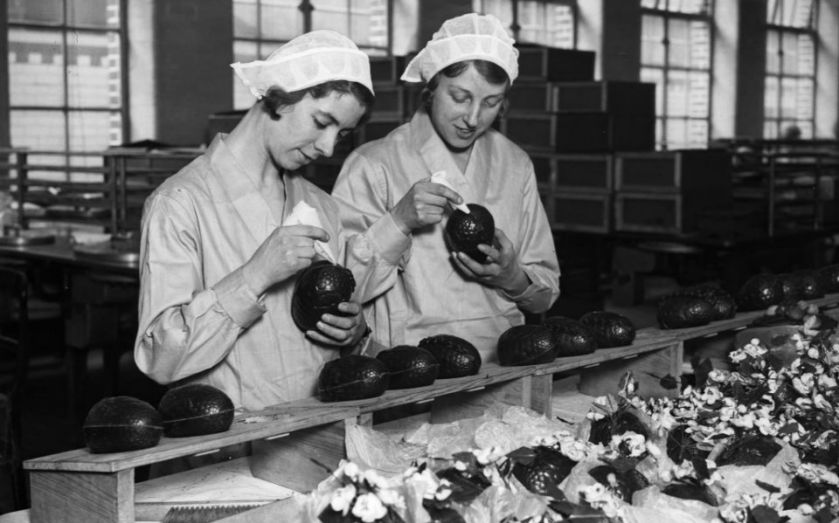
The Quakers led the way in some of the most purposeful companies that Britain has had over the past 200 years. Companies like Cadbury, Clarks, Fry’s and Rowntree’s were iconic in their days in creating not only enlightened but also commercially successful businesses. The Quakers introduced one of the most important commercial innovations of all time, fixed price contracts, to replace the haggling they abhorred so that all men who were equal in the face of God were treated equally in the marketplace.
Such was the standing of some of these businesses and enlightened entrepreneurs that the founder of modern industrial economics, Alfred Marshall, wrote at the time that “it is a strong proof of the marvellous growth of a spirit of honesty and uprightness in commercial matters, that the leading officers of great public companies yield as little as they do to the vast temptations of fraud which lie in their way”.
Are there lessons to be learnt from the Quaker family businesses of the past for business today? The answer is yes but not in the way in which one might expect. It is not that we can or should seek a revival of the types of businesses the Quakers promoted. Indeed, if survival is an indicator of success, the Quaker firms have been a failure. Most went out of business or were taken over and those that have survived, such as Barclays and Lloyds Bank, are not universally regarded as paragons of virtue today.
The very lesson of the Quaker phenomenon is the opposite of what Marshall saw as strongly ethical owners and managers. Philanthropy does not feature in a world where ownership and management is no longer in the hands of enlightened families but instead dispersed among a large number of institutional investors, solely concerned about financial returns for their investors.
Enlightened capitalism will have to be profitable to flourish. It will have to generate benefits for investors as well as society. It will have to rekindle the flame that drove the Quakers: that treating people fairly and well is good business.
For this to happen, it has to be true. Is enlightened business profitable, and more profitable than other ways of doing business? This is currently the subject of much analysis in business schools around the world. Opinions are divided. Some point to the high returns investors have earned from the so-called “sin stocks” – tobacco, alcohol and gambling. Others report that companies that pursue sustainable environmental and social policies earn greater returns for their investors in the long term than those pursuing less enlightened short-term goals.
Examples abound of firms on both sides of the fence and scepticism therefore prevails that doing good is really good business. And even if it were, it is even less clear what should be done about it. We appear to be stuck in a system that rewards financial returns irrespective of whether they are earned at the expense of the environment or the taxpayer.
But that is where the Quaker experience has important lessons for today, because the admirable companies that Marshall witnessed operated in a society that was less tolerant and enlightened than the present. What the Quakers did was to engage in commercial innovations, such as fixed price contracts and housing for their employees, that fundamentally altered the conventions and practices of their time.
The Quaker firms became models for business because they demonstrated by example how enlightened business was highly profitable. It is innovation in business practice today that will ultimately be the catalyst for change.