
What can the Covid-19 crisis teach us about tackling climate change?

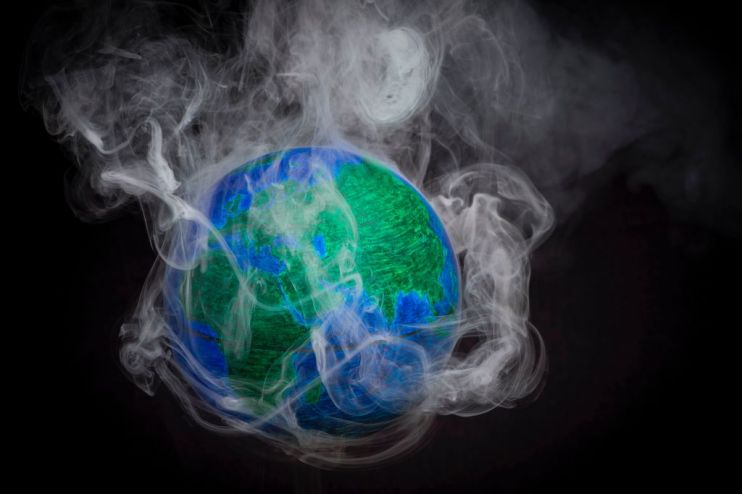
We already know how devastating climate change could be for the planet, so let’s ensure we learn the lessons from the current crisis.
Covid-19 caught most of the world’s institutions and governments by surprise, leading to a global health and economic crisis unprecedented in modern times. Few people would disagree with the notion that most countries were unprepared to deal with the crisis.
However, some experts, and thought leaders such as Bill Gates have been warning for years that a pandemic is among the greatest risks facing the world. So it is worth asking why we were so unprepared, and what we can learn from this.
There are several parallels, and of course some differences, to climate change. A new virus pandemic, while inevitable at some point, had uncertain timing. Uncertainty can lead to complacency and the idea that preparing for it involves wasted resources and unproductive investments.
Of course, we cannot fully insure ourselves or prepare for every conceivable tail risk. Faced with scarce financial resources, it can be tempting to forsake spending on testing and diagnostic facilities and rapid response medical facilities in the face of popular short-term spending priorities.
In essence, it was a classic case of an uncertain long-term problem being crowded out by other more pressing short-term priorities.
For more:
– Inflation post Covid-19: to be or not to be?
– Covid-19 poses temporary setback to the energy transition
– Q&A: Why do markets rise even when the outlook is bleak?
Current pandemic has parallels with climate change crisis
There are other parallels with climate change. Low income countries and low income population groups have been some of the hardest hit. They are also both global phenomenon, highlighting our interdependencies and the need to work together to solve problems.
In human terms, the impact of unmitigated climate change will be comparable to a permanent Covid-19 crisis. A study published in UK medical journal The Lancet concluded that the impact of climate change just on global food production could cause more than 500,000 deaths by 2050.
However, there is also one very important difference. There were few economic models and despite Bill Gates’ best efforts, little public discussion that predicted the economic devastation that dealing with a pandemic would bring.
With climate change, we know a great deal about the changes that will occur in the coming decades if we don’t act quickly, and there is already significant public and political awareness. We know that these climate changes will be eventually devastating, that they will occur year after year, and that they can only be avoided by consistently investing to create a decarbonised economy.
We also know, as highlighted quarterly in the Schroders Climate Progress Dashboard, that the pace of investments has been nowhere near fast enough. Perhaps Covid-19 will provide an example of the devastating impact that nature can have on our way of life, which could help generate more of the required political will to make these investments. Time will tell whether the rebuilding response distracts political attention, or focuses it.
The pandemic has highlighted the important role that governments can play in facilitating changes in behaviour. For example, although the impact of the lockdown has been severe, it has received strong support from the public.
Climate change lessons can be learnt from the handling of the pandemic
The pandemic may hold important lessons for voters and politicians, but financial markets are also likely to learn some lessons. They are increasingly likely to analyse the political response to climate change and identify whether or not it is sufficient, with asset prices moving accordingly.
If investment to decarbonise the economy and meet the Paris Agreement goals remains insufficient, asset prices will likely increasingly move to price in risks of adverse climate events, including risks to the value of low lying property, increased risk premiums on the worst affected and least prepared parts of the world, and a premium for climate change hedges.
Conversely and more hopefully, if investment in a low emission economy can be accelerated, markets will likely reduce risk premiums. They may also widen the valuation dispersion between those assets that have a role in a low emission economy, and those where asset lives need to be curtailed and growth rates reduced.
Whichever path we eventually go down, climate change will likely have a much bigger impact on financial markets.
Important Information: This communication is marketing material. The views and opinions contained herein are those of the author(s) on this page, and may not necessarily represent views expressed or reflected in other Schroders communications, strategies or funds. This material is intended to be for information purposes only and is not intended as promotional material in any respect. The material is not intended as an offer or solicitation for the purchase or sale of any financial instrument. It is not intended to provide and should not be relied on for accounting, legal or tax advice, or investment recommendations. Reliance should not be placed on the views and information in this document when taking individual investment and/or strategic decisions. Past performance is not a reliable indicator of future results. The value of an investment can go down as well as up and is not guaranteed. All investments involve risks including the risk of possible loss of principal. Information herein is believed to be reliable but Schroders does not warrant its completeness or accuracy. Some information quoted was obtained from external sources we consider to be reliable. No responsibility can be accepted for errors of fact obtained from third parties, and this data may change with market conditions. This does not exclude any duty or liability that Schroders has to its customers under any regulatory system. Regions/ sectors shown for illustrative purposes only and should not be viewed as a recommendation to buy/sell. The opinions in this material include some forecasted views. We believe we are basing our expectations and beliefs on reasonable assumptions within the bounds of what we currently know. However, there is no guarantee than any forecasts or opinions will be realised. These views and opinions may change. To the extent that you are in North America, this content is issued by Schroder Investment Management North America Inc., an indirect wholly owned subsidiary of Schroders plc and SEC registered adviser providing asset management products and services to clients in the US and Canada. For all other users, this content is issued by Schroder Investment Management Limited, 1 London Wall Place, London EC2Y 5AU. Registered No. 1893220 England. Authorised and regulated by the Financial Conduct Authority.