What does the collapse of the French government mean for Britain?

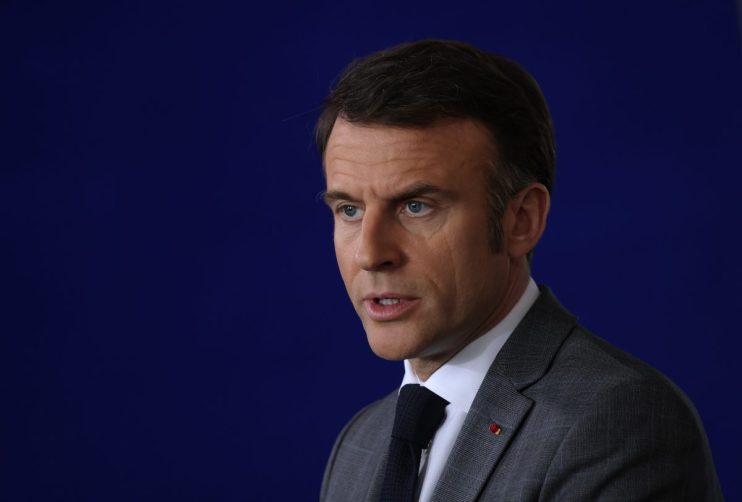
The balance of power is shifting in Europe following the collapse of the government in France, and the winners will be those countries most responsive to change, says Doug Stokes
The collapse of the French government last week follows a shift in the balance of power within European politics. The UK must act with caution.
The Franco-German axis has been at the core of the EU’s political and economic project for years. This axis ensured stability and shared prosperity, with Germany’s economic engine effectively sustaining the French social model of high public spending and a generous welfare state. However, the very foundations of this Franco-German consensus are now beginning to erode, signalling broader consequences for the EU and its future trajectory. For the UK, this is both a crisis and an opportunity to recalibrate its relationship with Europe.
Historically, Germany’s role as the guarantor of the Euro has allowed France to sustain a level of borrowing and welfare spending that would be unsustainable on its fiscal credentials. The European Central Bank, heavily influenced by German economic priorities, has facilitated favourable borrowing costs across the Eurozone, effectively insulating France from global and domestic financial pressures. In return, Germany has enjoyed a stable neighbour and both nations have mutually reinforced their hegemony within the EU structure.
However, the dynamics of this arrangement are rapidly changing. Germany faces significant economic challenges — a declining demographic profile, a shrinking labour force, energy vulnerabilities, and stagnation in key industrial sectors, particularly manufacturing. With energy prices higher post-Ukraine and demographic decline biting into workforce availability, Germany’s position as Europe’s economic powerhouse is waning. As Germany’s economy falters, France also finds its state-funded welfare model under threat since the security provided by Germany’s fiscal strength is no longer assured.
The Euro under threat
This means that the stability of the Euro, long underpinned by Germany, is coming into question. With Germany’s relative decline, the burden of ensuring Euro stability will dissipate to other powers, such as France and the southern European economies — countries with higher debt burdens and less resilience to economic shocks. The political implications are stark: countries like Italy, Spain, and France may have to cut down on welfare spending to support Eurozone stability, leading to political friction and likely further social unrest, as witnessed recently with rioting in Spain over the state’s lacklustre response to the mass floods.
From a broader perspective, the EU must reckon with its diminishing attractiveness as a partner. The European project, which long prided itself on economic integration and technological leadership, now faces stark internal contradictions. Growth has stagnated across the Eurozone, with per capita GDP lagging far behind the United States. Europe’s bureaucratic inertia has stifled innovation, with the EU’s rigid regulations driving away AI and tech start-ups and undermining energy-intensive sectors like manufacturing, chemicals, and life sciences.
Europe’s bureaucratic inertia has stifled innovation, with the EU’s rigid regulations driving away AI and tech start-ups and undermining energy-intensive sectors like manufacturing, chemicals, and life sciences
This occurs during a deepening global geopolitical realignment. Whatever the war’s outcome in Ukraine, Trump’s approach to European security will be significant. The EU must get real in the coming security order. Its endless strategic reviews and pomp and circumstance announcements on defence cooperation have allowed it to ignore inconvenient truths. In the new Trumpian world, it can no longer avoid the consequences of avoiding reality. It must grow its economy and pay for its security.
The EU’s punitive approach towards Britain — from the refusal to grant mutual recognition of conformity assessments to denying financial services equivalence — reflects a Groundhog Day mindset more focused on fighting yesteryear’s Brexit wars than fostering productive partnerships. Donald Trump and declining Franco-German axis will soon burst this legacy bubble. In this new dispensation, the UK must also develop new arrangements, as seen in the AUKUS alliance, which deepens defence ties. The UK must leverage its strategic position in Europe within what will soon be an American-lite European security order. If played well, the changing NATO relationship and American strategic buck-passing will allow us to play to our strengths and fill a growing geopolitical market demand. The winners will be those most responsive to these changes in the coming new Europe.
Professor Doug Stokes is a senior adviser to the Legatum Institute