Skip to content
Sunday 9 August 2026London --:--Frankfurt --:--Zurich --:--
NewslettersSearchEN · DE
MorningWire

European business, markets and politics

FTSE 100
10,901.09
+0.31%
DAX
26,319.45
+0.69%
CAC 40
8,714.93
+0.17%
STOXX 50
6,523.86
+0.33%
  • Europe
  • Markets
  • Business
  • Economy
  • Technology
  • Politics
  • Opinion
More
GermanyFranceBankingAIEnergyFintechPropertyCapital Markets
  • Germany
  • France
  • Europe
  • Markets
  • Business
  • Economy
  • Technology
  • Politics
  • Opinion
  • DE
Tuesday 05 March 2024 10:55 am  |  Updated:  Tuesday 05 March 2024 10:58 am

What is the OBR and why does it matter?

By: Chris Dorrell

Add as a preferred source on Google
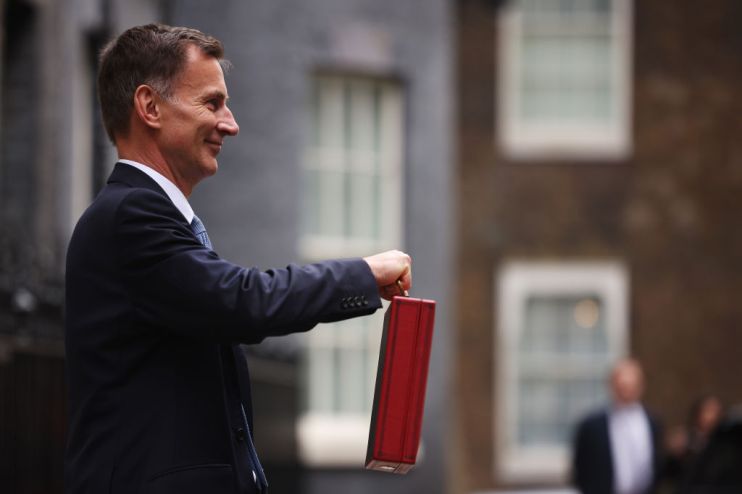
Chancellor Jeremy Hunt will take centre stage tomorrow when he delivers the Autumn Statement but investors are likely to pay just as much attention to the Office for Budget Responsibility (OBR).

Chancellor Jeremy Hunt will take centre stage tomorrow when he delivers the Spring Budget but investors are likely to pay just as much attention to the Office for Budget Responsibility (OBR).

The independent fiscal watchdog rarely steals the limelight, but, in an increasingly uncertain economic environment, the OBR’s forecasts will receive more attention than ever.

But what does it actually do?

What is the OBR?

The OBR was created in 2010 by George Osborne to provide “” analysis of the UK’s fiscal position.

For every ‘fiscal event’ – Spring Budget and the Autumn Statement – the OBR produces a five-year forecast for the state of the economy and of the public finances. The forecasts incorporate the impact of tax and spending measures announced by the Chancellor.

In effect the fiscal watchdog marks the government’s homework by assessing whether Hunt’s plans meet the government’s self-imposed fiscal rules.

The key target is to have national debt falling as a percentage of GDP by the fifth year of the rolling forecast, but the rules also say that borrowing must also be below three per cent of GDP in the same year.

A seal of approval from the OBR reassures markets that the government’s spending plans are credible.

What will happen this time around?

The OBR’s forecasts are crucial for determining the extent to which the Chancellor can splash the cash. In short, more headroom means more room for giveaways.

In November 2023, Hunt had £13bn, or 0.4 per cent of GDP. In March of that year he had just £6bn, the lowest level of any Chancellor since the creation of the OBR.

The Chancellor is likely to have slightly more headroom this time around – up to a maximum of £20bn – as markets have priced in interest rate cuts across 2024, which will lower the amount the Chancellor has to spend on interest payments.

Read more

Pension pressure to help swell UK debt to three times size of economy

Two older women exercising at an outdoor gym in sunshine

However, the improvement in the fiscal position is unlikely to enable dramatic tax cuts. Hunt has instead been looking for other ways of raising funds, including a levy on vapes, potentially scrapping the non-dom status and pencilling in a tighter squeeze on public sector spending.

Another 2p cut to National Insurance and a further extension to the freeze on fuel duty look the most likely options for the Chancellor this week, but experts remain concerned about the state of the public finances.

“Given the tightness of spending plans for public services there is a clear risk that any net tax cut announced on Wednesday will not prove sustainable,” Isabel Stockton, senior research economist at the Institute for Fiscal Studies said.

How accurate are the forecasts?

The OBR’s forecasts rely on the government’s stated policy proposals.

Believe it or not, politicians are not always entirely truthful about their spending plans. This has implications for the OBR.

Last time around the OBR forecast that the government would raise £4bn in fuel duty receipts in 2027-28 if it raised the tax in line with inflation, as it is supposed to. But the watchdog noted that the policy was “rarely implemented.”

“Cancelling these planned increases, as every Chancellor has done since 2011…would, in itself, more than halve the Chancellor’s headroom,” it said.

Many have also suggested that the government’s spending plans are unrealistically tight.

In the Spring Budget the government essentially delayed making spending cuts until after the next election. But failing to increase spending plans over the coming years would amount to a deep spending cut in real terms as inflation rises.

The Resolution Foundation estimated that failing to increase spending on unprotected departments would mean they face spending cuts of a similar magnitude to the austerity of the early 2010s.

Read more

Warning for John Healey as key fiscal target missed

Labour MP John Healey in a professional headshot, likely for news or political profile.

Share this article

  • Facebook
  • X
  • LinkedIn
  • WhatsApp
  • Email

Similarly tagged content:

Sections

  • Markets & Economics

Categories

  • Economics

Trending Articles

  • Thames Water faces fresh threat to survival after pensions regulation breach

  • PwC’s Embankment HQ to get major makeover ahead of Canary Wharf move

  • Family feud: London estate agent Winkworth sues chair over plot with wife to oust son from board

  • As it happened: Stocks rise despite new tensions in Strait of Hormuz; Oil price climbs

  • A tribute to wine legend Matthew Jukes by his friend Libby Brodie

More from Morning Wire

  • Pension pressure to help swell UK debt to three times size of economy

    Economics
    Two older women exercising at an outdoor gym in sunshine
  • Warning for John Healey as key fiscal target missed

    Economics
    Labour MP John Healey in a professional headshot, likely for news or political profile.
  • OBR misery makes tax rises inevitable

    Opinion
    Treasury Department building with government bonds signage, representing financial management and bond issuance responsibi...
  • The devastating prognosis for the UK’s public finances

    Economic News/Analysis
    Dramatic cloud formation over Westminster, capturing a striking skyline with iconic landmarks under a moody sky.
  • Unfunded Digital ID will not free up new cash for Burnham’s cost of living plans

    Politics
    Burnham cityscape at sunset with historic buildings and bustling streets, highlighting the vibrant urban landscape
  • The seven growth tests every Budget must pass

    Opinion
    Chancellor holding iconic red budget box outside Downing Street, symbolizing UKs annual budget announcement
  • Healey announces early Budget

    Politics
    Man in suit and red tie speaking at a podium to an audience in a modern building.
  • The pensions triple lock is a travesty. Our politicians must fess up

    Opinion
    Young people face the risk of failing to save enough in their pension
MorningWire

Independent European business, markets and political news for decision-makers.

Morning Briefing

Europe

  • Germany
  • France
  • Europe
  • UK & Ireland

Business

  • Markets
  • Banking
  • Technology
  • Energy
  • Property
  • Fintech

Editorial

  • Opinion
  • Editorial Policy
  • Corrections
  • Contact

Company

  • About Morning Wire
  • Privacy Policy
  • Terms of Use
  • Cookie Policy
© 2026 Morning Wire Ltd · Published by Morning Wire Media, Bahnhofstrasse 65, 8001 Zürich, Switzerland
Privacy · Terms · Cookies · Facebook