What Rachel Reeves can learn from Geoffrey Howe

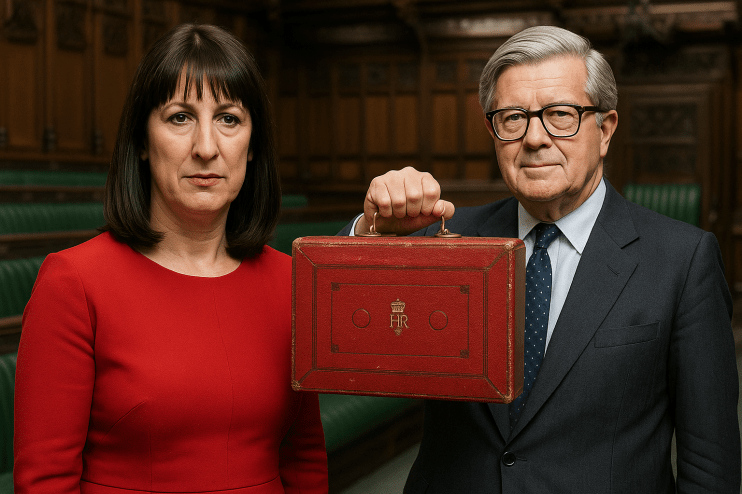
In 1981, Geoffrey Howe defied Keynesian orthodoxy by tightening fiscal policy during a recession – and completely changed the narrative about the British economy. Reeves must do the same, but all she offers is doom and gloom, says Paul Ormerod
The UK economy is either already in or very close to a recession. Despite Rachel Reeves’s proclamations about the importance of growth, it remains elusive. What is to be done?
Very few budgets linger in the memory for very long. But one which does is the March 1981 budget introduced by Geoffrey Howe, Mrs Thatcher’s first Chancellor.
The economy was unequivocally in a recession, the sharpest there had been since the Second World War. Output had begun to fall in the spring of 1980 and by March 1981 it was over four per cent lower than a year previously.
The striking feature of the budget was that, at a time of severe recession, the government tightened fiscal policy. The overall effect was a cut in borrowing of around 1.5 per cent of GDP – almost £40bn in the prices of today.
This flew directly in the face of the prevailing Keynesian orthodoxy., according to which the correct response to a recession was to pump money into the economy by increasing public borrowing. Cue howls of outrage all round. A Conservative MP defected to Roy Jenkins’ Social Democrat Party. Mrs Thatcher appears to have faced serious criticism within her own Cabinet.
No fewer than 364 economists signed a letter to the Times newspaper which was strongly critical of the measures. They were denounced as having “no basis in economic theory or supporting evidence”.
Yet immediately following that budget, the recession ended and the economy began to grow again.
The 1983 boom
True, the growth in the second quarter of 1981 was miniscule and output was still lower than a year previously. But the economy picked up rapidly. By 1983 there was a veritable boom with growth of over four per cent, a rate which Rachel Reeves probably does not even dare to dream about.
The crucial reason is that Howe’s budget started to create a different narrative about the British economy. In 1981, just as today, the dominant mood was one of doom and gloom.
The reasons then were different. Trade unions were far more powerful. Only seven years previously the miners had actually brought down the Conservative government of Edward Heath. Inflation was rampant, at an annual rate of some 15 per cent.
But Howe, strongly supported by Mrs Thatcher, succeeded in telling a different story, one in which a government was finally willing to get to grips with the serious problems which Britain faced. And they were successful, with strong growth returning an inflation falling sharply to just five per cent in 1983.
Keynes himself was not as dogmatic as his latter day followers. He accepted that it was theoretically possible for a tightening of fiscal policy to boost the economy.
His magnum opus, The General Theory of Employment, was published in 1936. He argued that in general an increase in public sector borrowing would stimulate the economy.
But in a short but crucial passage which modern Keynesians conveniently ignore, he argued that the positive effect would be undermined if the increase in public borrowing which it entailed had an adverse effect on “confidence”.
What Thatcher and Howe succeeded in doing in the 1981 budget was to start to restore confidence by creating a positive narrative about how things could be changed for the better.
The major problem which Rachel Reeves has created as Chancellor is not any specific measure. It is that the only narrative which she has tried to create is a negative one of an alleged “black hole” in the public finances and the need to raise taxes.
I wrote last September that this negative story would depress the economy. Reeves is, if anything, doubling down on her strategy. But without a different and convincing narrative, the economy will continue to falter.
Paul Ormerod is an Honorary Professor at the Alliance Business School at the University of Manchester, an economist at Volterra Partners LLP, and author of Against the Grain: Insights of an Economic Contrarian, published by the IEA in conjunction with Morning Wire