What should investors do in H2? Diversify

At a time of global uncertainty, diversifying your investments across regions and sectors remains the best way to protect your portfolio, says Liz Ann Sonders
The year 2025 began on a note of buoyancy. Fresh off the back of the US Presidential election, equity markets were roaring, fuelled by optimism that deregulation and tax cuts would propel Wall Street profits. Inflation was forecast to drift back down to the two per cent target of the US Federal Reserve (Fed), prompting hope that the Fed could shift back to an easing bias.
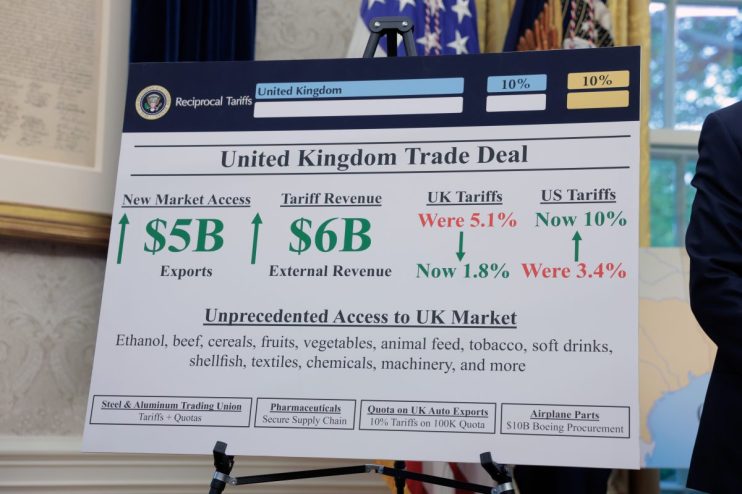
This upbeat outlook was abruptly challenged in April, when the Trump administration unveiled a sweeping new tariff policy that rattled global markets. Although investor reaction has become more muted with each new development since, the uncertainty has continued to linger. Many of the fair winds the markets anticipated have yet to materialise, giving way instead to a challenging macroeconomic and geopolitical environment.
These tariff measures have contributed to concerns about stagflation – a deceleration in economic growth and an expected acceleration in inflation. The Organization for Economic Co-operation and Development (OECD) projects US gross domestic product (GDP) to slow from 2.8 per cent in 2024 to 1.6 per cent in 2025, with inflation nearly for per cent by year-end due to higher import costs. Those expected growth and inflation hits are larger than for most other counties the OECD analysed. Globally, the OECD expects a decline in economic growth from 3.1 per cent in 2024 to 2.9 per cent in 2025, attributing the slowdown to increased trade barriers and policy uncertainties.
Recession odds lower, but not eliminated
Recession risk remains top-of-mind; although economists’ odds thereof did ease in the aftermath of the announcement on April 9 of a 90-day delay in the administration’s “reciprocal tariffs” that were announced on 2 April. Economic indicators remain mixed, with “hard” economic data remaining relatively resilient, but “soft” (survey-based) indicators, like consumer and corporate confidence, remaining under pressure. Both government and monetary policy direction remains difficult to forecast, and conflict in the Middle East adds another layer of geopolitical complexity.
As we start 2025’s second half, the fear that tariffs will boost inflation and slow economic growth is likely to continue to impact markets and confidence, until and unless there is more clarity on policy.
Against this backdrop, stocks are trading near all-time highs, but the bar is now higher for further upside. A stabilising labour market, declining tariffs and inflation remaining under control would all be welcome developments, but they are far from guaranteed. For now, investor sentiment and positive earnings growth remain supportive for stocks, but stretched valuations and the potential that tariff policy will slow economic growth are headwinds.
Keep the seatbelts on
Coming into 2025, we had the view that the market would mostly resemble the inverse of what happened in 2024: more index-level volatility, not just a lot of churn under the surface. That manifested quickly given the S&P 500’s 21 per cent drop into bear market territory (on an intraday basis) from mid-February to the “turnaround” day on 9 April.
One of the more difficult aspects of analysing the market this year has been the significant shifts in sector leadership. Sector performance has been rotating sharply, with no single area holding the top spot for more than two weeks at a time. For instance, looking at two-week intervals, energy topped the leaderboard on three occasions, but is not the best performer year-to-date. Meanwhile, industrials only held the top spot once, yet it is leading year-to-date.
Why diversification still works
No portfolio is bulletproof, especially in a globalised world where shocks are rarely contained within a country’s borders. But diversification, across and within asset classes, remains one of the most effective tools available to investors.
For UK investors, that means spreading exposure across asset classes and geographies. A diversified portfolio could include a mix of direct equities, global tracker funds, fixed income, property funds, infrastructure investments and alternative assets. Allocating capital across sectors and regions helps reduce vulnerability to localised downturns or policy swings. A balanced blend of US, European, and Emerging Markets exposure can provide both resilience and growth potential.
In addition, areas such as high-quality bonds and income generating assets can offer valuable ballast during periods of equity market stress. Maintaining some exposure to cash or cash equivalents may also provide flexibility to take advantage of market dislocations.
Liz Ann Sonders is managing director, chief investment strategist at Charles Schwab